Checking It Yourself
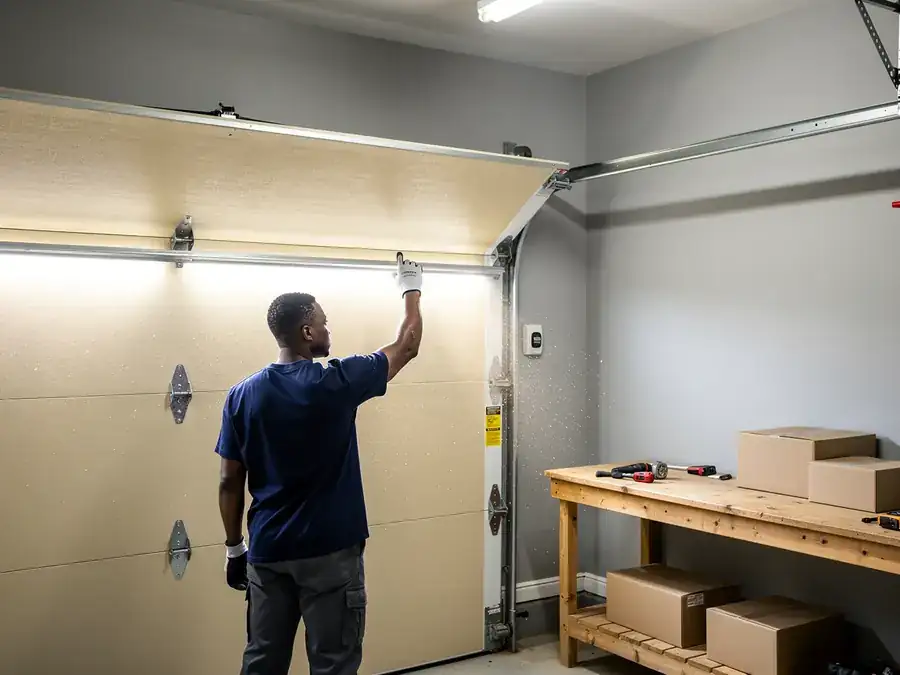
Before you call anyone, open the garage door manually
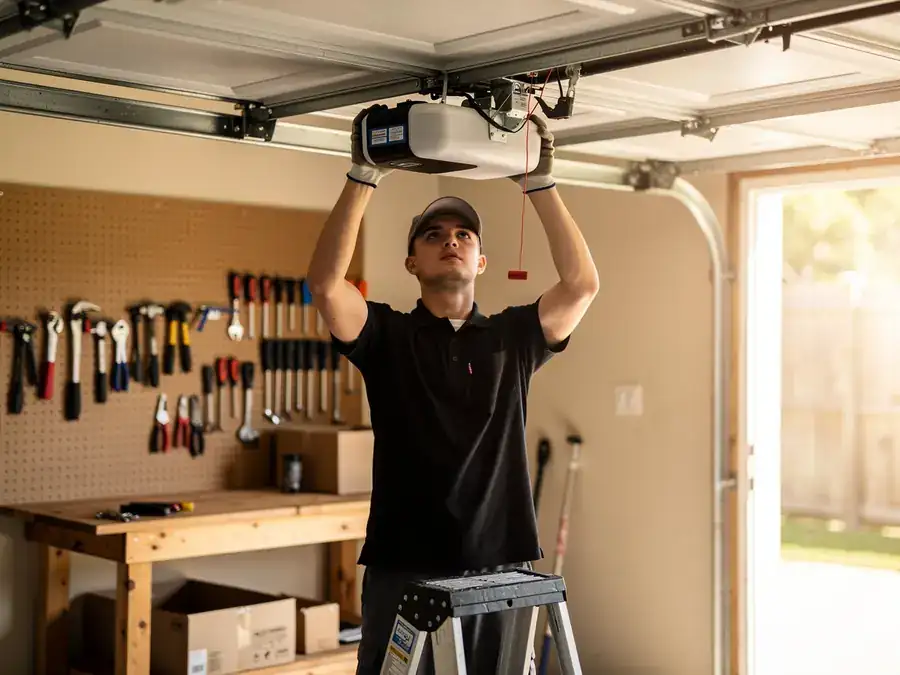
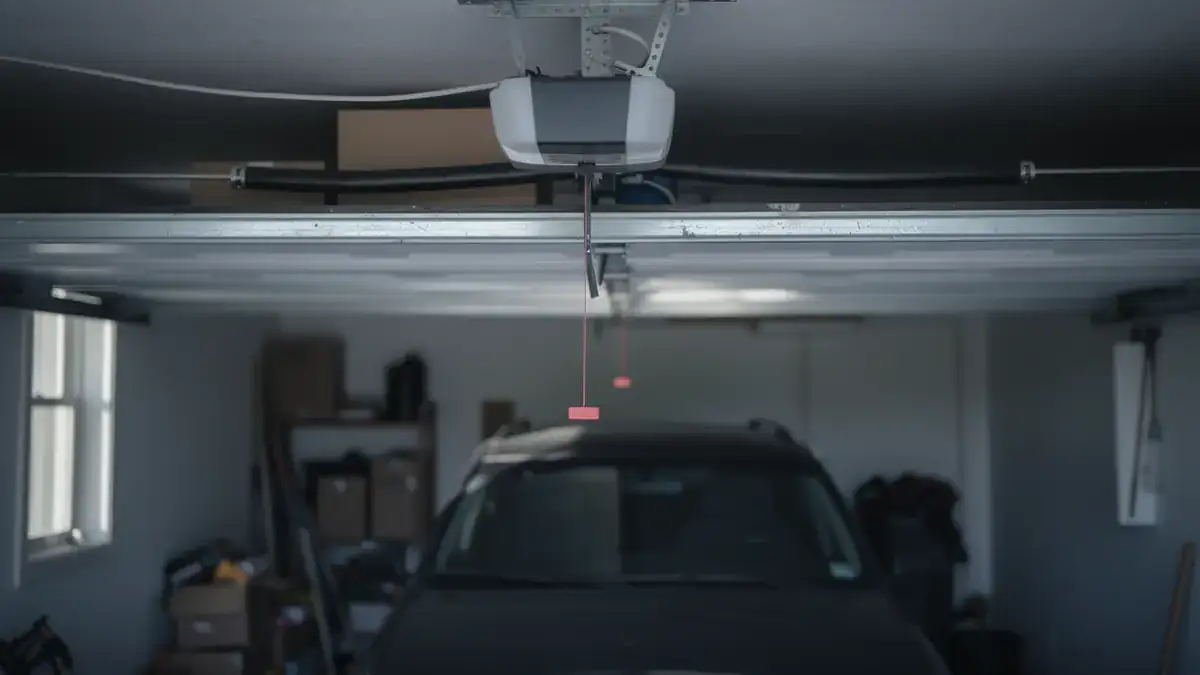
Every opener sold since the mid-1980s has a release cord hanging from the trolley - pull it down and back toward the motor head and the carriage disconnects from the chain or belt, letting you lift the door by hand. If you're in one of the neighborhoods built in the 1979-2006 wave common across this area, your opener is likely original to the house or a direct swap-in replacement, which means the release mechanism is the same style even if the unit's been changed once or twice.
Check the wall switch first
If the light doesn't come on when you press it, the problem is power, not the opener. Check your panel for a tripped breaker. If the opener has a battery backup (common on units installed in the last decade), listen for a beeping pattern, which usually means the battery is holding partial charge and struggling, not dead.
One honest limitation
If the opener motor hums but the door doesn't move, that's very often a stripped gear or a worn drive mechanism, not a wiring issue, and no amount of resetting will fix it. That's a parts call, not a troubleshooting one.
What Is Going On
A chunk of the houses in this part of Henderson, and in the named pockets around were built between 1979 and 2006, with the bulk going up in the 1980s and 90s. That matters for openers specifically because a lot of original units from that era are still in service, either as the primary opener or because a homeowner replaced the motor head but kept the same wiring and wall console.
Older circuit boards don't like heat cycling. They're built with capacitors and relays that degrade faster when they spend years sitting in a garage that regularly tops 110°F in summer, which is standard for this climate band. When the power cuts out, even briefly, an opener with a weakening board sometimes doesn't recover cleanly on its own - it needs a manual reset at the unit, not just power restored.
If your house falls in that 1979-2006 build range, the opener age is worth knowing, because a board failure after a power event on a 30-plus-year-old unit usually means replacement, not repair - parts for boards that old are getting hard to source.
What Local Conditions Do
Henderson sits in a severe heat climate band, and that heat does specific things to opener hardware that milder climates don't see as often. Garage interiors here routinely run hotter than outside air in summer, because the space traps heat with little airflow. Circuit boards, capacitors, and the small motors inside openers are rated for a temperature range, and repeated days above that range shortens their working life - it's cumulative, not a one-time event.
Power cuts compound this. A board that's already running hot and stressed takes a harder hit from a sudden power interruption than one in a cooler environment would. That's part of why opener failures in this area cluster in the hottest stretch of the year rather than spreading evenly across the calendar.
Battery backup units help bridge short outages, but the battery itself degrades faster in a hot garage too, so a backup that worked fine two summers ago may not hold a charge long enough to matter now. If your opener doesn't have battery backup at all, that's worth factoring in if outages are a recurring issue for your street.
The Seasonal Bit
The hardest stretch on openers here lines up with the hottest months, when garages sit at their highest sustained temperatures for weeks at a time
That's when boards that have been slowly degrading tend to finally fail, often right after a brief power cut that an opener in better shape would have shrugged off.
If your opener dates back toward the older end of the 1979-2006 range common in this area, it's worth a look before peak heat hits, not during it
Checking the battery backup (if you have one) and making sure the wall console and sensors are responding normally takes a few minutes and tells you whether you're relying on aging hardware.
We don't push a new opener on anyone whose unit is still running fine
But if yours has already had a board issue once, or it's old enough that you're not sure of its age, a second failure during a summer power cut is a worse time to find out than now.