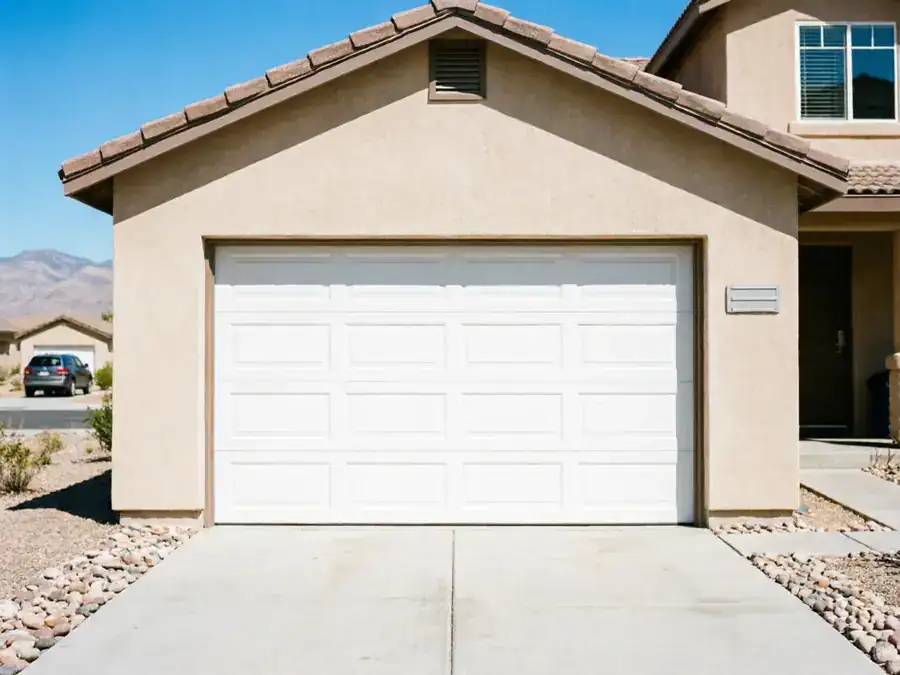
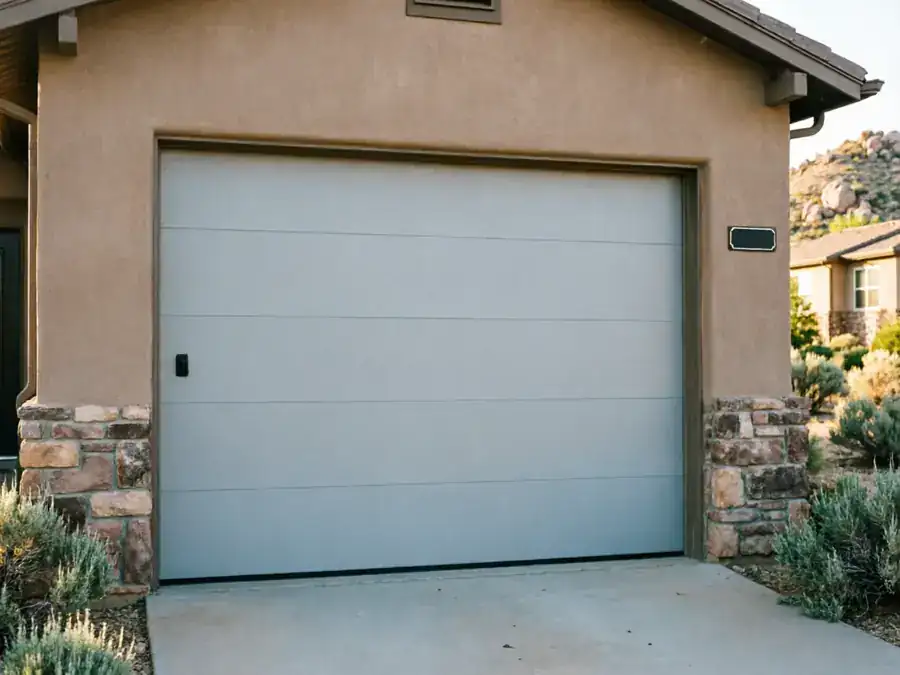
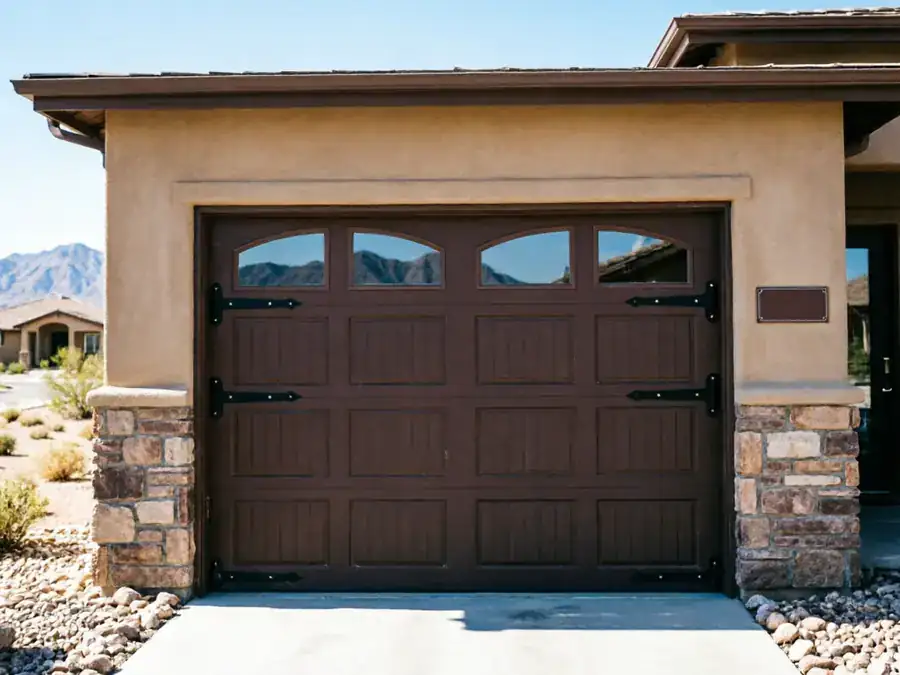
Garage door maintenance built around Henderson's 1980s-2000s housing stock and desert heat - spring tension, lubrication, and opener checks that actually matter here.
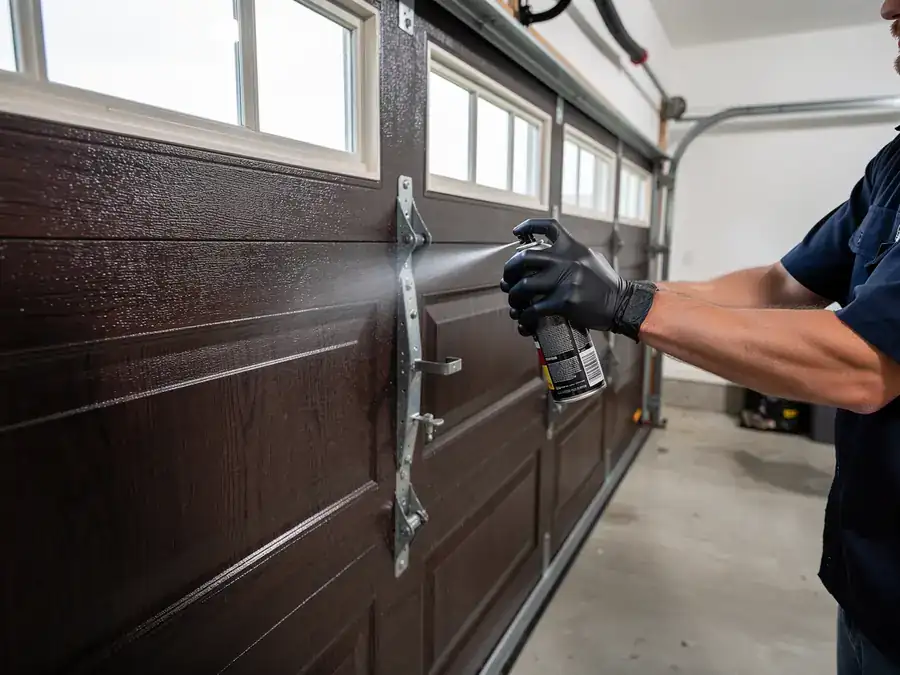
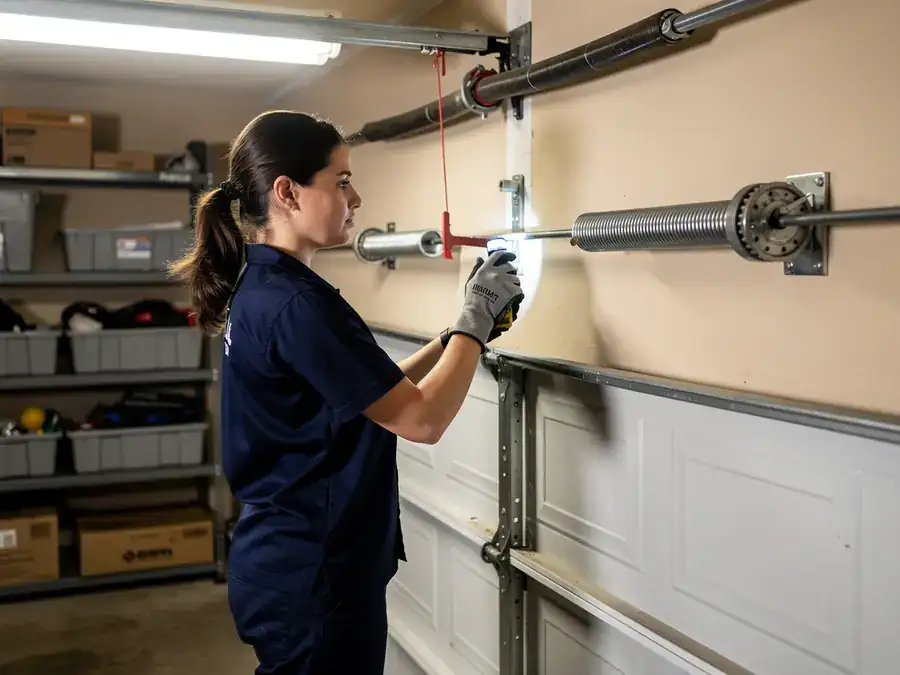
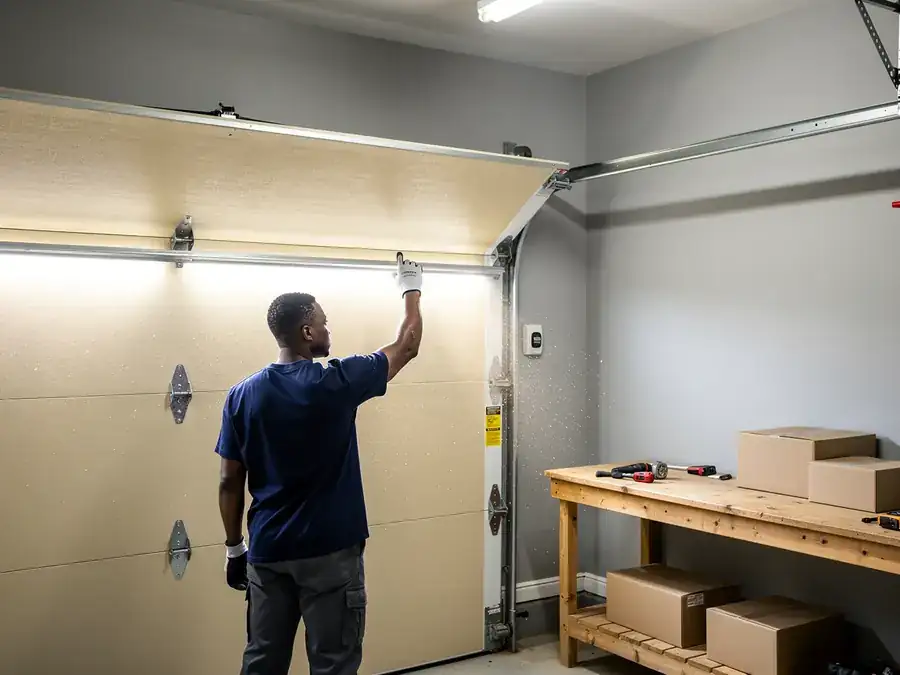
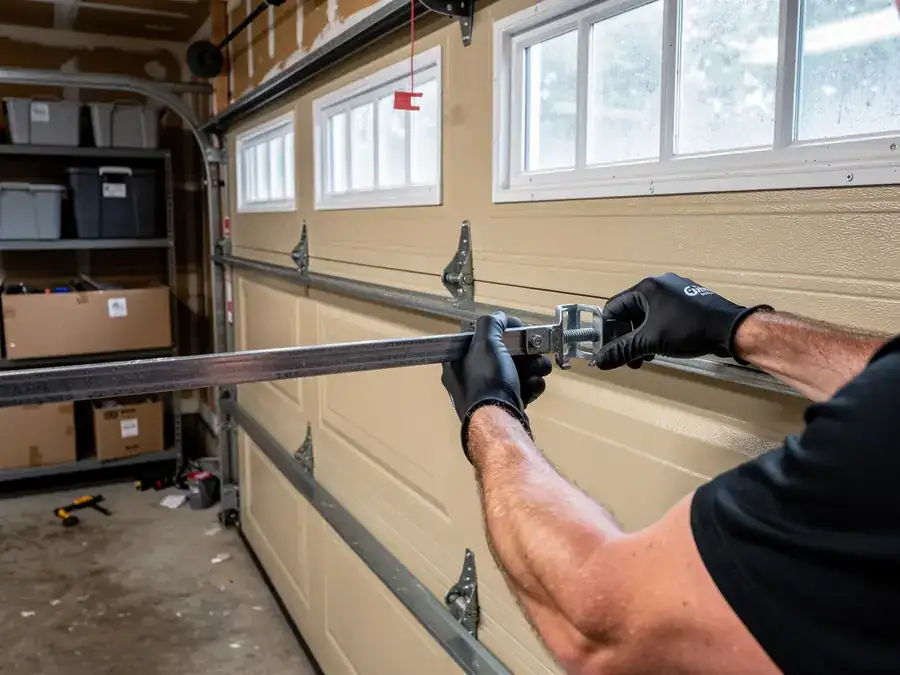
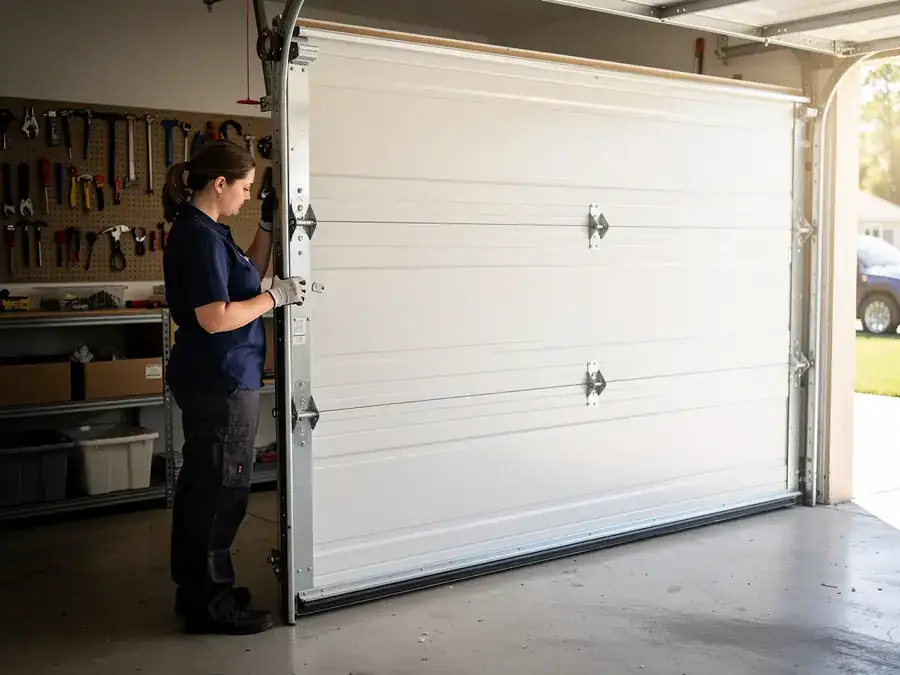
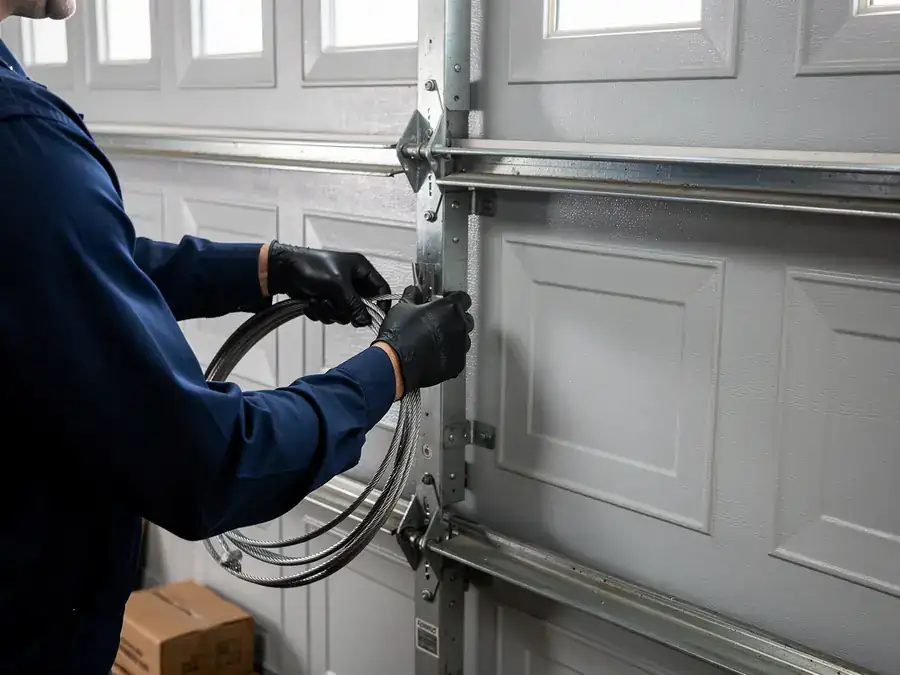
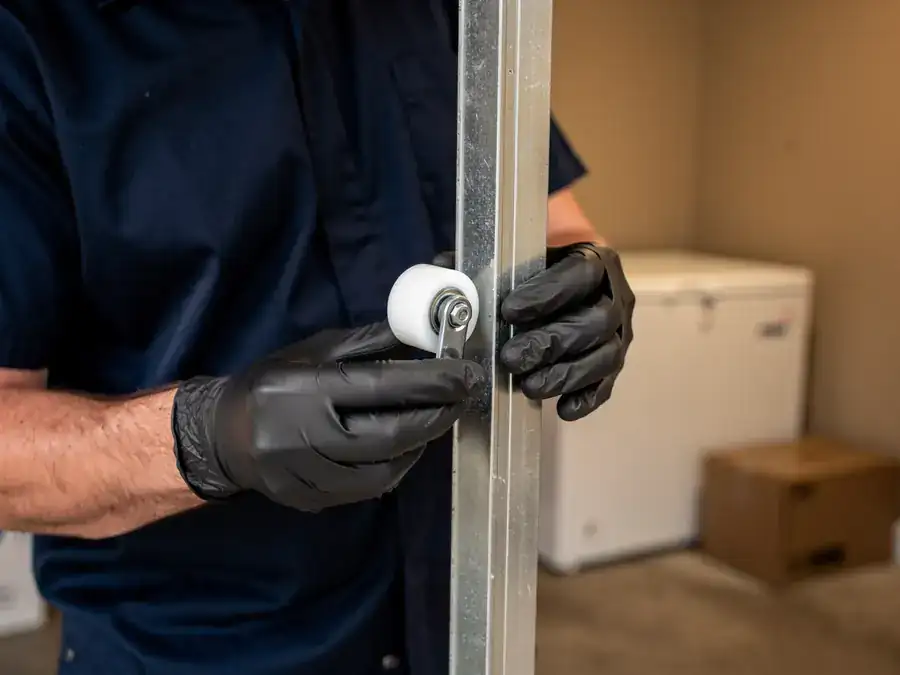
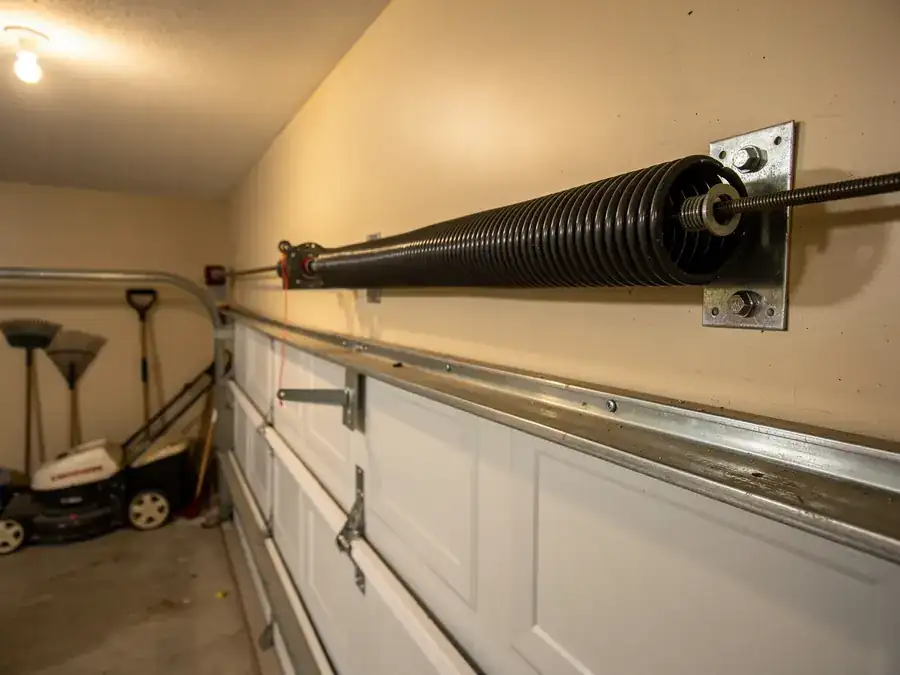
A real maintenance visit covers the whole system, not just a squirt of oil on the track. We check torsion spring tension and winding, inspect cables for fraying at the drum, test the balance by disconnecting the opener and lifting the door by hand, tighten loose hardware on the track and hinges, lubricate rollers and bearings, and check the opener's force and travel limits. On most homes across the Henderson service area, which includes roughly 115,140 owner-occupied houses among 360,017 households, the doors going up for service were installed when the house was built or shortly after. Since the bulk of that housing dates to 1979-2006 with a median build year around 1994, a lot of what we're servicing is original or first-replacement hardware now 20 to 45 years old. That means we're often finding galvanized springs that have lost coating integrity, plastic idler pulleys gone brittle, and opener logic boards from an era before soft-start/soft-stop was standard. None of that shows up as a dramatic failure day one - it shows up as a slow drift toward noise, imbalance, and eventually a snapped cable or spring. A maintenance visit catches that drift before it becomes a Saturday morning emergency.
What You Are Seeing
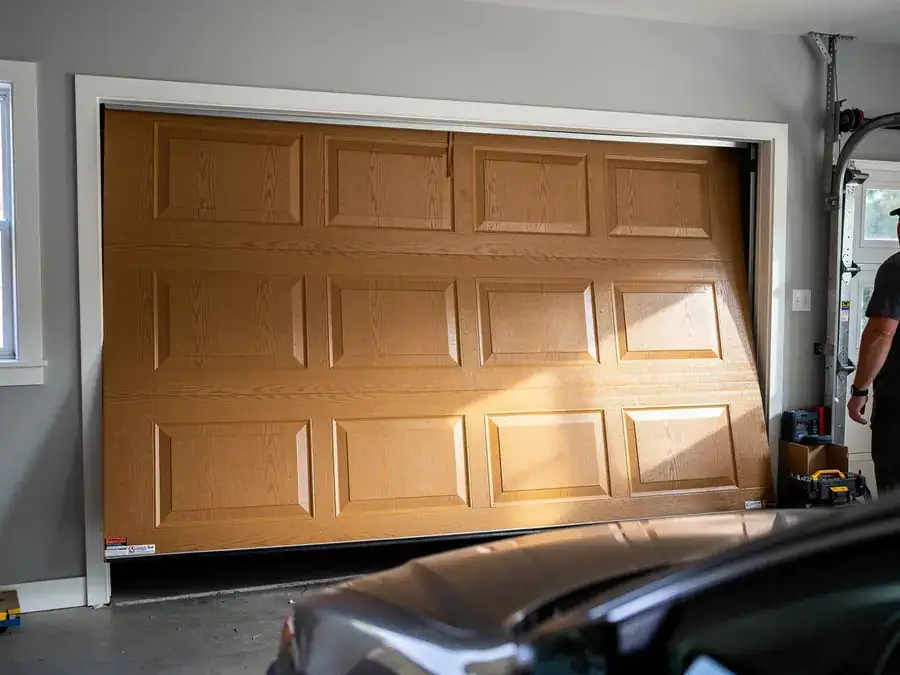
The early signs are almost always small. A door that used to glide now hesitates a few inches up, or the opener strains and you hear a grinding pop from the spring side. Rollers rattle in the track instead of rolling quiet. The door reverses on its own halfway down, or it closes crooked, dropping faster on one side than the other. On a lot of these houses the garage faces west or south, and heat-cycled steel tracks expand and contract enough over a year to loosen the lag bolts holding the track brackets to the jamb - you'll feel that as play when you push on the track by hand. None of these are reasons to panic, but they're reasons to get it looked at, because the gap between 'a little noisy' and 'a cable just let go' is usually a matter of a few months, not years.
The DIY Question
Lubricating hinges and rollers with the right garage-door-rated grease is fine to do yourself, and so is wiping down the tracks and checking that the auto-reverse safety sensors are aligned. What you should not do is touch the torsion spring. A wound spring under tension can do real damage if it lets go while you're working near it, and that's true whether the house is six years old or thirty. Balance testing - disconnecting the opener and lifting the door by hand to see if it holds at waist height - is something most owners can do safely, and it's worth doing twice a year given our heat. If the door doesn't hold, don't keep opening and closing it on the opener; the motor is fighting the spring and that wears out both faster. That's the honest limit of what's DIY here: inspection and light maintenance, yes; spring adjustment and cable work, no.
Why This Fails Locally
The reason maintenance matters more here than it would in a mild, wet climate comes down to heat, not neglect. Henderson sits in a severe heat band, and steel springs, nylon rollers, and the grease inside bearings all degrade faster under sustained high temperatures than the manufacturer's rated lifespan assumes - that lifespan is usually tested for a moderate climate, not ours. Combine that with a housing stock concentrated in the 1980s and 90s and a median build year of 1994, and you get a large share of doors running original hardware well past the point where heat-accelerated wear has eaten into the spring's cycle life. We see this across the areas we cover - from in close, and the Whitney/Paradise corridor - the pattern repeats because the housing age and the climate are the same across all of it. A door that would still be fine at year 20 in a cooler state is often due for spring replacement here well before that.
How it works
From “it’s stuck” to “it’s fixed”
01
Tell us what’s wrong
Describe the symptom - won’t open, loud bang, opener runs but the door won’t move.
02
On-site diagnosis
A technician tests the door under power and by hand and finds what actually failed.
03
Clear, up-front plan
You get the fix that’s needed and what drives the cost - before any work starts.
04
Repaired & tested
The repair is done, the door is set true and tested, and the work area left clean.
Not sure which repair your door needs in Henderson, NV? Describe what it’s doing - every job starts with a diagnosis.
Straight answers about garage door repair in Henderson. Still unsure? Ask us directly.
How often should I get garage door maintenance in Henderson?
Twice a year is a reasonable baseline given our heat, with a balance check yourself every few months in between. Springs and bearings here work harder year-round than in milder climates, so stretching maintenance to once every two or three years often means catching a problem after it's already caused a cable or spring failure.
Why does my door sound louder in summer?
Heat makes steel tracks and springs expand slightly and lubricant thin out, so looseness and dry-running parts become more audible in peak summer months. It's usually not a new problem, just an existing one - loose hardware, dry rollers - made more obvious by the temperature.
Is my original garage door opener from the 1990s safe to keep using?
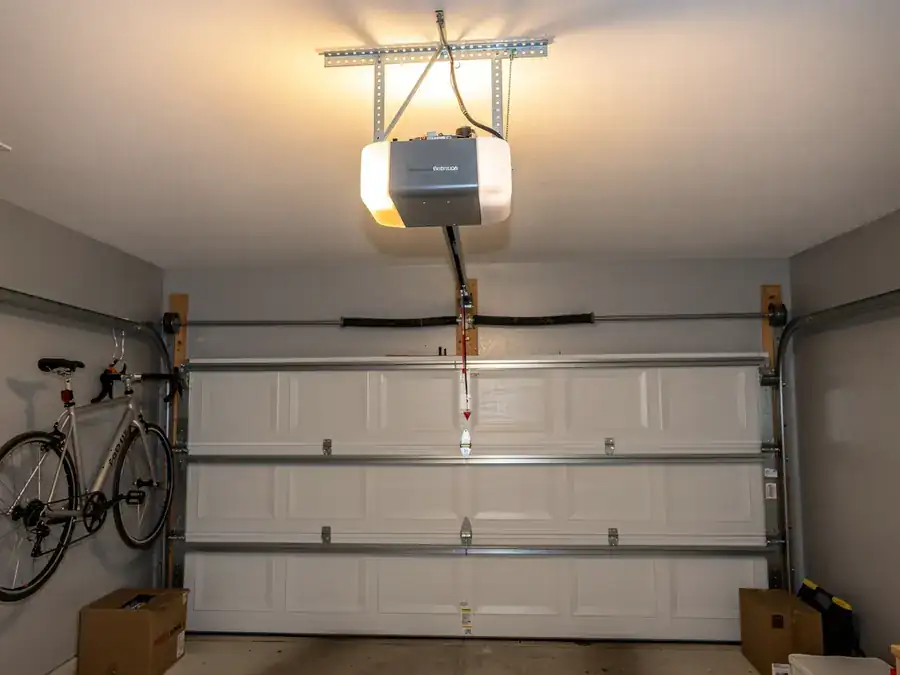
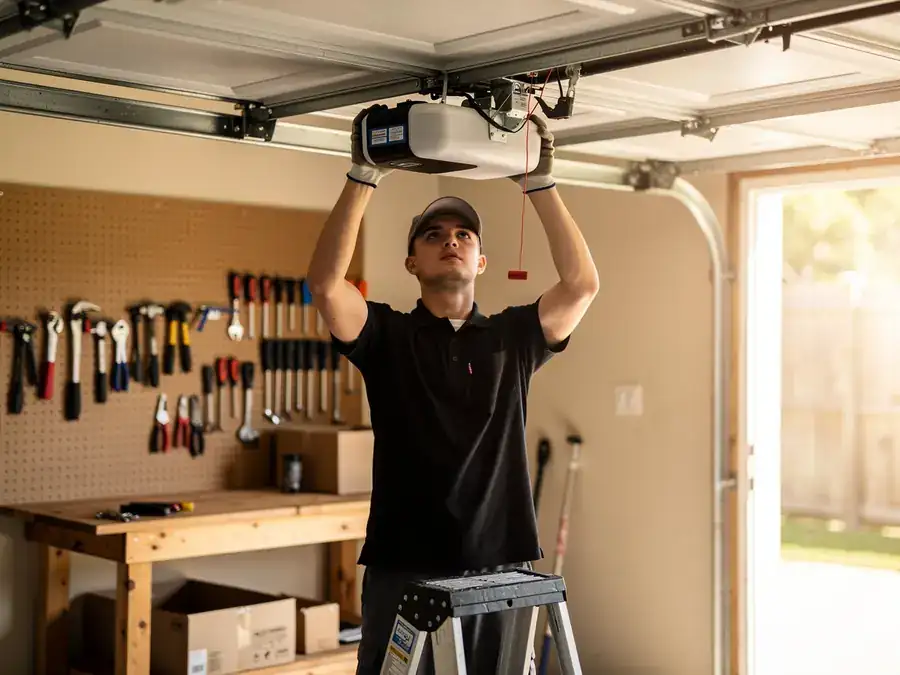
It depends on condition, not just age. If it still has working auto-reverse safety sensors and isn't straining or reversing unpredictably, it can keep going, but a lot of homes with 1990s-era openers are due for the force and travel limits to be rechecked, since worn components change how much force the motor applies.