What the Fix Involves
Most calls we take in Henderson break down into three jobs
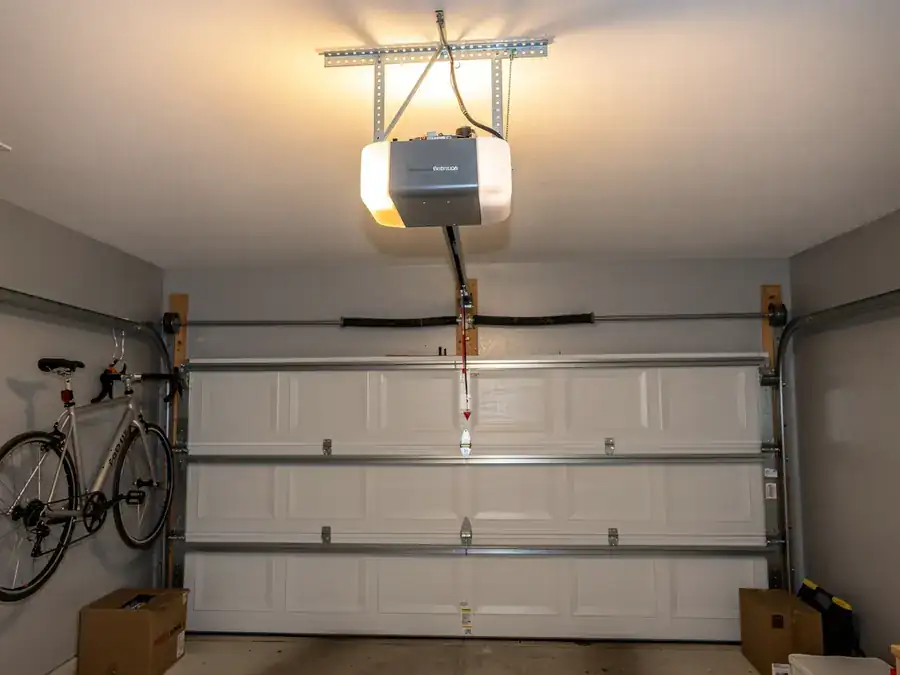
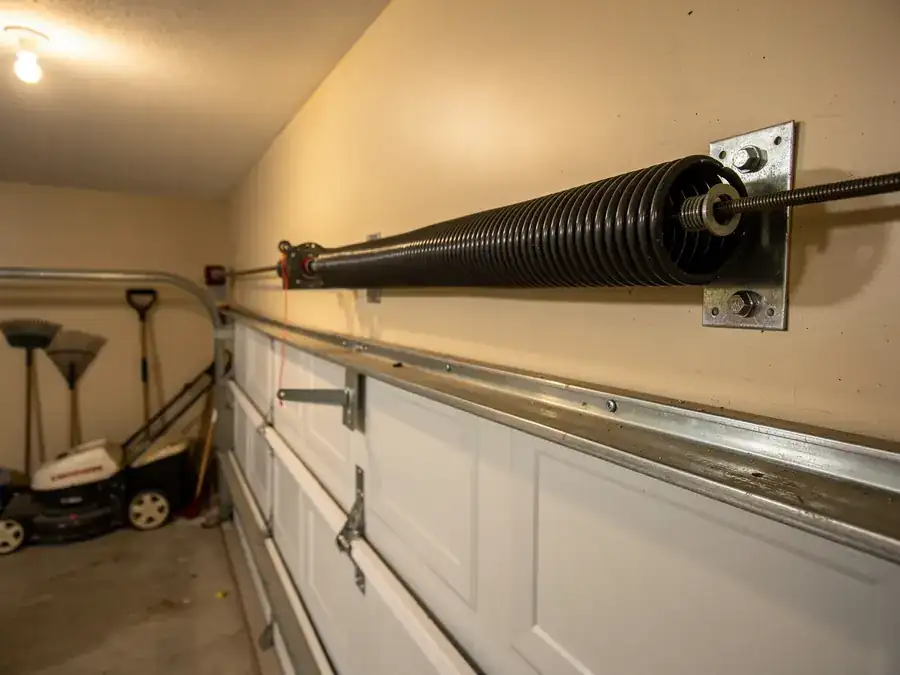
A broken or weakening torsion spring, a failing opener (motor, gears, or the logic board), or a track that's bent enough to bind the rollers. Homes across Henderson's service area went up mostly between 1979 and 2006, with a median build year of 1994, so a lot of the original torsion springs and openers are now 25 to 45 years old. That matters because a torsion spring is rated for a set number of cycles, not years, and a door opened twice a day for three decades has used up its hardware long before the paint looks tired.
- 45 years
The fix itself is mechanical, not mysterious
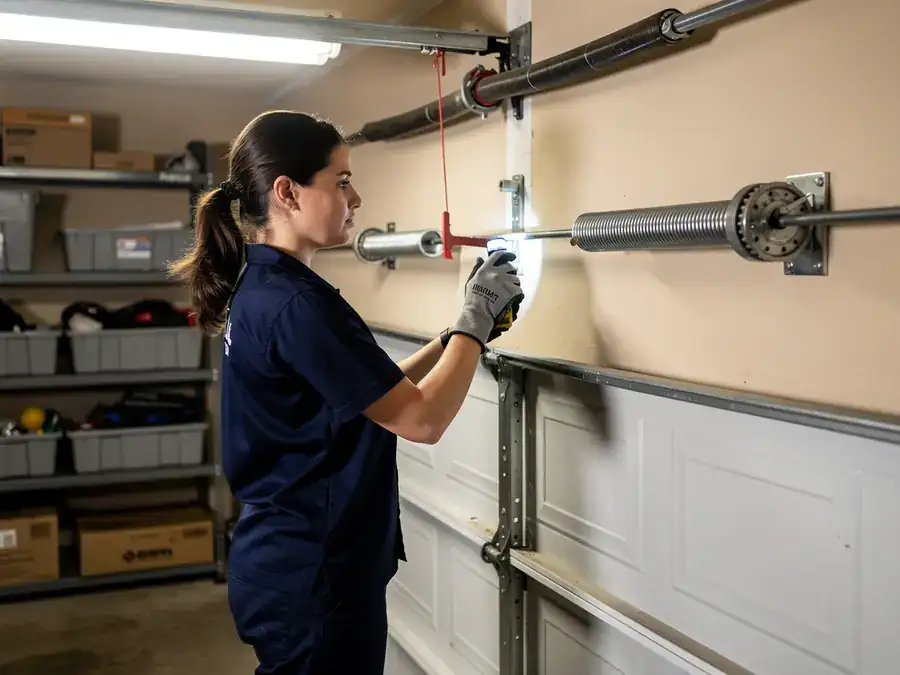
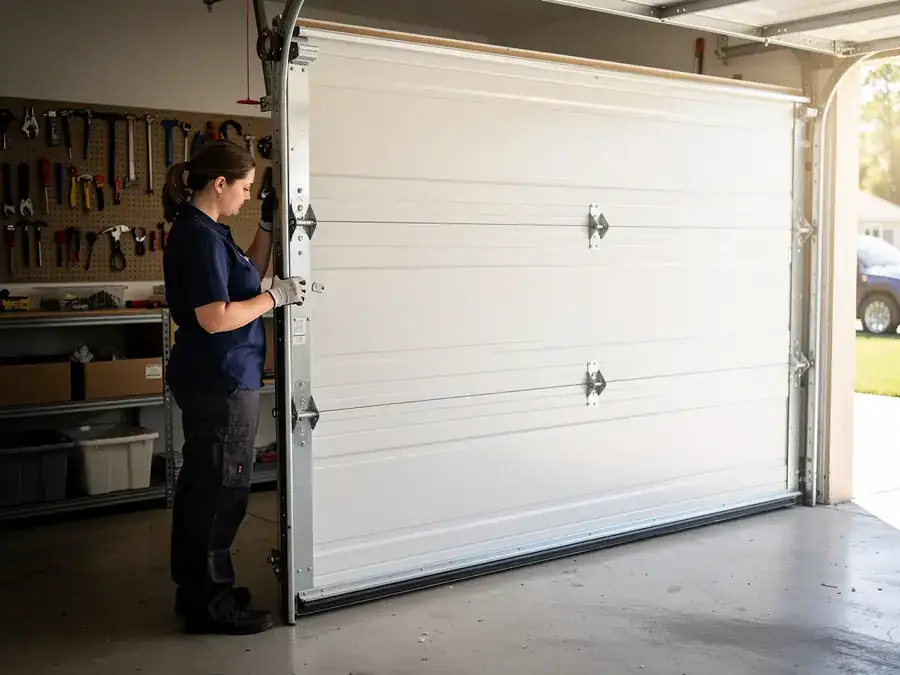
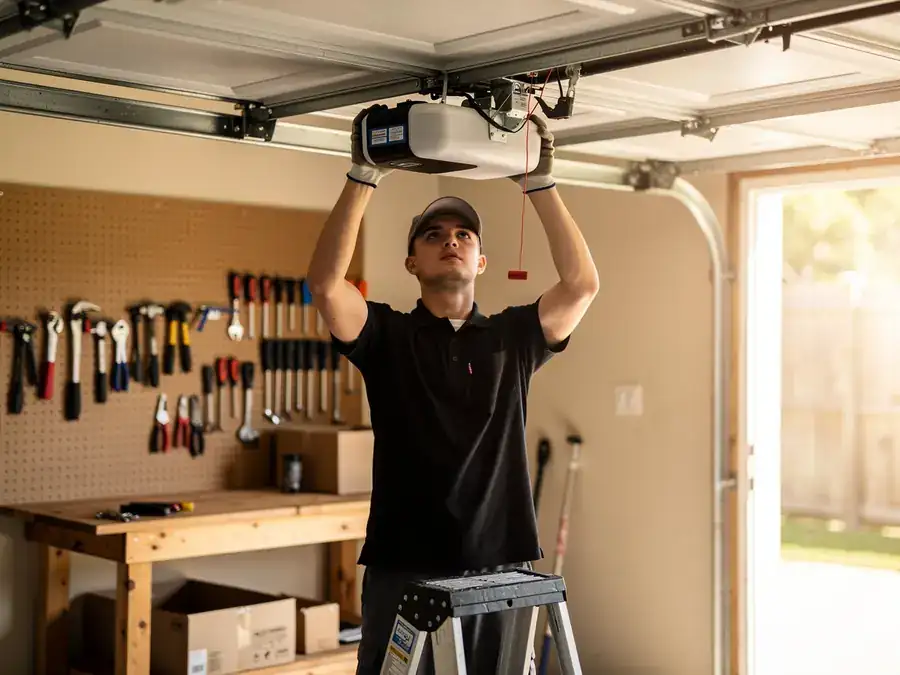
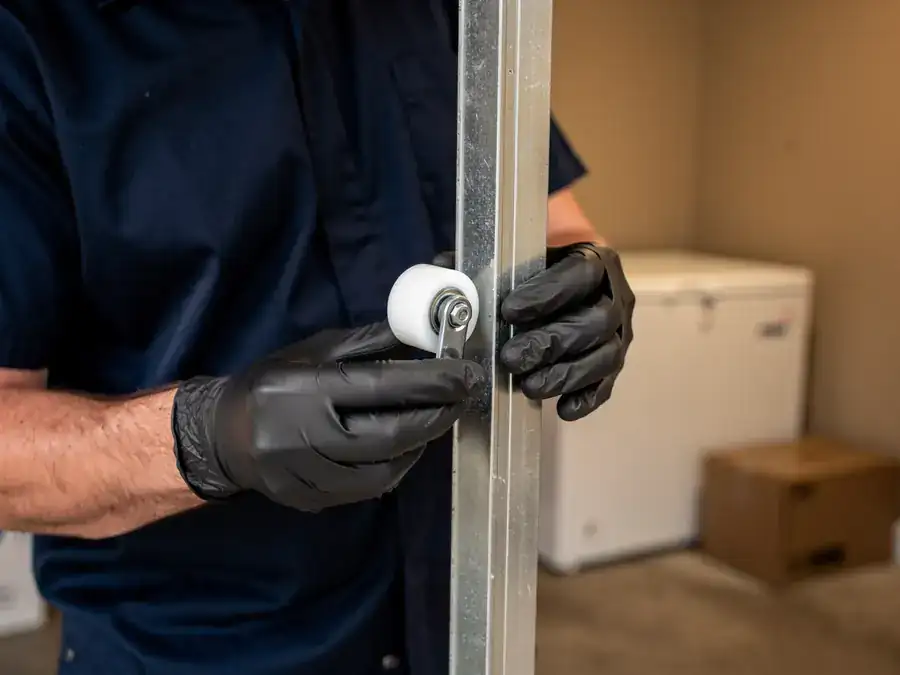
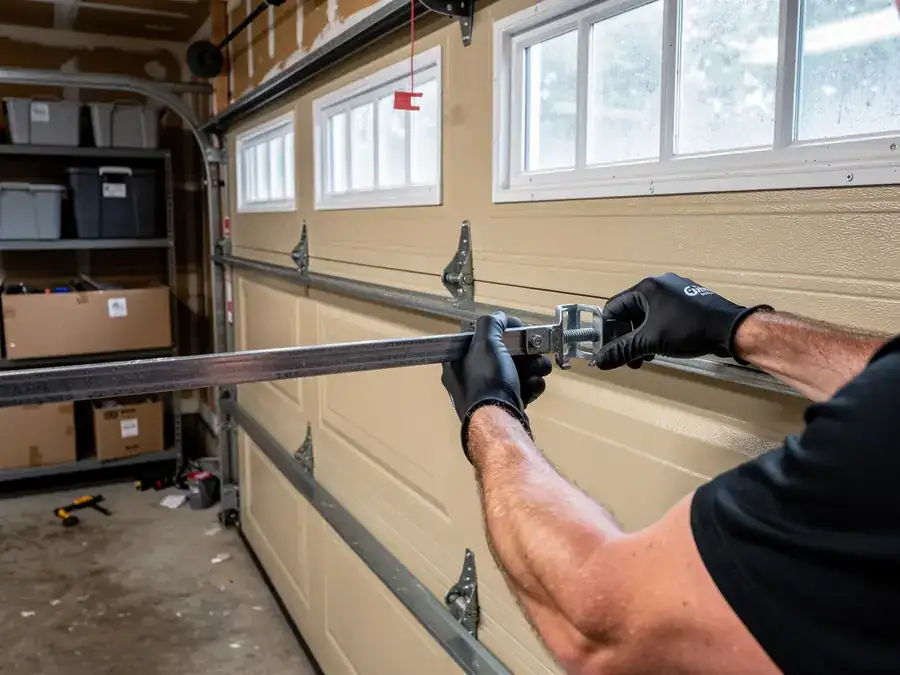
We pull the old spring off the shaft, match wire gauge and wind to the door's weight, and set the winding cones to the right turns for that size door. On openers, we check whether it's the motor, the drive gear, or the board before replacing anything - swapping a whole unit when it's a $20 gear is a waste of a homeowner's money. Track work is usually a matter of unbending or replacing a section and re-squaring it against the jamb so the rollers stop grinding.
We don't do cosmetic panel painting or custom door builds here
This page is strictly about getting a stuck, noisy, or broken door moving right again.
What You Are Seeing
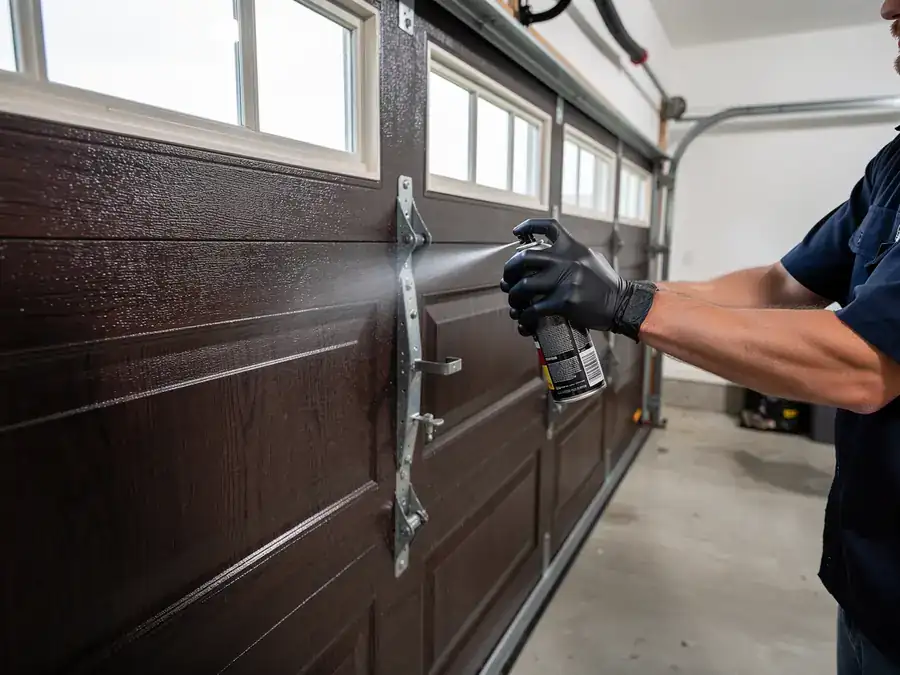
The door that won't open past six inches, stays open with a loud bang when it finally does, or reverses itself halfway down a close cycle - these are spring and opener symptoms, and they show up a lot here. Henderson's severe heat band puts real stress on galvanized torsion springs and nylon gears, and summers here push lubricant to break down faster than it would in a milder climate. Dry grease turns to a gummy residue on the torsion bar, the spring binds slightly on every cycle, and metal fatigue speeds up.
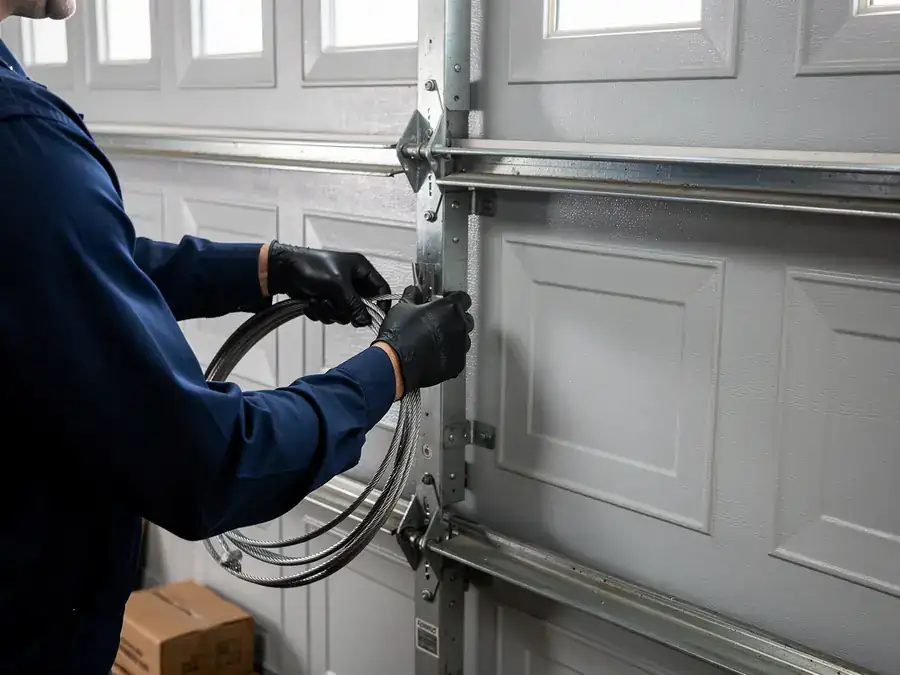
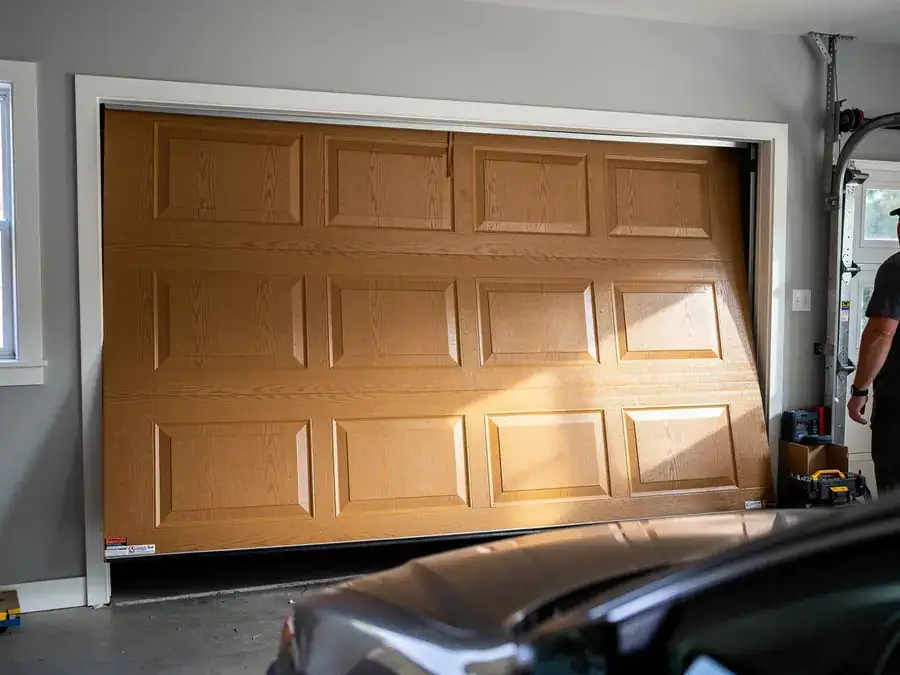
You might also notice the door is heavier to lift by hand than it used to be, or the opener motor strains and hums without moving the door at all - that's a dead or badly unbalanced spring doing the work the opener can't make up for. A door that drifts open on its own after you close it, or one side that sags lower than the other, usually points to cable or roller wear rather than the spring itself, especially on the older galvanized track common in homes from the late '80s and '90s.
A grinding or popping sound during travel is almost always a roller or hinge, not the spring - worth knowing before you assume the worst and brace for the bigger bill.
The DIY Question
A torsion spring under tension can break a hand or worse if you loosen the wrong bolt - this isn't a project for a Saturday with a socket set. Opener boards and gear kits are a different story; those are reasonable to swap yourself if you're comfortable with a screwdriver and a multimeter, and plenty of homeowners do it.
Here's the honest limit on our side: if your opener is more than about 15 years old and the logic board has failed, we'll often tell you a new opener costs less than hunting down a discontinued board, and we'll say so instead of charging you for the search. We also won't pretend a bent track is a quick fix if the jamb itself has shifted - sometimes that's a framing issue, and we'll tell you to get that looked at separately rather than keep adjusting a track that will just bend again.
If you do want to try the opener side yourself, test the safety reversal sensors before you call it done. A door that doesn't reverse when something's under it isn't finished, no matter how smooth it looks.
Why This Fails Locally
Henderson's service area runs about 115,140 owner-occupied houses out of 360,017 households
And most of those houses were built in that same 1979-to-2006 stretch, with the bulk clustered in 1980s and '90s construction across areas like a mile west a mile north four miles out. That means a lot of garages built on similar plans, with similar door sizes and the same generation of torsion hardware, aging out at roughly the same time.
- 115,140 owner-occupied
- 360,017 households
Pair that with a severe heat climate and you get a specific failure pattern
Springs here don't just wear out from cycles, they wear out faster because heat degrades the lubricant and accelerates metal fatigue in a way milder climates don't produce. A spring rated for 10,000 cycles in a temperate market doesn't always make it that far here.
A household here earns a median of $66,312
Which is part of why we price straightforward spring jobs to be done right the first time rather than sell a full opener swap nobody asked for. The repair that makes sense in Henderson is usually the one matched to what the heat has already done to the hardware, not a generic fix pulled from a different climate.