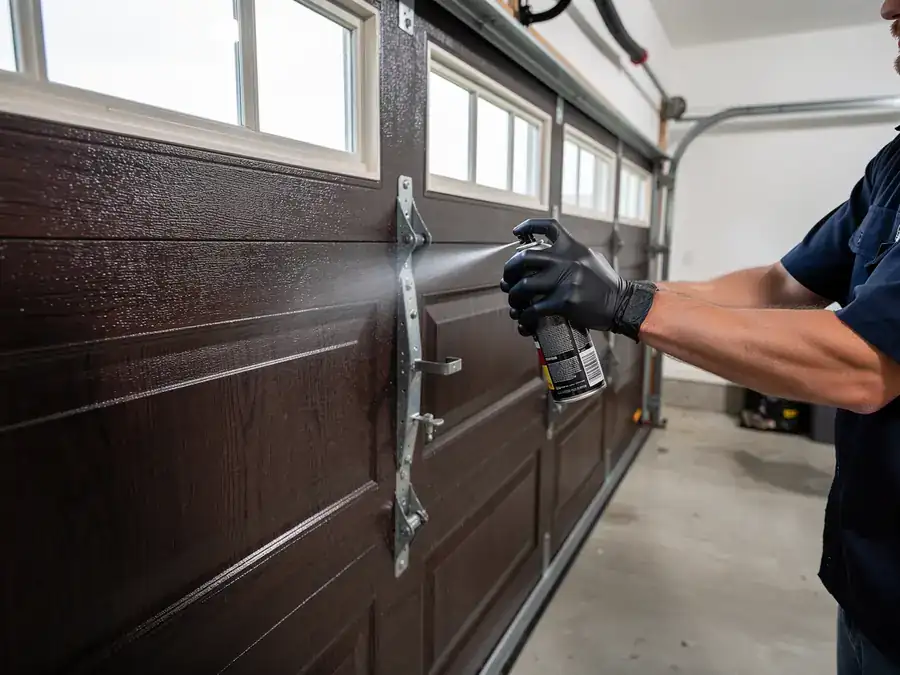
What the Fix Involves
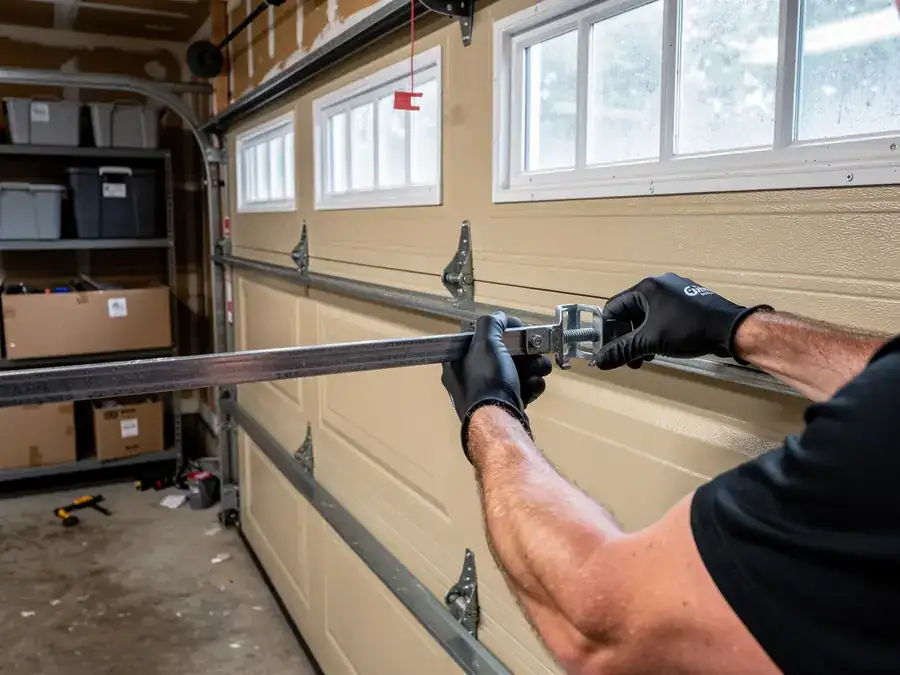
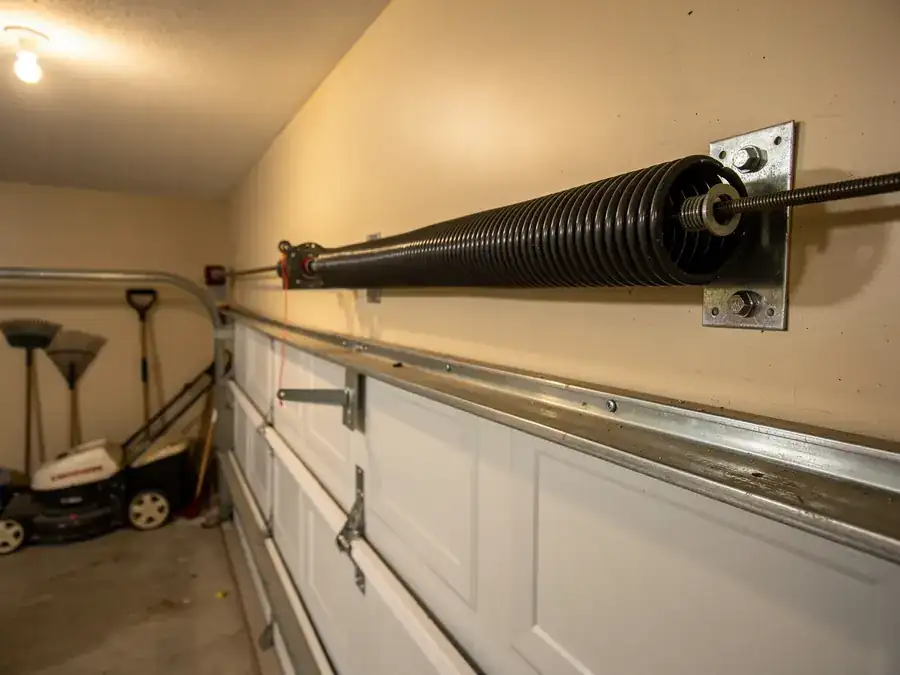
A roller replacement job starts with the track disconnected from tension
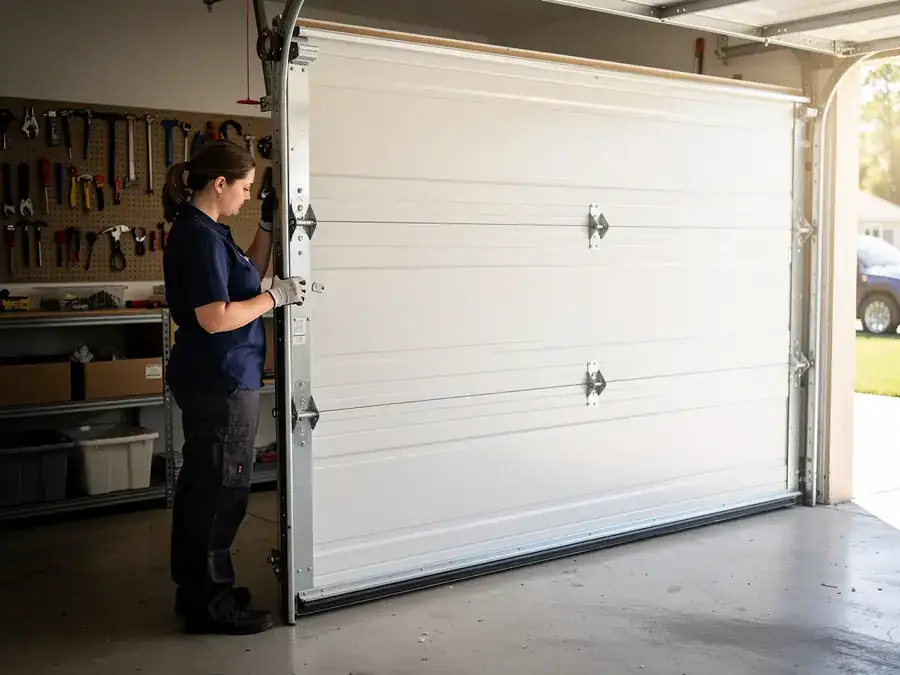
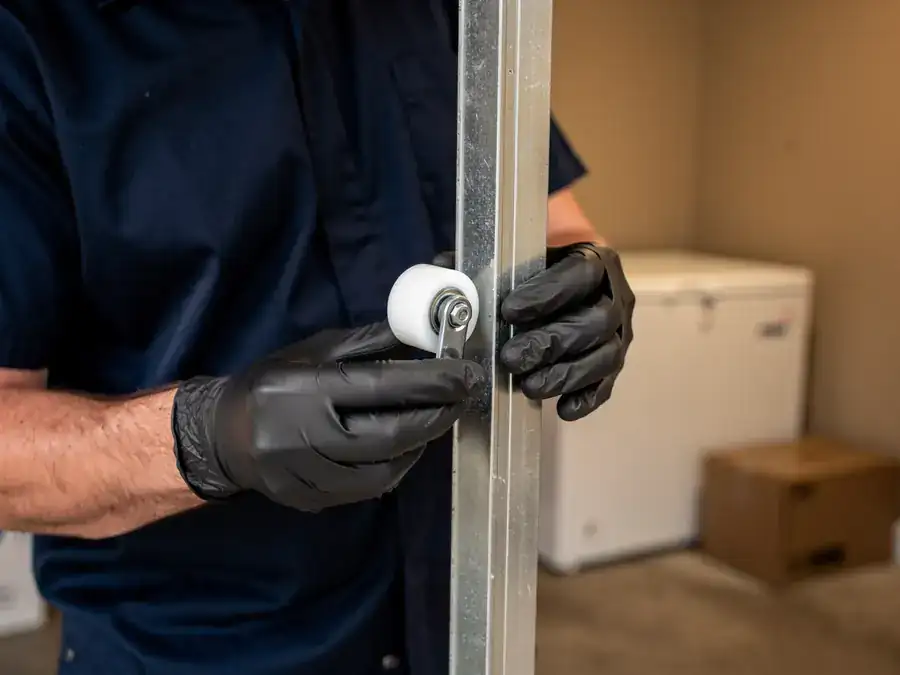
The door either blocked in the down position or the spring released, so nothing drops on your hand. Each roller gets pulled from its hinge or end bracket one at a time, so the door stays supported on the remaining rollers and track while you work. On a standard double door that's ten rollers, sometimes twelve depending on the track length and panel count.
We swap worn rollers for sealed-bearing steel or nylon units, matched to the stem length and track gauge already on the door - that part varies more than people expect once you're dealing with doors installed across three different decades
Bent or pitted sections of track get checked at the same time, because a fresh roller in a track that's already out of plumb just wears again inside a year. The hinges and rollers nearest the bottom panel usually take the most load and go first, so those come off first for inspection.
We don't replace a full roller set if only two or three show wear
We'll tell you if a partial swap makes sense instead. If the track itself is bent beyond a light adjustment, that's a separate repair, not something a new roller fixes.
What You Are Seeing
The early sign is noise: a grinding or clicking as the door travels, loudest right as it starts moving. That's a roller losing its bearing surface, not the opener or the spring. If the door seems to catch or jerk at the same spot every time, that's usually one specific roller binding against a rough patch in the track rather than a uniform problem.
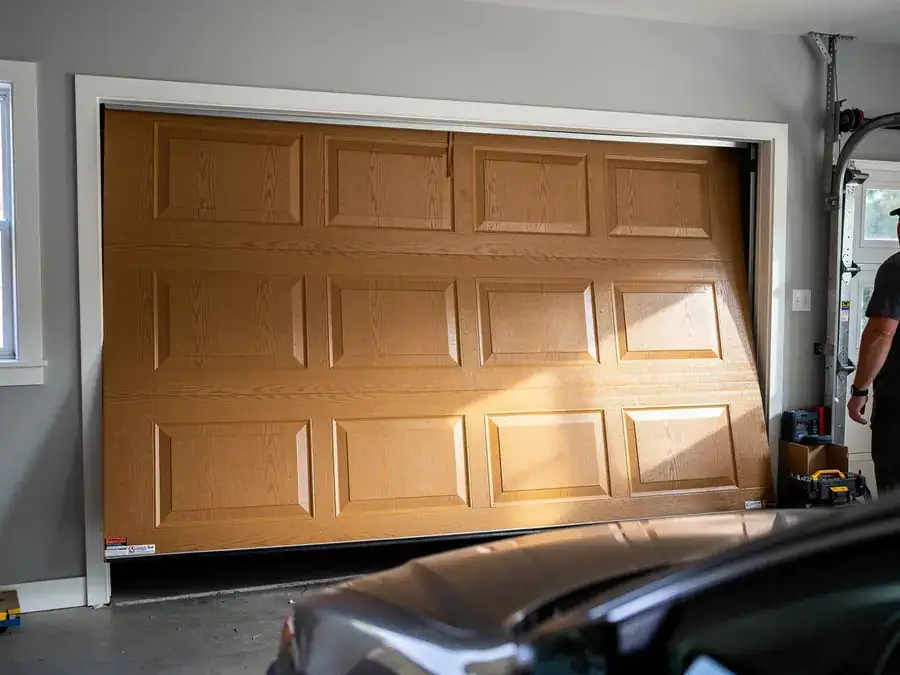
Flaking white or gray residue near the track, or a roller stem that wiggles loose in its bracket, both point the same direction. Nylon rollers crack and chip with age and don't always make noise before they fail outright - you might just see the door sag unevenly on one side. Steel rollers tend to announce themselves with sound well before they quit.
If the door won't move at all, that's more likely a spring or cable problem than a roller issue, since a door can usually limp along on bad rollers for a while before it stops moving entirely.
The DIY Question
Swapping a roller or two on a door that's properly disconnected from its spring tension is within reach for someone comfortable with basic tools - it's not the same risk as spring work. The part that trips people up is the lift cable and track alignment: pull the wrong roller while the door is resting on the track wrong, and a panel can drop or the track can pull loose from the wall bracket.
Matching the roller stem length and bearing type to what's already installed also matters more than it looks like it should. Mismatched stem length changes how the door sits in the track, which can turn a quiet fix into a new squeak within weeks.
If you're down to one or two noisy rollers and you know how to block the door safely, it's a reasonable weekend job. If more than a few rollers look worn, or the track shows rust or bends, that's when a full inspection pays for itself - you're not just buying rollers, you're buying someone checking the rest of the system while it's apart.
Why This Fails Locally
Most of the houses across this part of the valley
Henderson and the surrounding areas we work, from out to Paradise - were built between 1979 and 2006, with the bulk of that stock going up through the 1980s and 90s. That matters for rollers because a lot of those original doors are still running their first-generation steel rollers, now three or four decades old, well past any reasonable service life.
Heat is the other half of it
Summers here push well past what most roller bearings and nylon wheel compounds are rated for over the long run, and a garage that sits closed all day turns into a heat trap that's hotter than the outside air. Nylon rollers get brittle and crack faster under that kind of repeated heat cycling than they would in a milder climate, and the grease in steel ball-bearing rollers breaks down faster too, which is why grinding and binding show up here years before they would somewhere cooler.
The combination - original hardware from a decades-old build plus a climate that's hard on bearings and nylon
Is why roller wear is one of the most common calls we get across the service area, not a rare failure.