The DIY Question
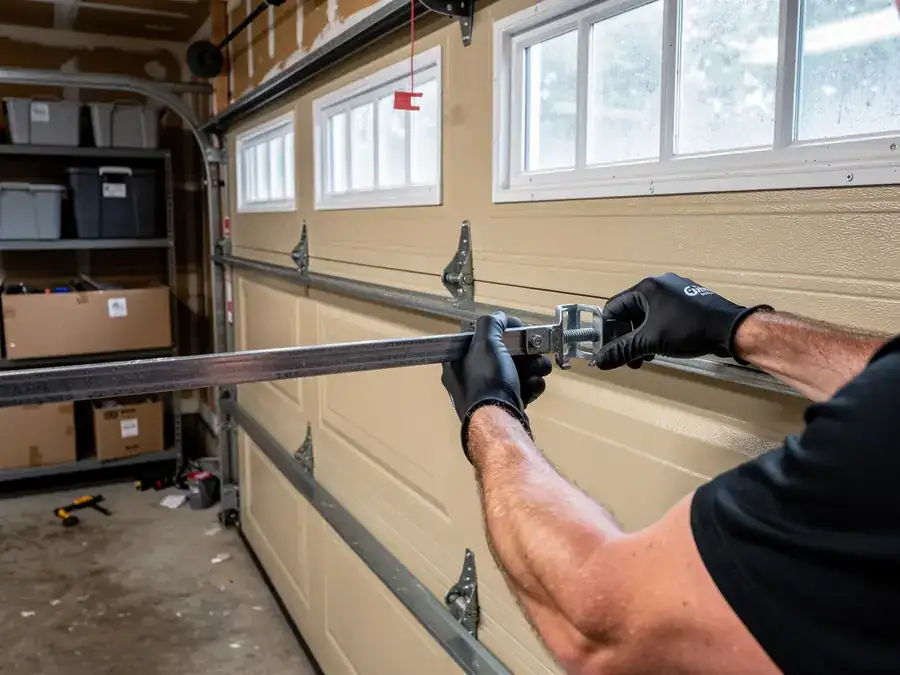
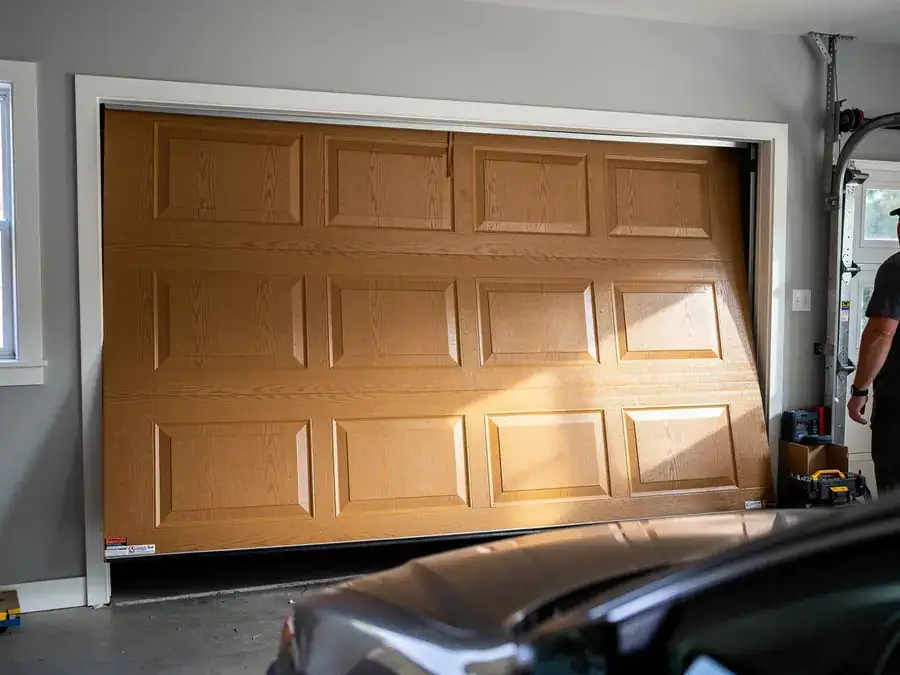
Rollers look like a bolt-on part, and on a side-mounted bracket with the door down and the spring unloaded, swapping one roller really is within reach for a careful homeowner. The job gets riskier fast once you're dealing with the rollers nearest the bottom bracket, where the cable and a wound spring are both under load even with the door closed.\n\nThe bigger issue in homes built around 1991 is track wear. A roller that's worn enough to need replacing has often been grinding a groove into the track for months, and a new roller dropped into a worn track will bind again within weeks. Before you buy a roller kit, run the door by hand (power off) and watch whether it binds at the same spot every time. If it does, the fix isn't just the roller, it's the track, and that's a two-person job we'd rather quote in person than have you discover halfway through a Saturday.
Booking a Visit
We run out of Henderson, and Sunrise Manor is about 12 miles out, one of the farther stops in the area we cover. We don't keep a branch or a drop box in Sunrise Manor itself, so every visit starts with a truck coming from Henderson rather than a crew already nearby. That doesn't change what we can fix once we're on site, but it does mean we schedule the visit rather than claim a same-day window we can't back up from this distance.\n\nWhen you call, tell us the door's age if you know it (most here are 1990s builds) and whether the noise is a grinding sound at a specific spot on the track or a general rattle the whole run. That alone usually tells us if we're bringing roller stock or planning for a track replacement too, which keeps the visit from turning into a second trip. You can see the rest of what we cover in the area on our Sunrise Manor page, and the full roller-replacement rundown for Henderson itself sits on its own page if you want the broader version.
What the Fix Involves
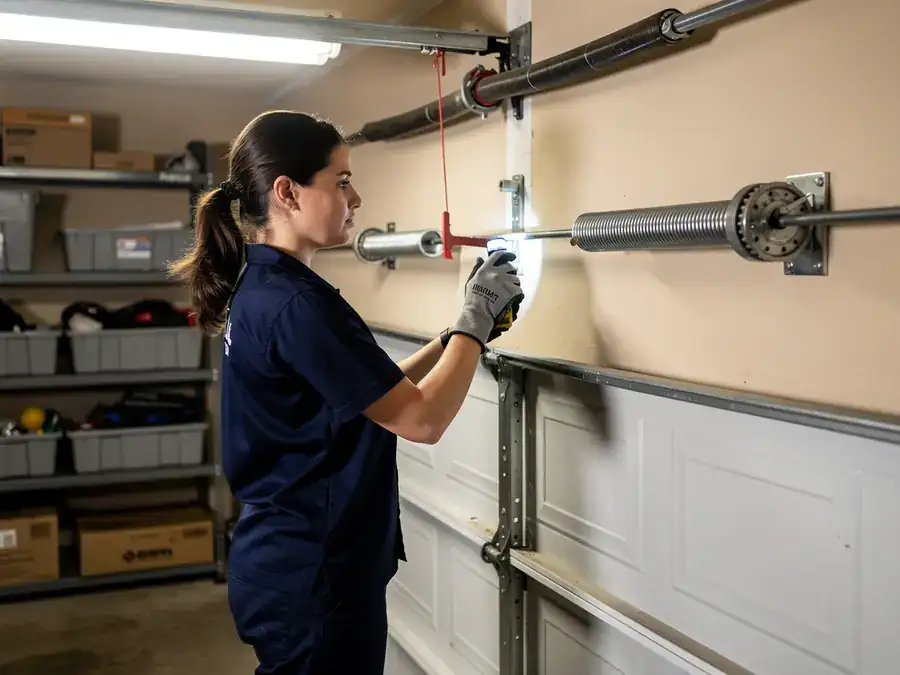
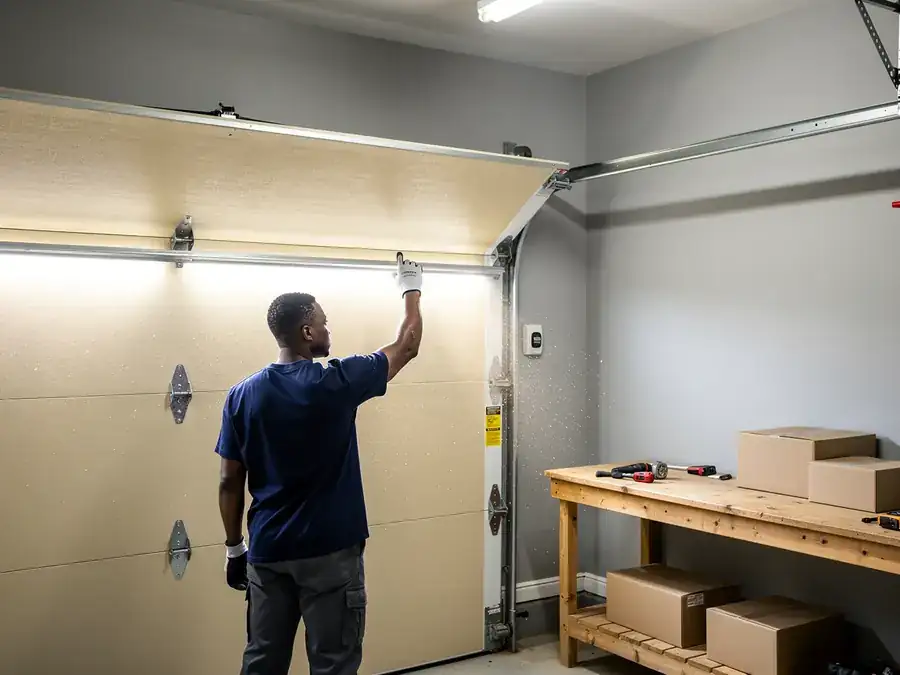
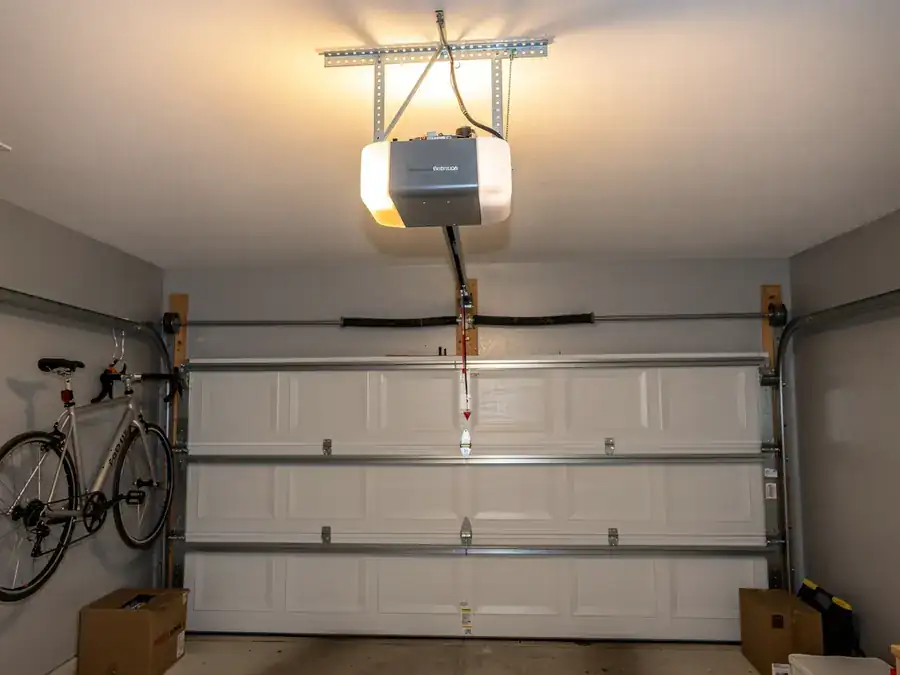
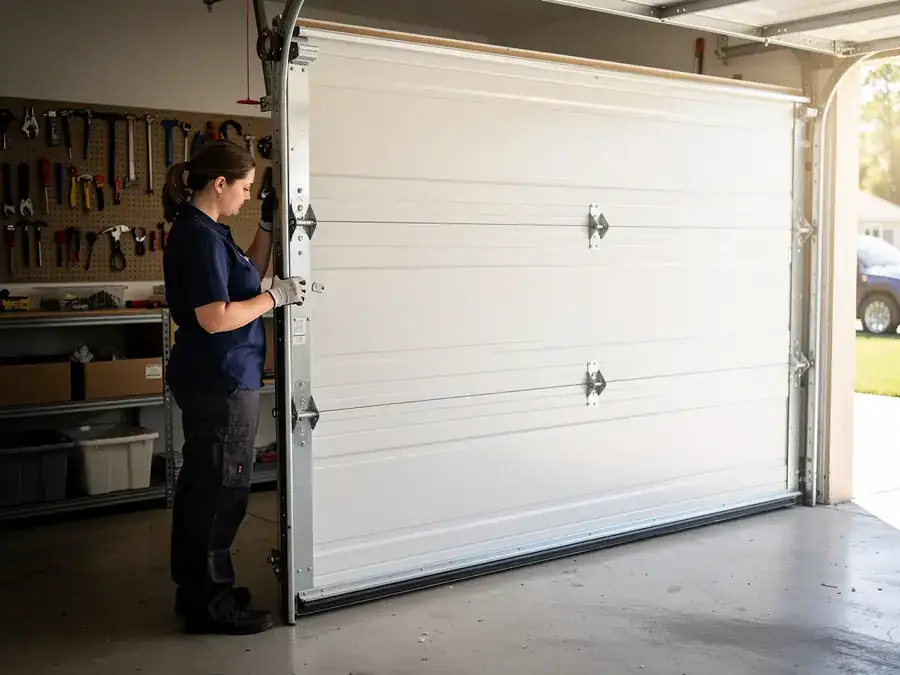
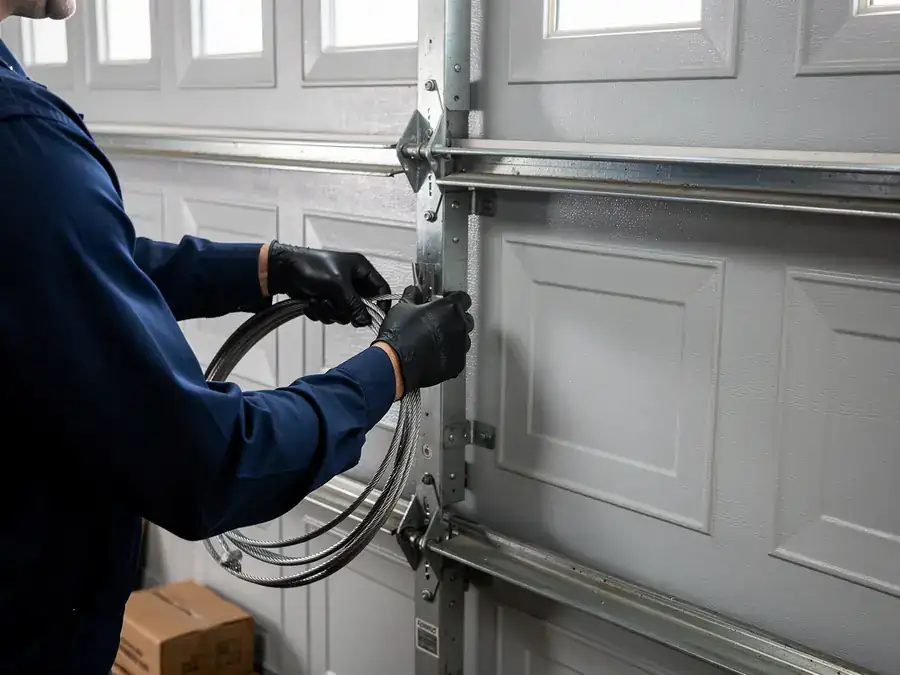
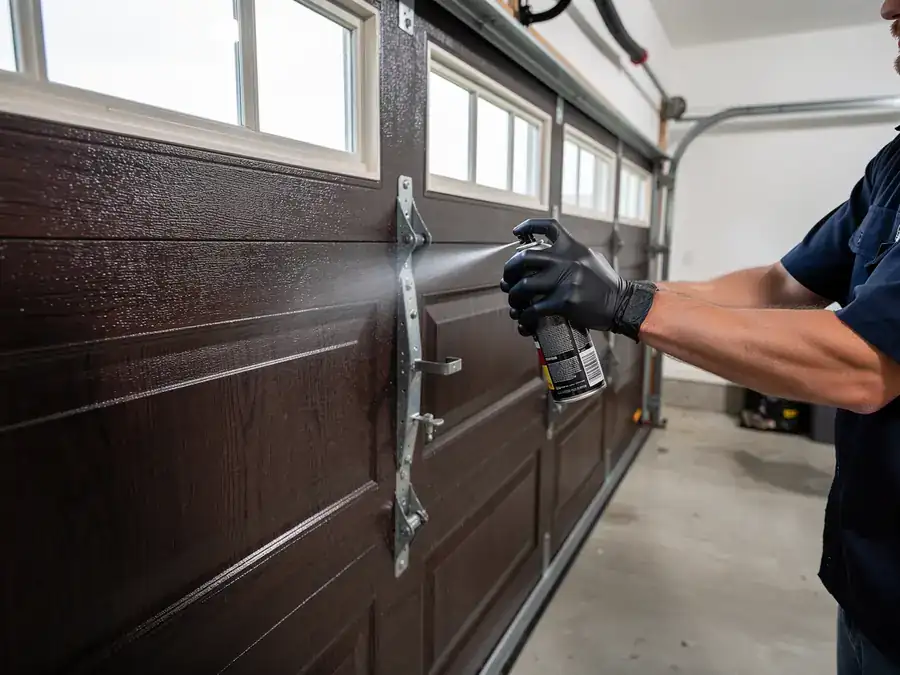
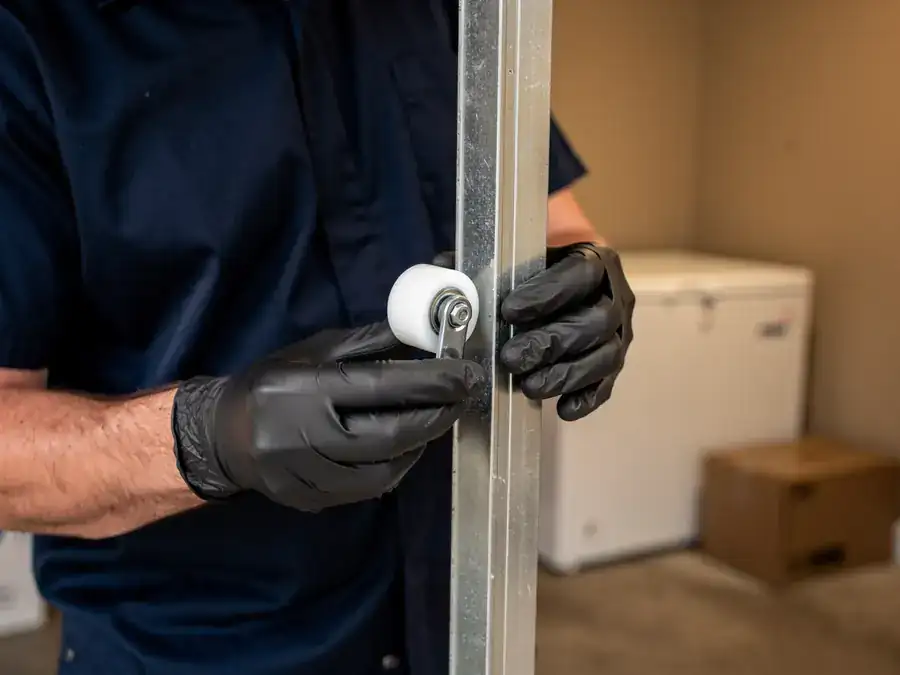
The visit starts with the door up, so we can run it by hand and watch each roller track through its bracket. On a 1991-era double door, that's usually 10 rollers across two tracks, and we're checking for flat spots, cracked nylon, or steel rollers that have gone dry and start squealing under load.\n\nSwapping a roller means pulling the bracket, sliding the old roller stem free of the track, and setting the new one in with the stem seated square so it doesn't bind. On rollers near the bottom bracket, we release tension on that section of cable first rather than working around it loaded. Once every roller's in, we run the door through a full open-close cycle a few times and recheck for drag, since a roller that looks fine on the bench can still catch if the track has a slight twist in it. If we find that twist, that's the point where we talk about the track itself rather than just the roller.