Why This Fails Locally
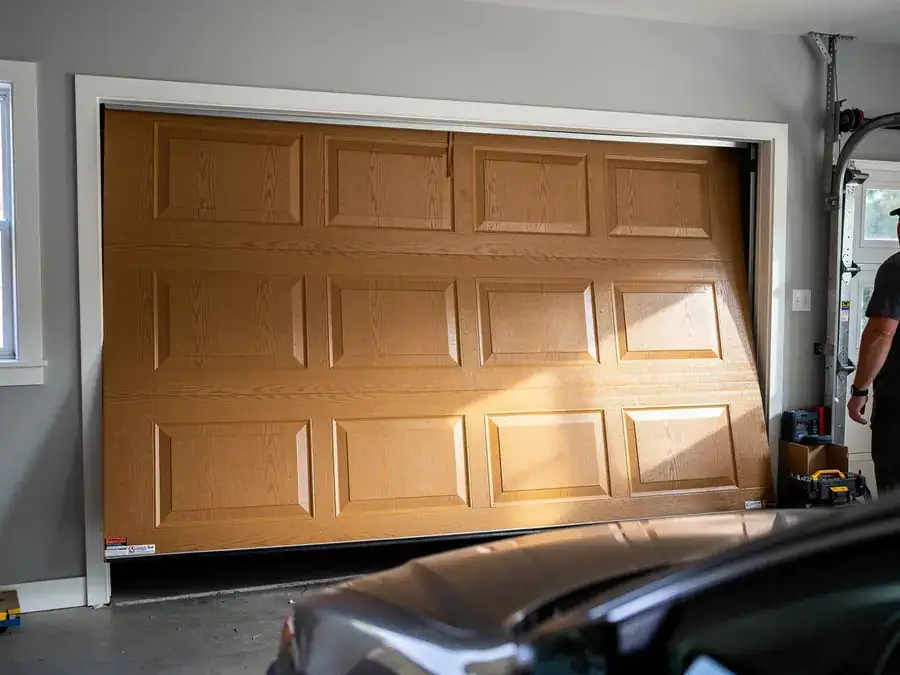
The fault we see most in Boulder City isn't a broken spring
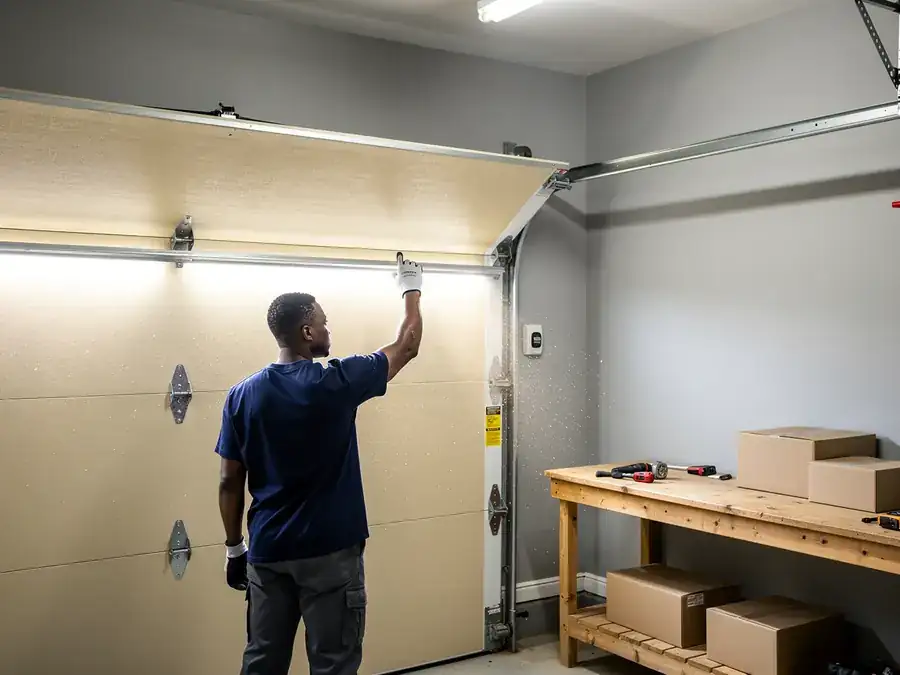
It's a door that was never sized right for the opening in the first place. A lot of these houses have single-rail track built for a 7-foot door, and when an owner upgrades to a taller or insulated panel without swapping the track and header bracket to match, the door binds, the opener strains, and the whole system wears out early.
That's a build-year problem
Median year built out here runs around 1981, close to a decade older than the 1994 median across the broader service area this company covers. Doors from that era were sized to older lumber-frame rough openings and lighter steel gauges. When a new door goes in without updating the jamb seal, the track width, or the spring cycle rating to match current double-car dimensions, you get a door that looks new but fights the opener from day one.
The DIY Question
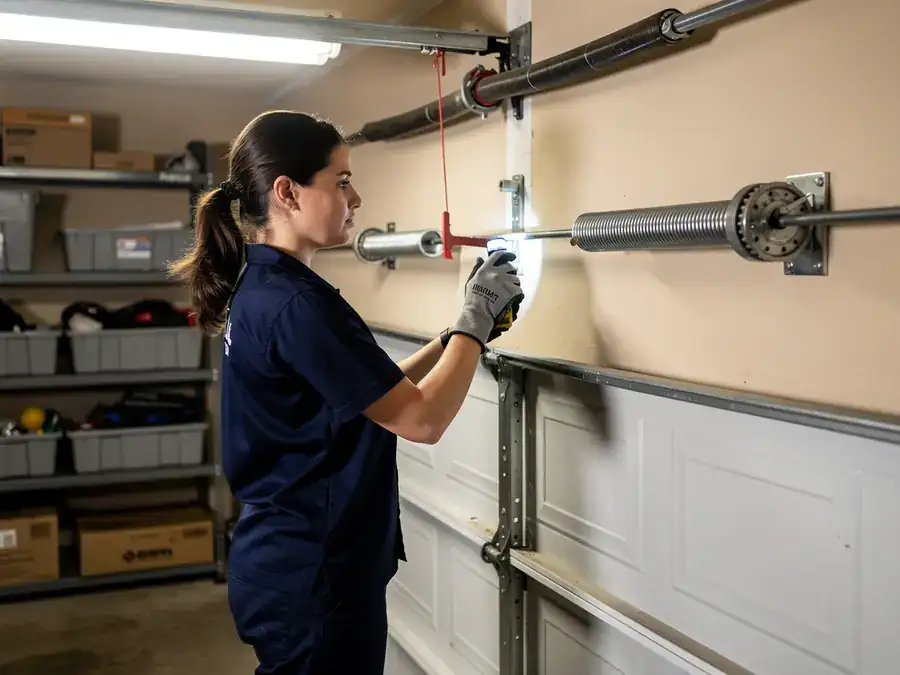
Swapping a panel yourself is one thing. Setting a new door - track, springs, cable drums, opener bracket - on a 1981-era frame is another, because the rough opening often isn't square anymore and the header may need reinforcing before a heavier insulated door goes up. Get the spring cycle count wrong on an 8-foot double door and you're looking at a cable snap within a year, not a slow fail you can catch early.
We're honest that some of this is within reach for a handy homeowner - weatherstripping, a replacement remote, even a single torsion spring swap if you've done it before. A full door-and-track installation on an older frame isn't a weekend job we'd recommend doing solo, mainly because misjudging spring tension on a double door is a genuine injury risk, not just a comeback call.
What It Costs
Boulder City's median household income sits at $69,145, a bit above the $66,312 median across the wider service area this company covers from Henderson. That gap shows up in what people choose here - more owners asking about insulated steel or composite doors instead of the base single-layer panel, and more requests for quieter belt-drive openers over the older chain-drive units still common on 1980s-built garages.
We won't quote a number here without seeing the opening, the current track condition, and whether the header needs work - pricing depends on door size, insulation level, and whether the existing frame is reusable. What we can say is that houses from this era frequently need a track or bracket upgrade alongside the door itself, which is a line item people don't expect going in.
What You Are Seeing
If your door is original to a 1981-built house, you're likely running a single-layer steel panel on a narrow track, paired with an opener that's been replaced once or twice already while the door and hardware stayed put
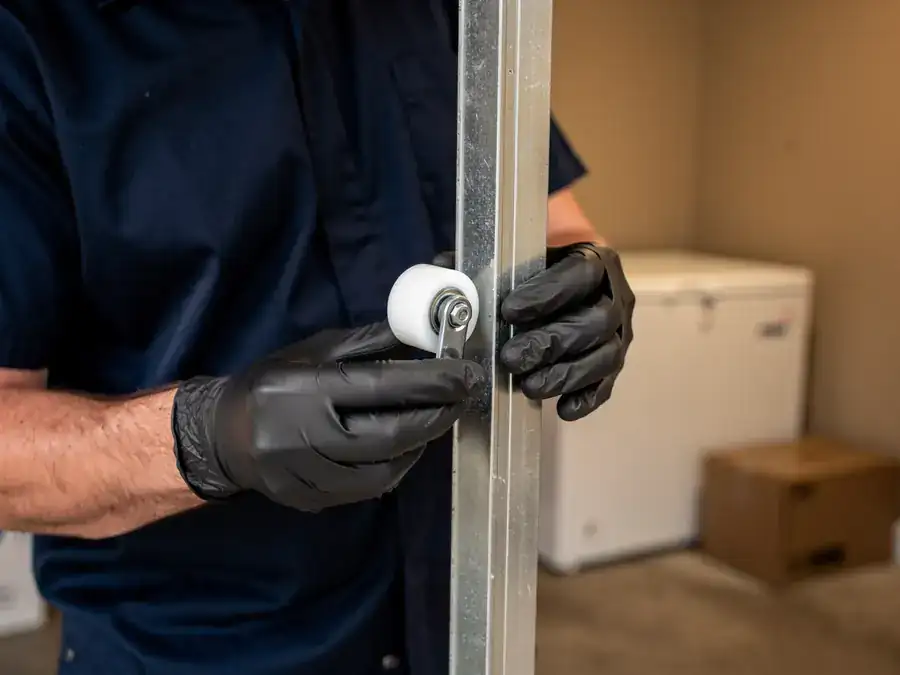
Watch for a door that sags in the middle when raised halfway, rollers that have gone from round to oval, or a track that's been bent and re-bent at the same spot near the bottom bracket.
Another pattern specific to older Boulder City stock
Steel doors from this period weren't built with the insulation layer that makes sense given how hard summer heat hits this area. An uninsulated door on an attached garage means that wall runs hot most of the year, which is worth factoring in if you're replacing the door anyway rather than just patching it.
Stocked Parts
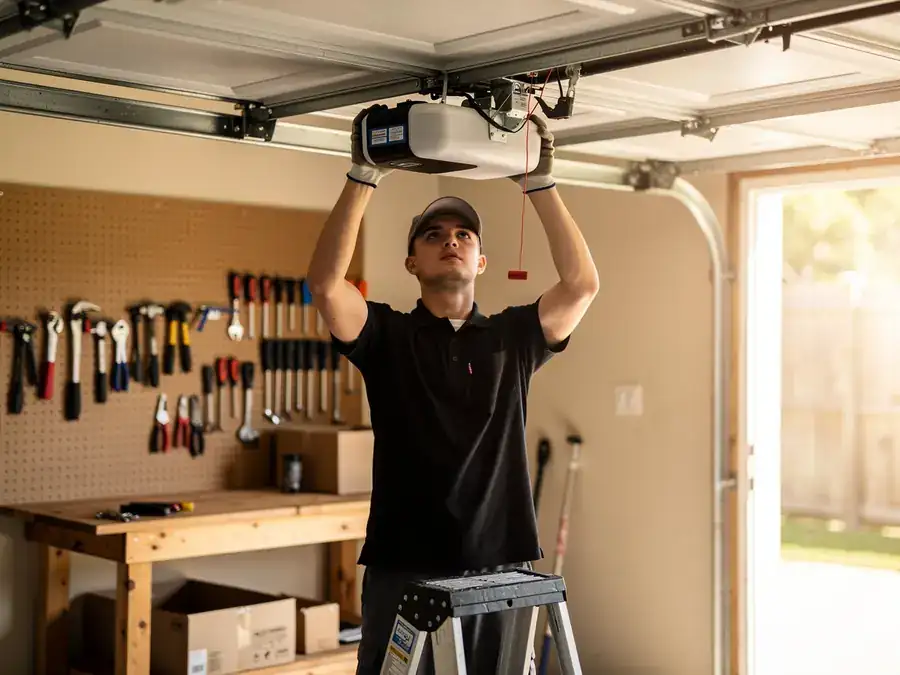
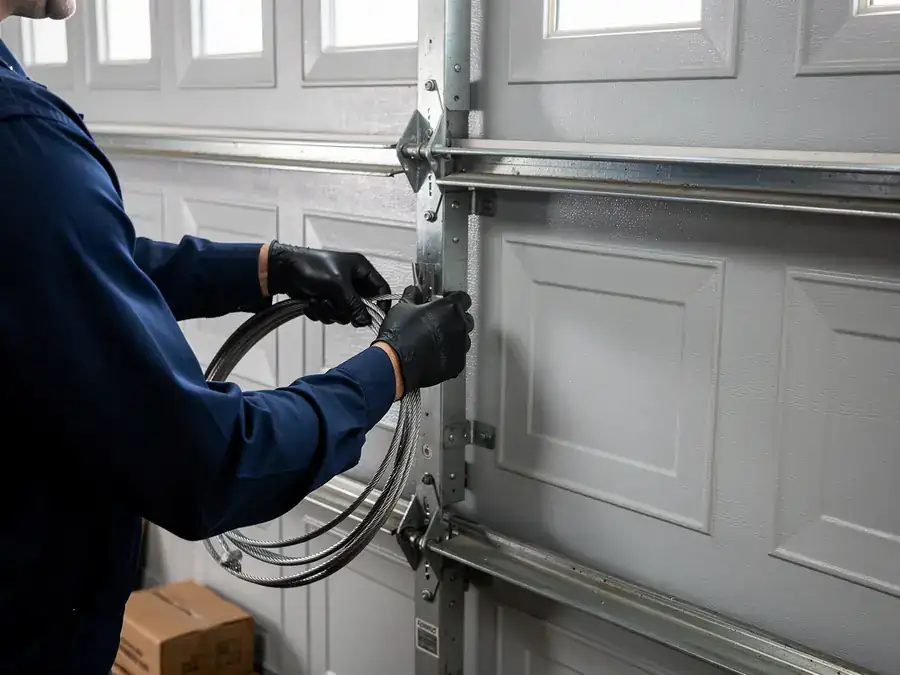
We carry standard torsion springs, cable, rollers, and common opener parts on the truck for most jobs. What we don't keep stocked are custom track kits sized for the narrower openings found on some of these older Boulder City garages - those sometimes need to be ordered, which can add a day or two to a job that would otherwise be same-visit. We'll tell you up front if your opening needs a special-order part rather than letting you assume the first visit finishes the job.