Why This Fails Locally
Boulder City is a small town as far as our service area goes
About 6,436 households, which is a fraction of the volume we see closer to Henderson. That size matters for what comes up: roller failures here don't cluster the way they do in a dense new subdivision. They show up one house at a time, usually tied to the age of the door rather than a bad batch or a builder shortcut.
- 6,436 households
Most of the housing stock in Boulder City centers on 1981, a bit earlier than the 1980s-90s range that covers much of the broader service area
A door that age has usually been through at least one spring replacement already, and the rollers that were factory steel on a side-mount track back then have had decades of dry heat and grit working the bearings loose. By the time a homeowner calls, it's not one roller - it's the whole set wearing unevenly, and the door starts binding on one side of the track before the other.
The median income here, $69,145, runs a bit higher than the $66,312 average across the wider area
But that doesn't change the mechanics. An old roller on a worn track fails the same way whether the house is worth more or less.
The DIY Question
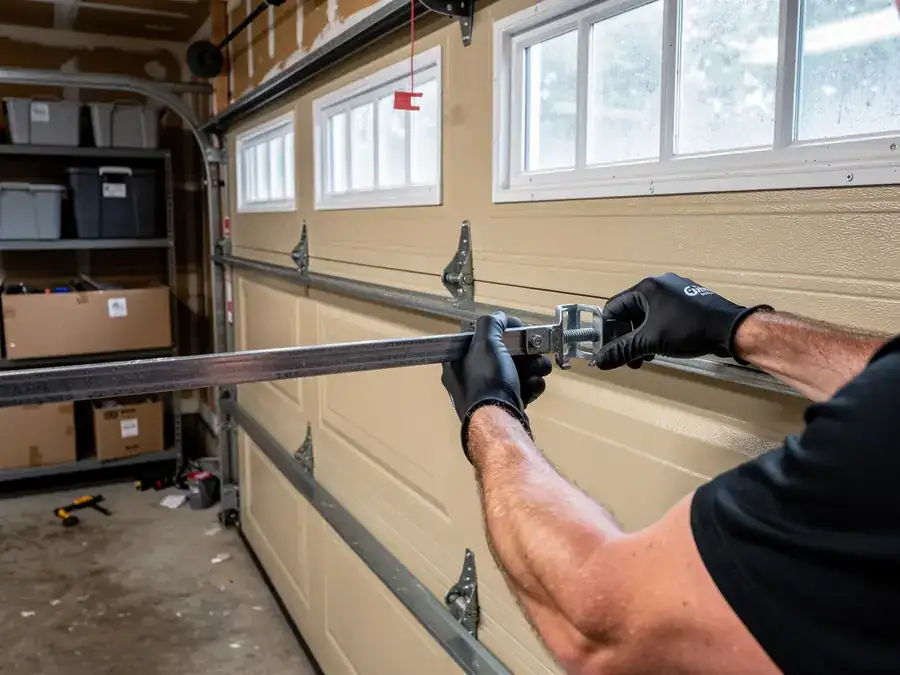
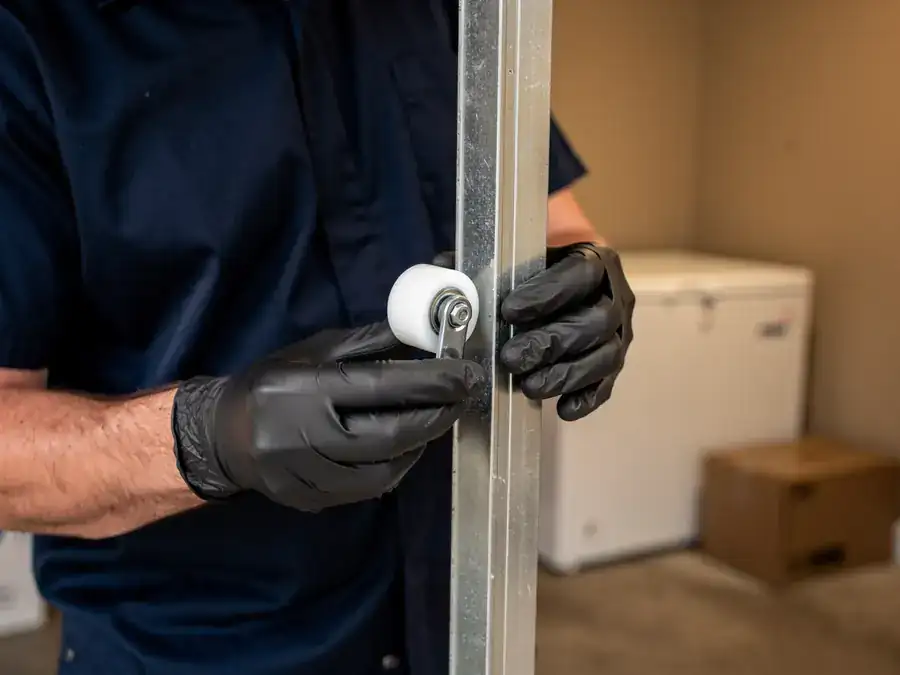
Swapping a roller sounds simple - pull the roller stem out of the bracket, drop in a new one, done. On a door this age, it rarely goes that clean. The track on a 1981-era door has usually worn a groove matching the exact wear pattern of the original roller, and a new roller of a slightly different diameter can bind in that groove instead of rolling free.
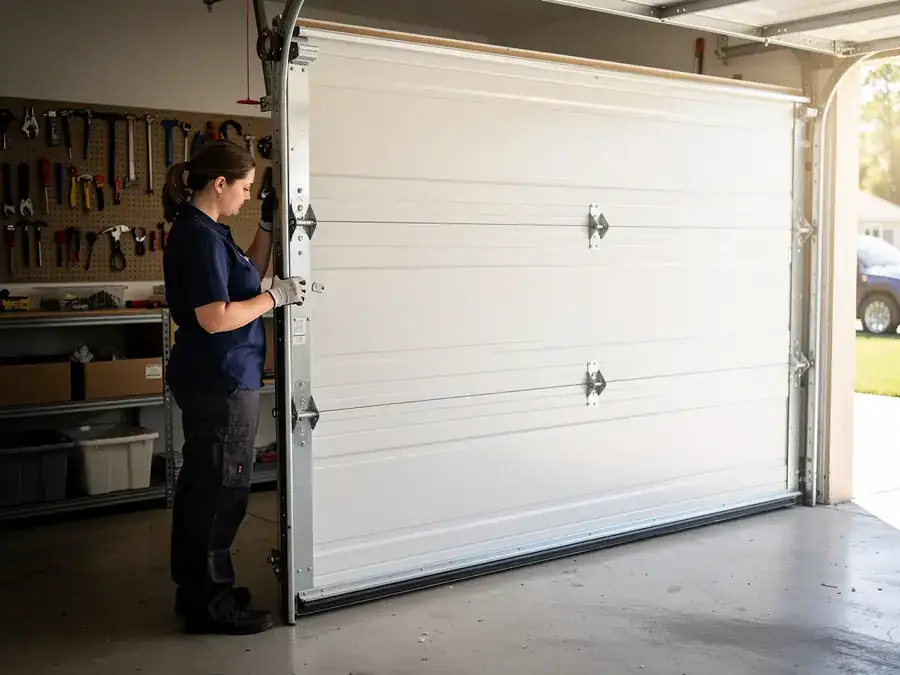
The honest answer is that a single roller swap on an otherwise sound door is within reach for someone comfortable with a socket set and willing to work with the door disconnected from the opener. What isn't: doing it with the door under spring tension, or assuming one bad roller means the rest are fine. On a door this old, if one roller's shot, the others are close behind - and replacing one while the others are rusted or flat-spotted just moves the next service call out a few months instead of fixing the real problem.
We won't talk anyone into a full roller set over the phone without knowing the door. If it's genuinely one roller on a track that's otherwise straight, say so and we'll price it that way.
What It Costs
We don't have a flat number to quote for Boulder City specifically, and we're not going to invent one. What drives the cost on a roller job is how many rollers need replacing, whether the track needs straightening or full replacement alongside them, and whether the bearings are sealed nylon or the older open steel type still found on a lot of 1981-built doors.
What we can tell you is what to expect on the visit itself: since Boulder City sits 13 miles out from our base in Henderson, the truck comes loaded for a roller job before it leaves, not after a diagnostic trip and a second visit. That's the only way a job this size makes sense at that distance - guessing wrong on parts means a return trip neither of us wants.
If your rollers are original steel and the brackets are rusted through, a straight roller swap sometimes isn't the right call - at that point you're often better off replacing the whole roller-and-bracket assembly, or in some cases the door hardware entirely. We'll tell you if that's where your door's landed.
What You Are Seeing
On a 1981-era door, the first sign is usually sound before it's motion
A grinding or clunking as the door travels, loudest where the roller crosses the curved section of track near the top. That's a bearing that's worn through its lubricant, often from years of summer heat baking out whatever grease was left.
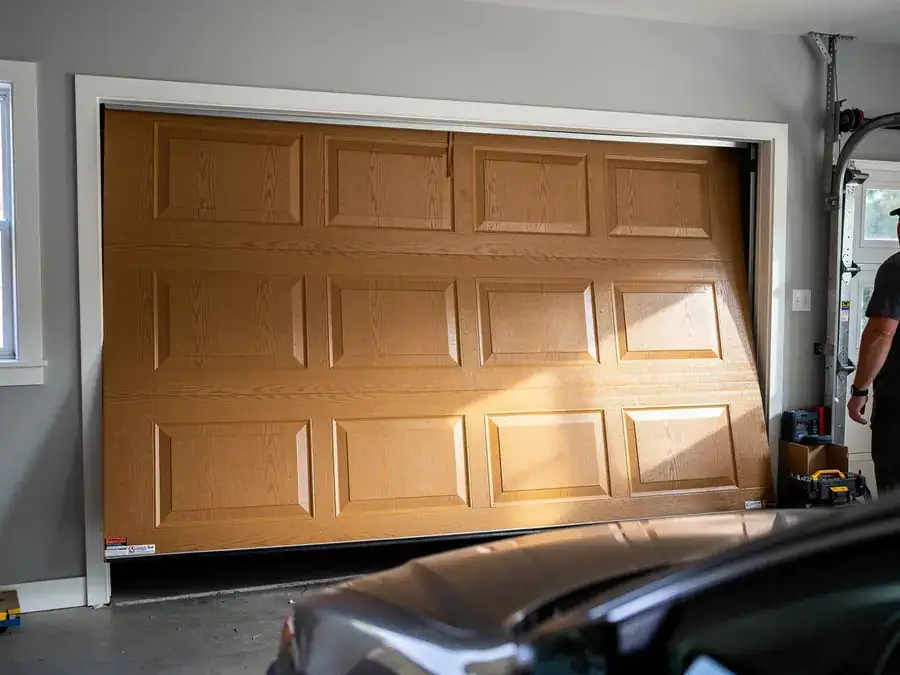
The second sign is the door riding unevenly
One side lifting a beat before the other, or the door appearing to wobble in the opening as it closes. That's usually a roller that's gone from round to flat on one side, which happens gradually and then seems to fail all at once.
If the door jumps the track entirely, stop using it
That's not a roller problem anymore - that's a roller that's already failed, and running the opener against a door off its track risks bending the track itself, which turns a roller job into a track replacement.
Stocked Parts
We carry nylon rollers in the common stem lengths and both standard and 10-ball bearing configurations on the truck, since those cover the bulk of what shows up on doors from the 1980s and 90s across this area. Steel rollers - less common now but still original equipment on some older Boulder City doors - aren't something we stock in bulk; those sometimes mean a short wait if a full OEM-matched set is needed.
Where we can, we'll replace an aging steel roller setup with sealed nylon rather than chase down a matching steel part, since nylon runs quieter and holds up better against the kind of dry heat this area gets through the summer. That's a judgment call we'll walk through with you rather than just swap in on our own - some owners want to keep the original hardware if the door's otherwise in good shape, and that's a fair call too.