What You Are Seeing
Most houses in Enterprise went up around 2006
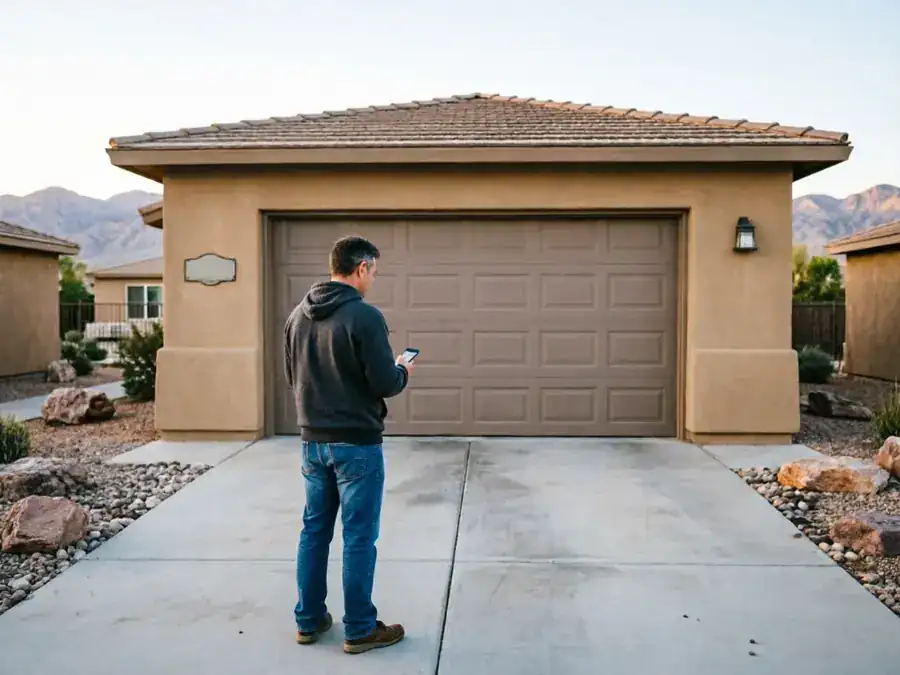
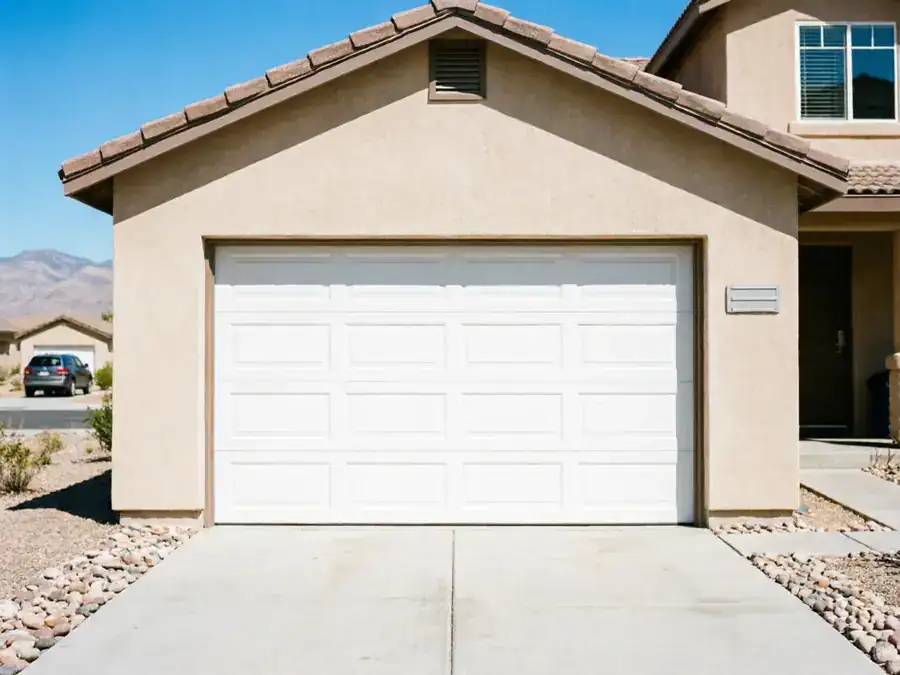
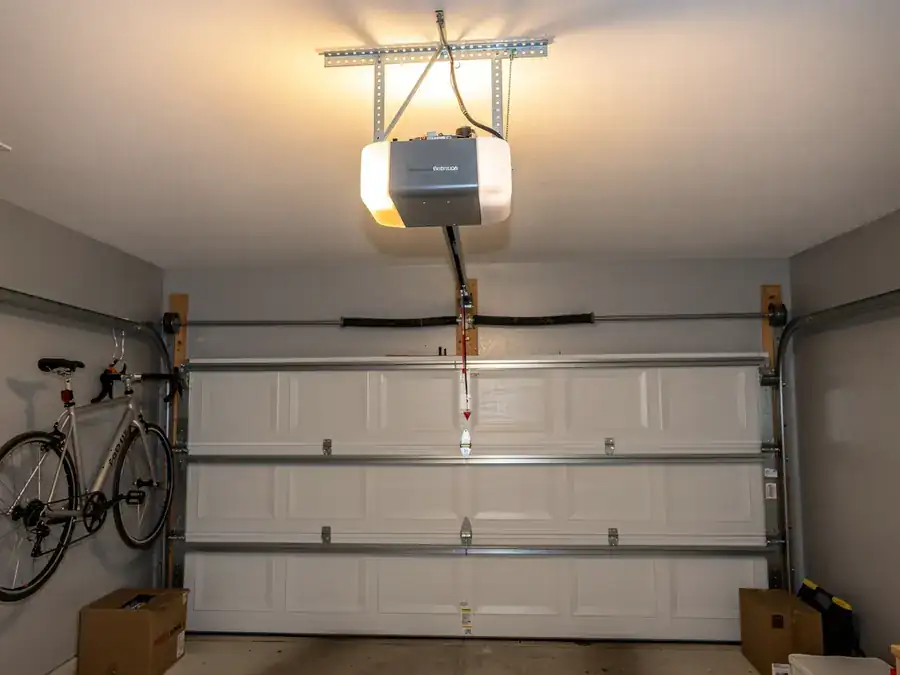
Which puts this area at the newer end of the valley's building boom. That matters for your door because builders in that stretch were racing through subdivisions fast, and the garage door that shipped with the house was almost always the cheapest code-compliant option: a single-layer or lightly insulated steel door on a torsion spring sized for minimum cycle life, paired with a basic chain-drive opener. It's held up this long because the climate here is dry, but dry heat is still hard on these doors. The vinyl backing on cheaper steel panels gets brittle and the factory lubricant on rollers and hinges cooks off faster than it would somewhere milder. If your door is original to a 2006-era build, you're at the point where the spring has likely outlived its rated cycles, even if the panel itself still looks fine.
Across the wider Henderson service area the housing stock spans 1979 to 2006
With a median build year of 1994, so Enterprise sits at the newest edge of that range rather than the middle. That's a different starting point than the older pockets closer to Henderson proper, and it changes what we're replacing when we come out here - usually the spring and opener before the door itself needs to go.
What Can Go Wrong
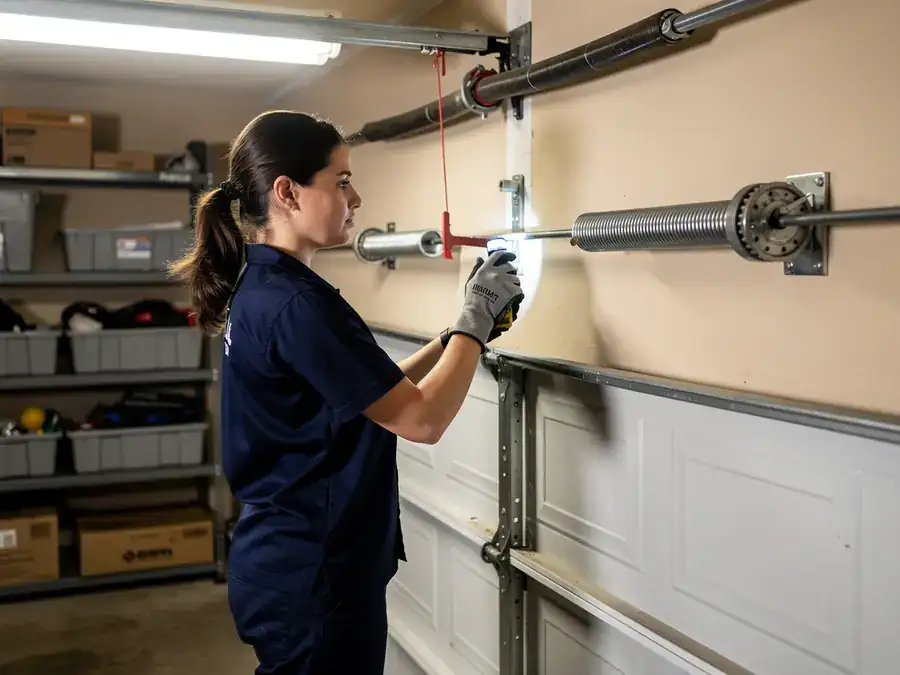
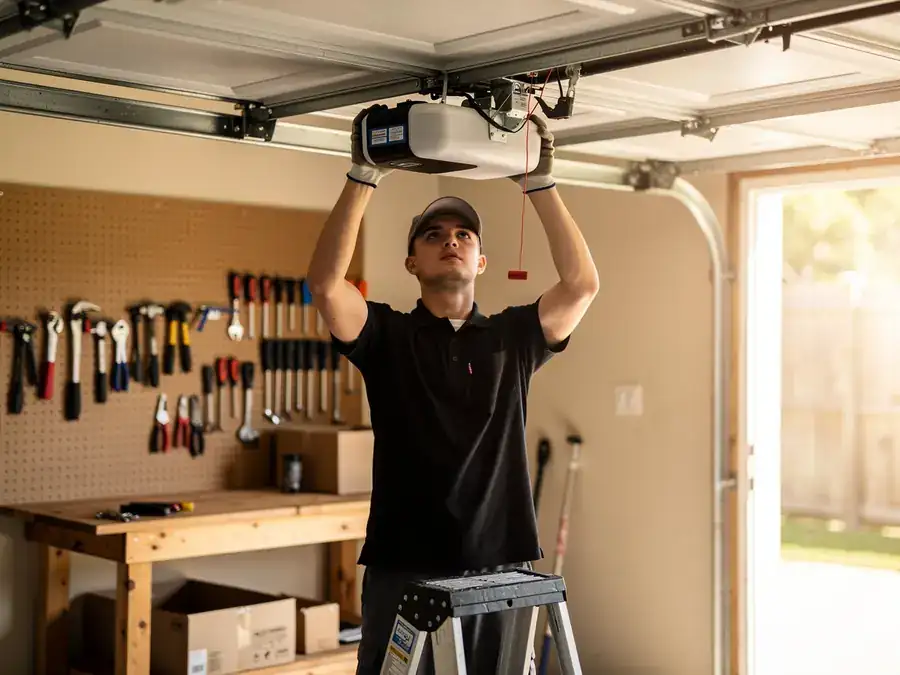
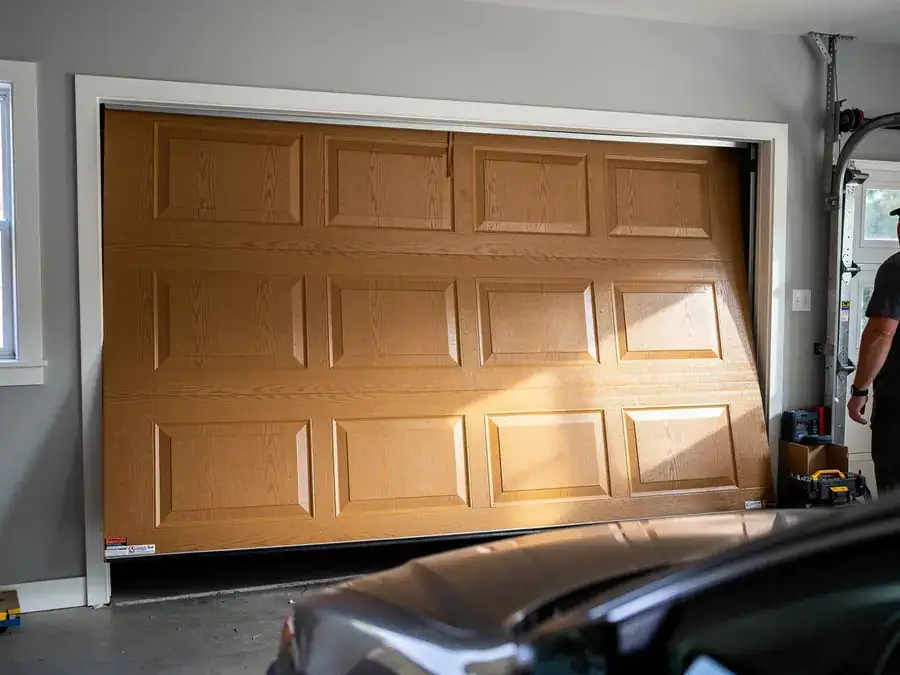
The most common failure we see on builder-grade doors from the mid-2000s is a torsion spring that was undersized for the door's weight from day one, especially on double-car doors with a single spring instead of two. When that spring goes, the opener tries to do the lifting and burns out its drive gear within a season or two - so a $30 part turns into a $150 part if nobody catches it early.
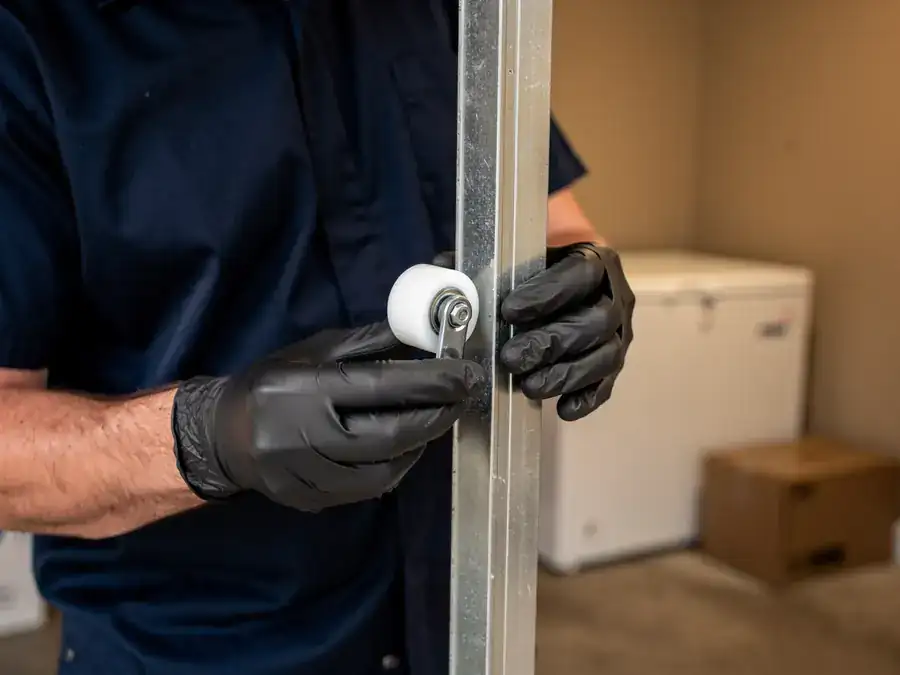
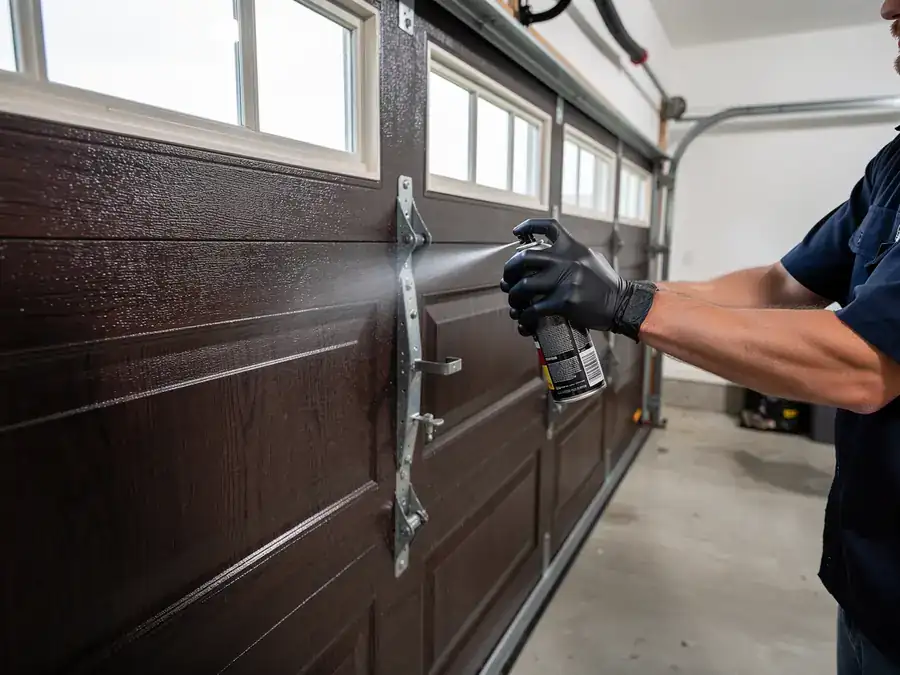
Severe summer heat (per federal climate data for this region) also does real damage to anything plastic or rubber on these doors: bottom seals crack and let in dust, nylon idler bearings on the rollers go brittle, and opener logic boards sitting in an unconditioned garage can fail years before they would in a cooler climate. None of this is unique to one house - it's a pattern tied to how these doors were spec'd when the subdivisions went in.
What It Costs
We don't have a published price list for Enterprise installs here, and giving you a number without seeing the door, the opening width, and whether we're matching existing jamb hardware would be a guess dressed up as a quote. What we can tell you is that median household income in this part of the valley runs well above the broader service-area median of $66,312, and in practice that means more Enterprise customers ask us about insulated steel or add-on features like a quieter belt-drive opener rather than the bare-minimum replacement. That's a choice, not a requirement - a single-layer steel door still does the job if budget is the priority.
The honest limitation: if your opener is more than the one failed part, and the logic board or circuit is original to a 2006 install, we may tell you replacement makes more sense than chasing parts for a board that's past its useful life. We'd rather say that upfront than bill you for a repair that doesn't hold.
What the Fix Involves
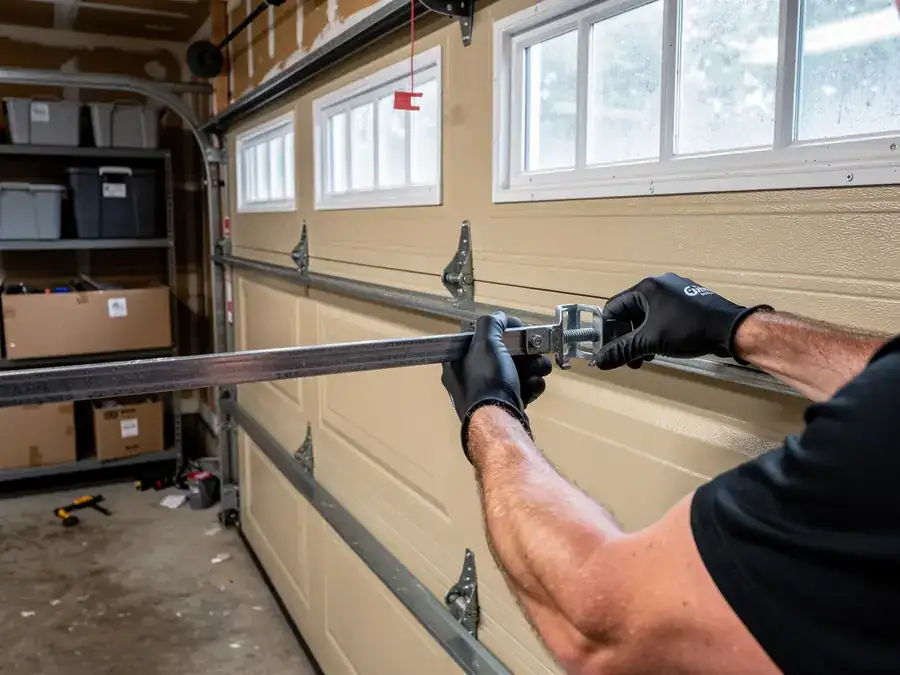
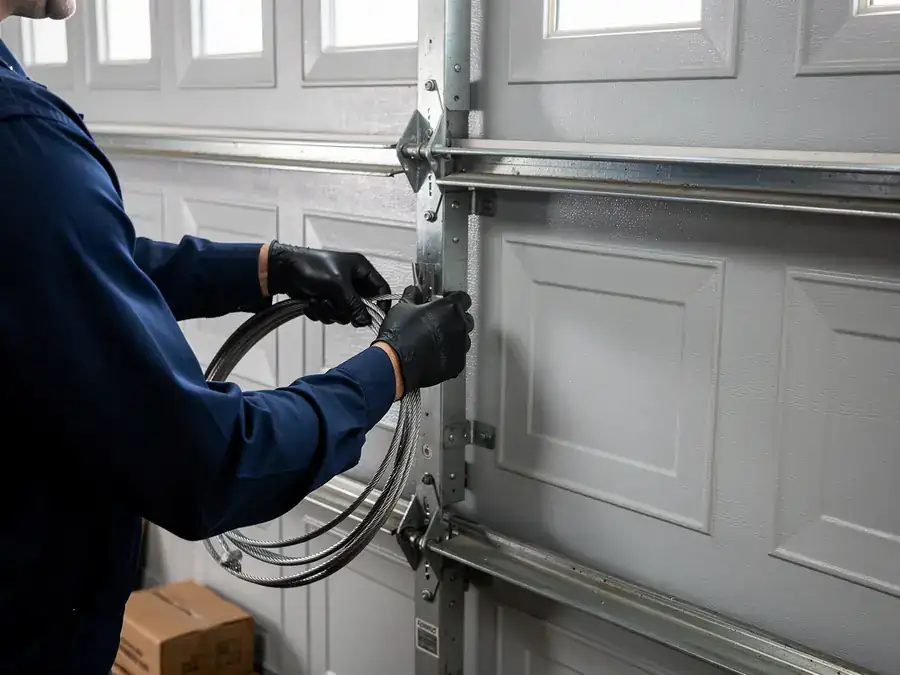
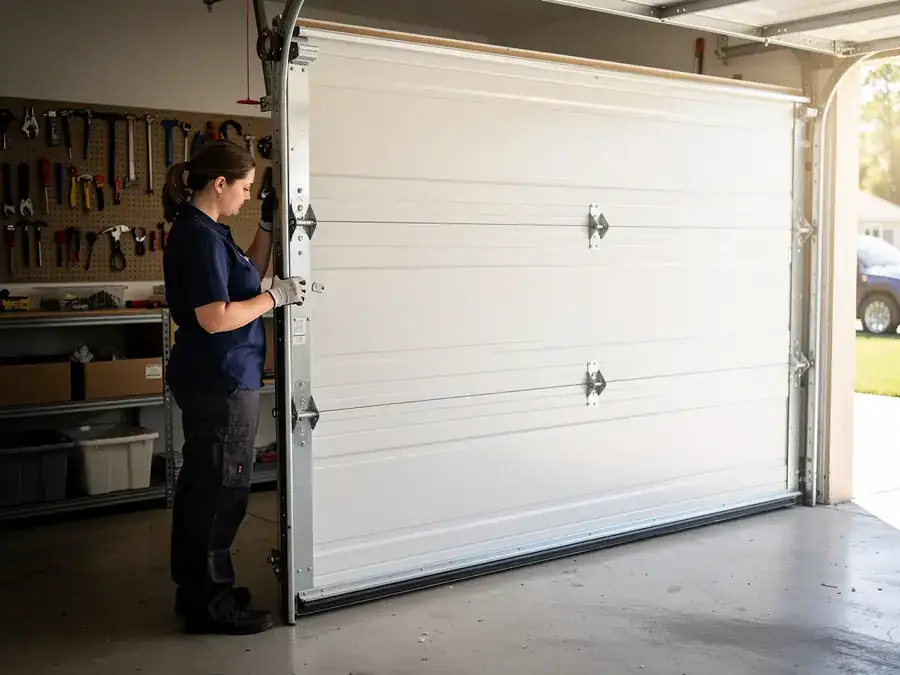
For a straight replacement on a 2006-era opening, the job starts with pulling the old door and spring assembly, checking the track and jamb for square - builder-grade installs sometimes skipped that step - and setting new heavier-gauge torsion springs rated for the actual door weight, not just the minimum code clearance
We travel to Enterprise from Henderson, about 11 miles, so we schedule the install as a planned visit rather than a same-day emergency call.
- 11 miles
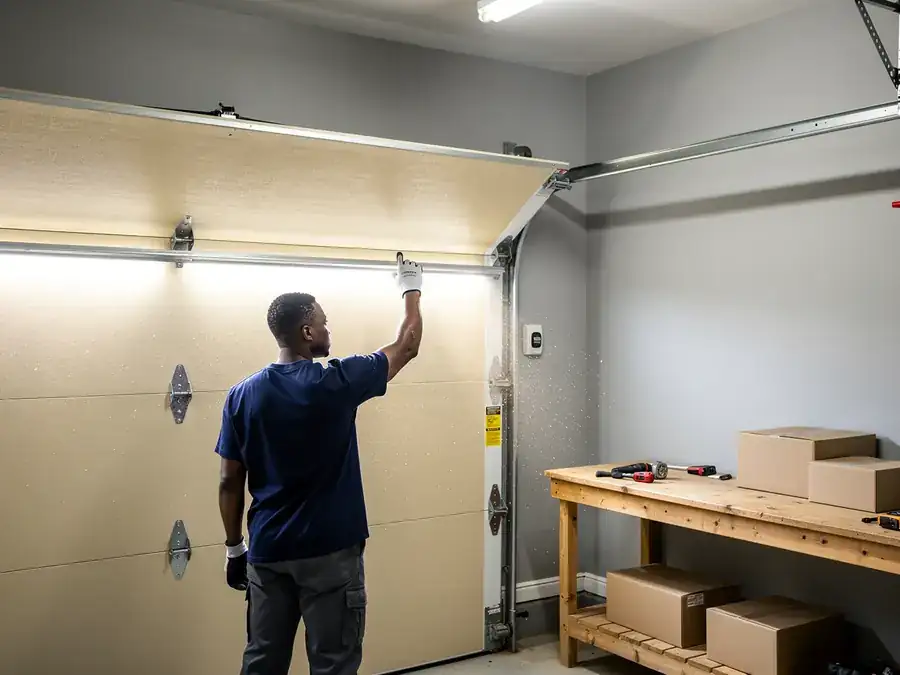
If you're upgrading insulation or going with a heavier door, we also check that the opener's lift capacity and travel limits match the new door - swapping a light door for an insulated one without resetting the opener is a common mistake that shows up as a door that reverses on its own weight
We finish with a full cycle test under load, not just an open-close check, since that's where undersized original hardware tends to show itself.