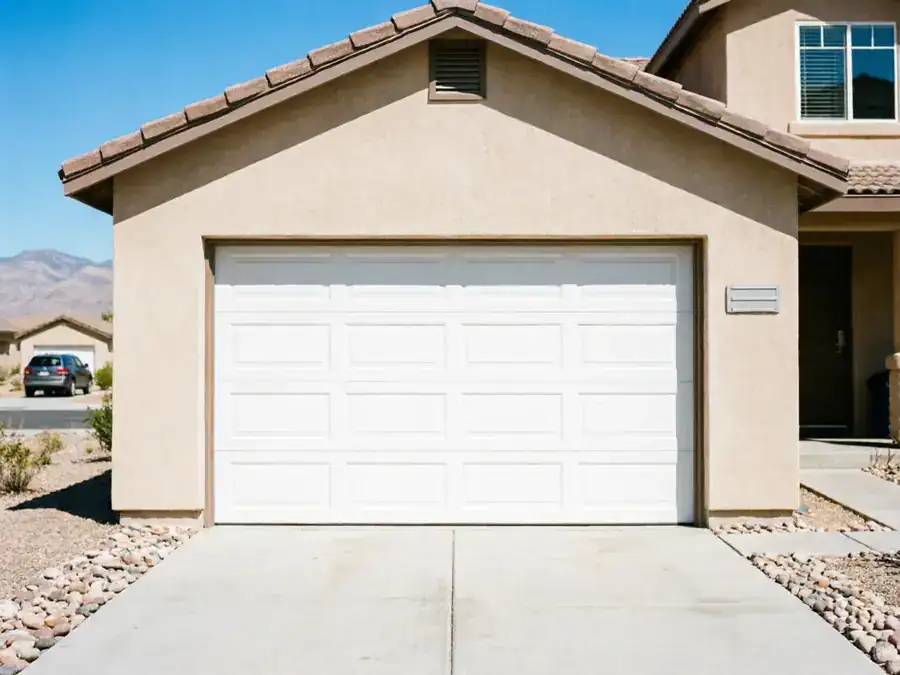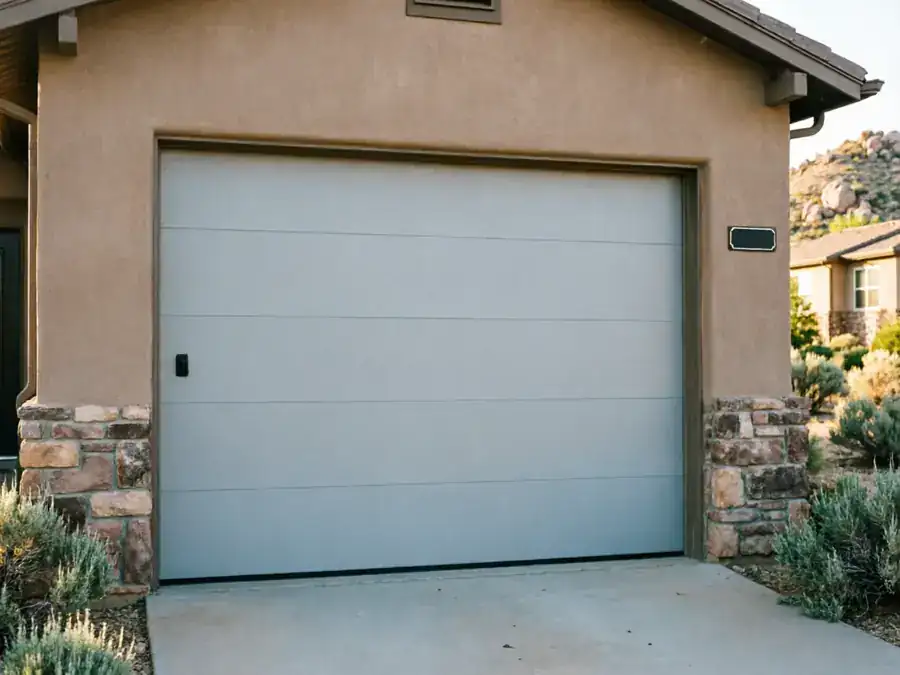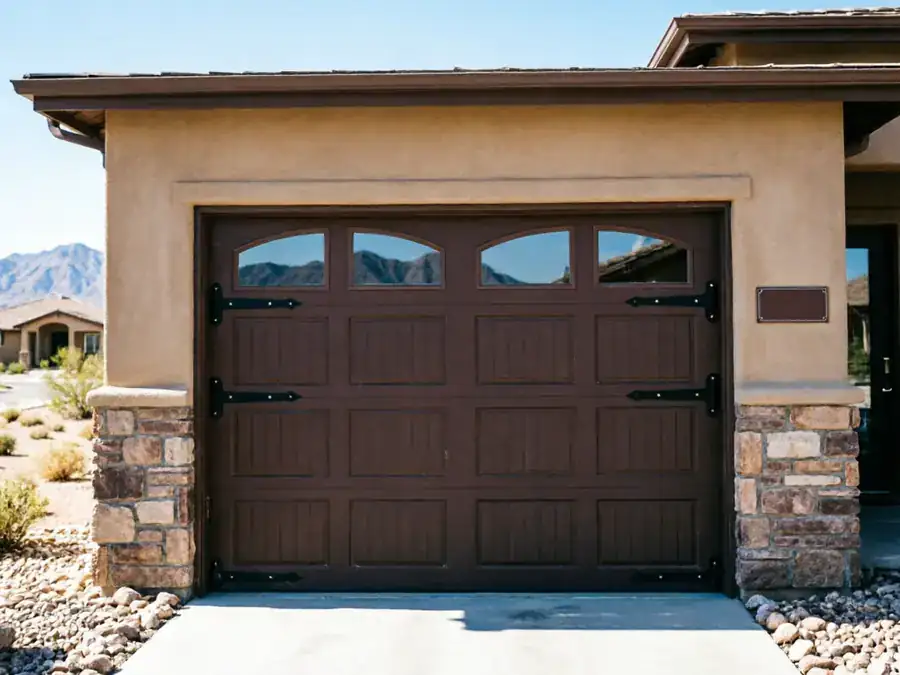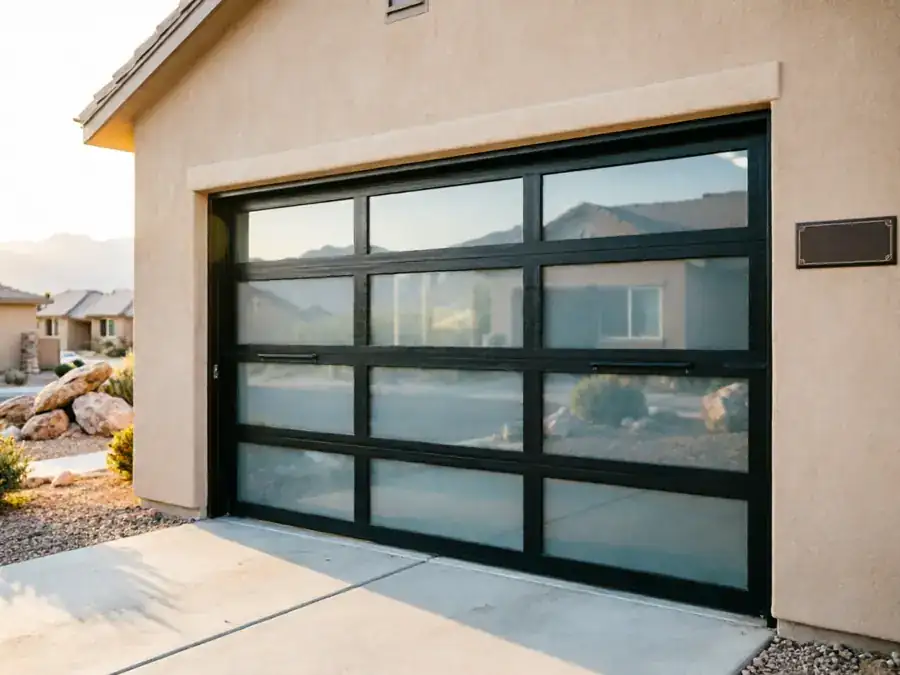
What You Are Seeing
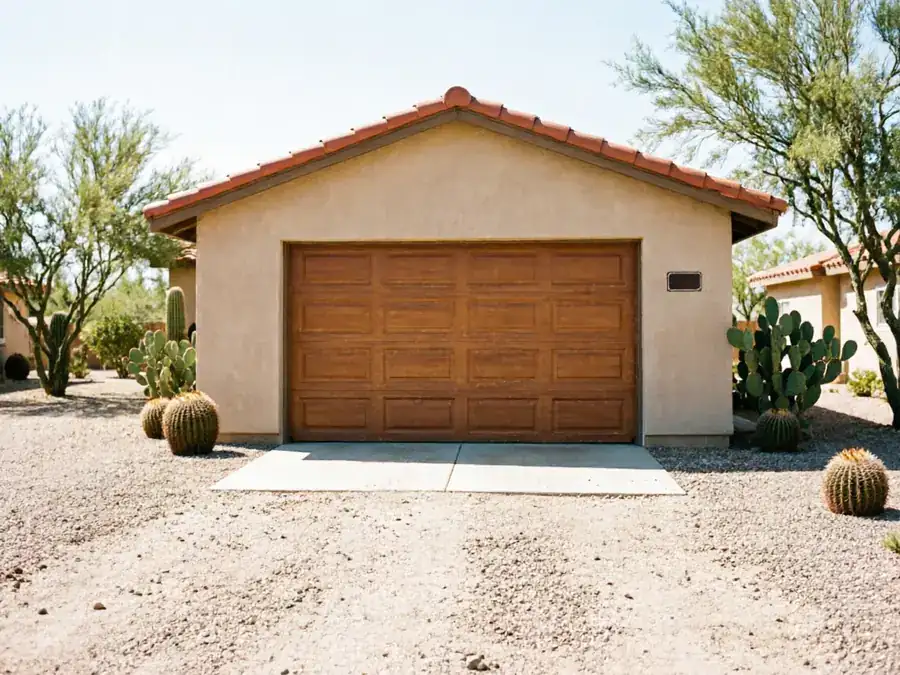
Across the Henderson service area, the median house dates to 1994
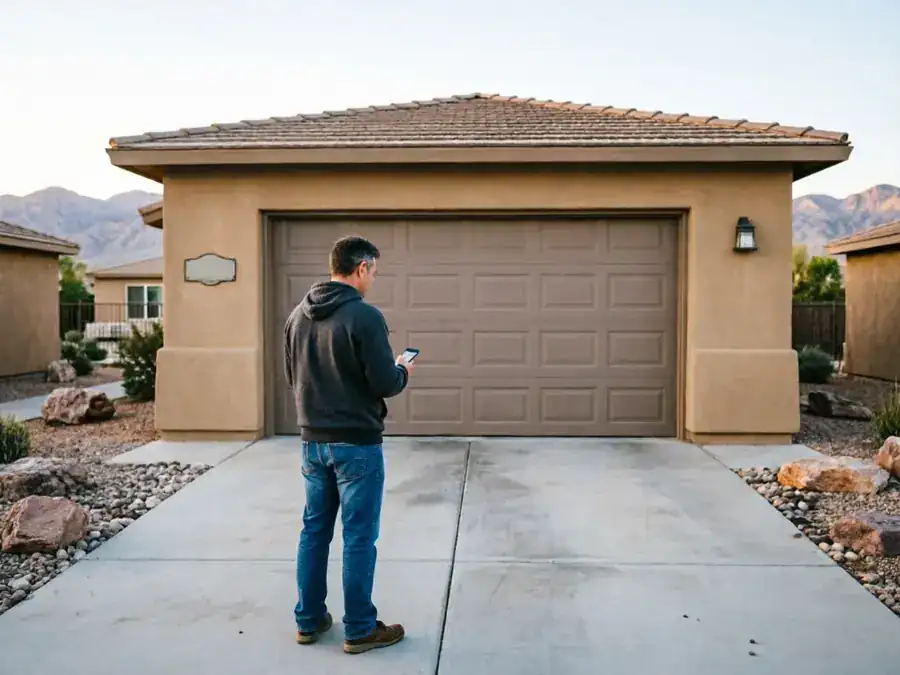
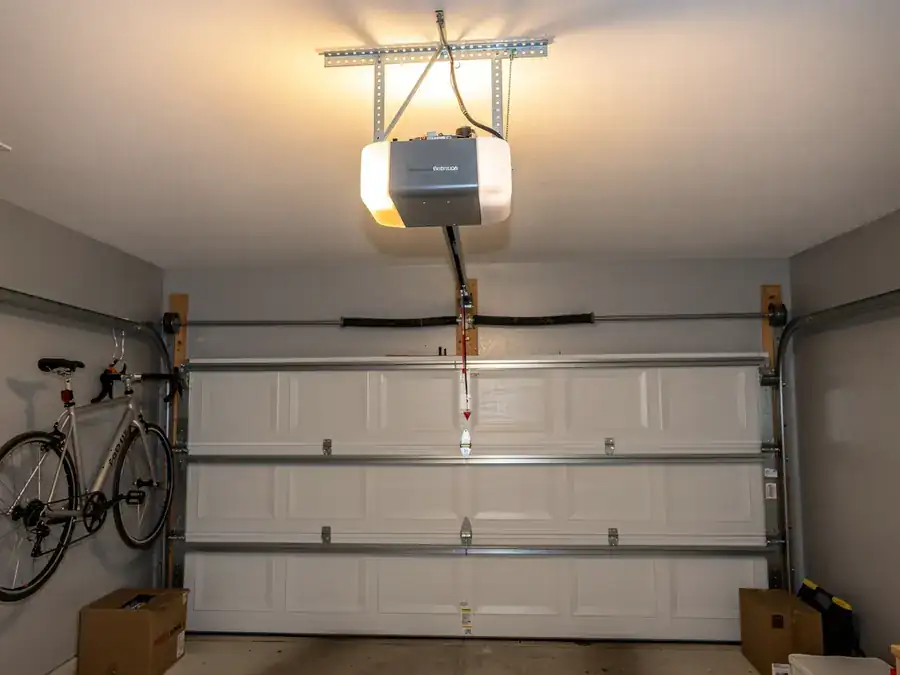
With most stock going up between 1979 and 2006. Enterprise sits at the newer end of that range, with a median build year around 2006. That matters more than it sounds like it should. A house built in the early '90s usually has a chain-drive opener on a standard rail, bolted to framing that's had thirty years to settle. A 2006 build in Enterprise is more likely to have come with a belt-drive unit, pre-wired for a wall console and sometimes already set up for a smart hub, since builders in that era started including that wiring as standard.
The practical effect
When an opener fails in Enterprise, we're usually not fighting old framing or a mystery splice job from a prior owner. We're dealing with newer bracket hardware, cleaner wiring runs, and doors that are more likely to be insulated steel rather than older single-layer panels. That changes which opener specs make sense as a replacement - mainly horsepower and rail length - and it usually means less time spent reworking the mounting point.
What Can Go Wrong
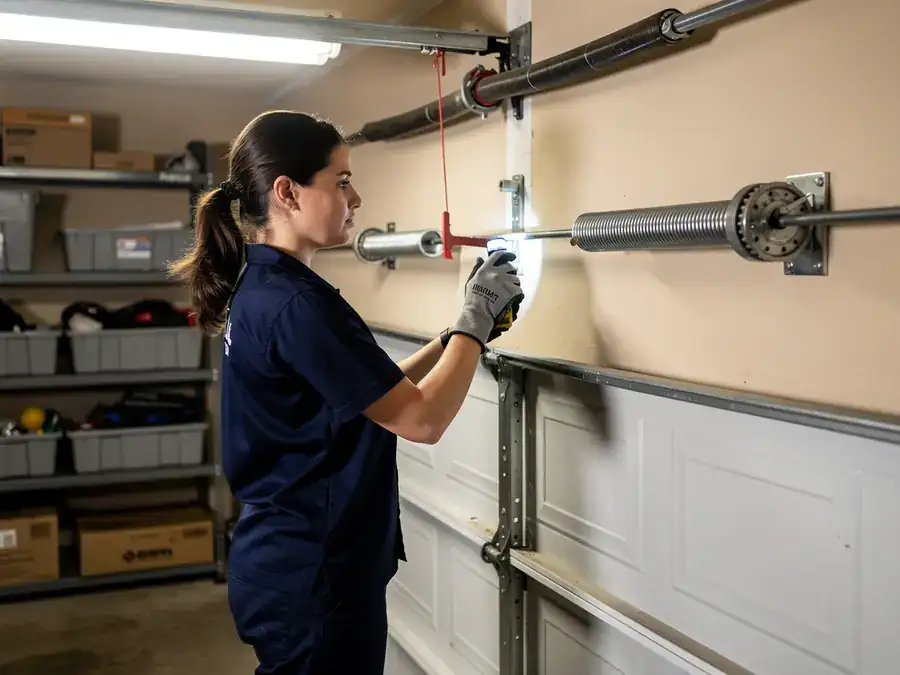
Henderson's service area runs under a severe-heat climate band, and Enterprise doors sit outside in that same heat all summer. Attached garages in particular trap heat, and that's hard on an opener's circuit board, capacitor, and belt tension over the years - even on units installed only a decade or so ago. We see boards that fail early from heat cycling, and belt-drive systems that stretch or skip faster than they would in a milder climate.
The other common failure in newer Enterprise construction isn't the opener itself - it's the safety sensors. Builder-grade photo-eye sensors get knocked out of alignment during normal yard work or a parked bike, and a homeowner assumes the whole unit is dying when it's really a thirty-second fix. We check that before quoting anything bigger.
What It Costs
We don't have a published price list for opener installation to quote here, and giving you a number without seeing the door, the rail length, and whether you want belt or chain drive would be a guess, not a fact. What we can tell you is that because Enterprise homes are newer on average, you're less likely to need extra work like reinforcing an old header or rewiring from scratch - both of which add cost on older houses elsewhere in the service area. That typically keeps the job closer to a straight swap.
What the Fix Involves
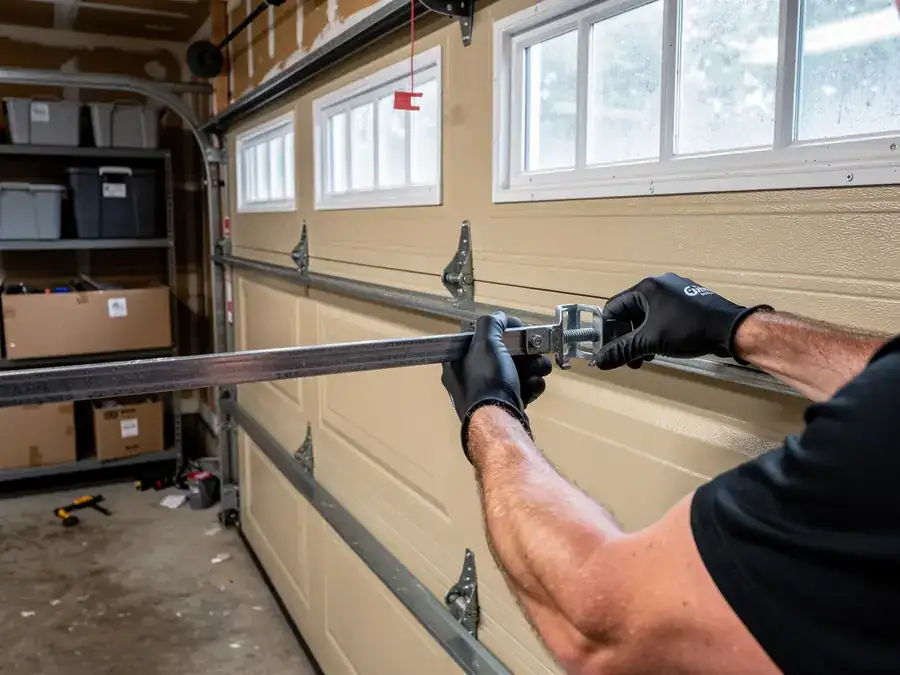
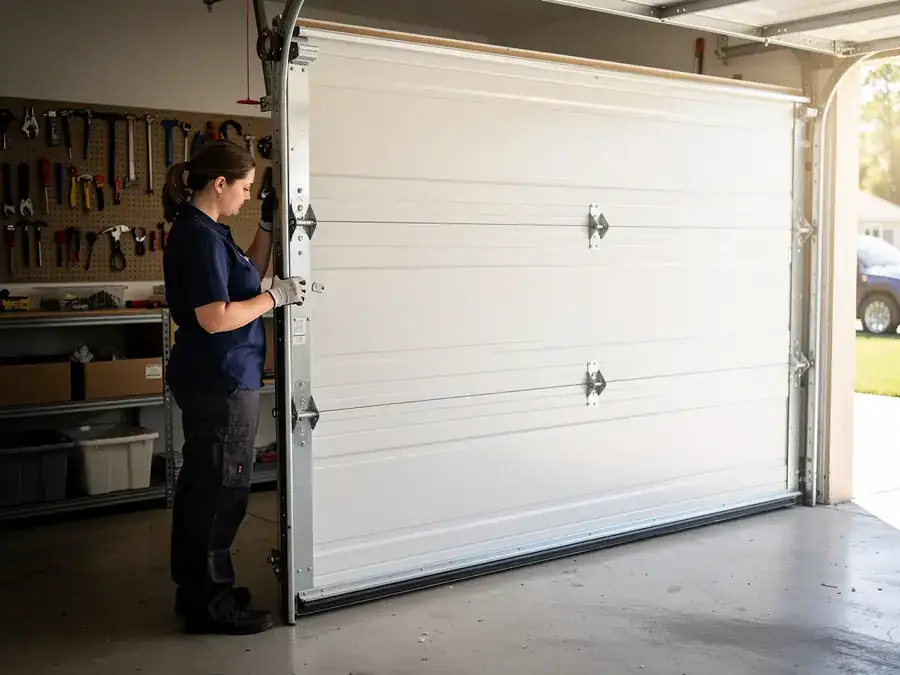
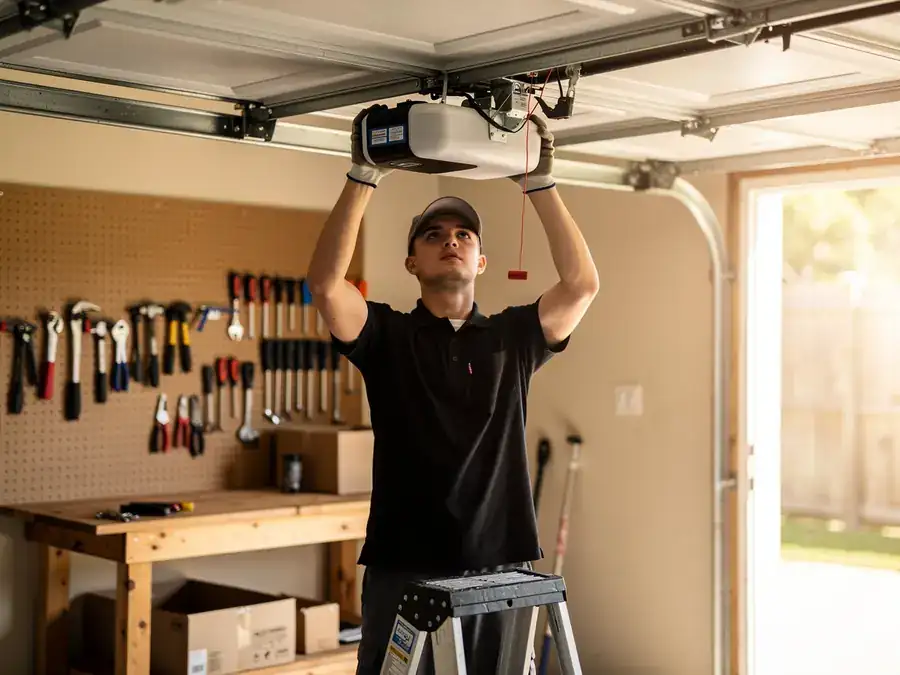
A standard opener swap means pulling the old unit, checking the rail and header bracket for wear
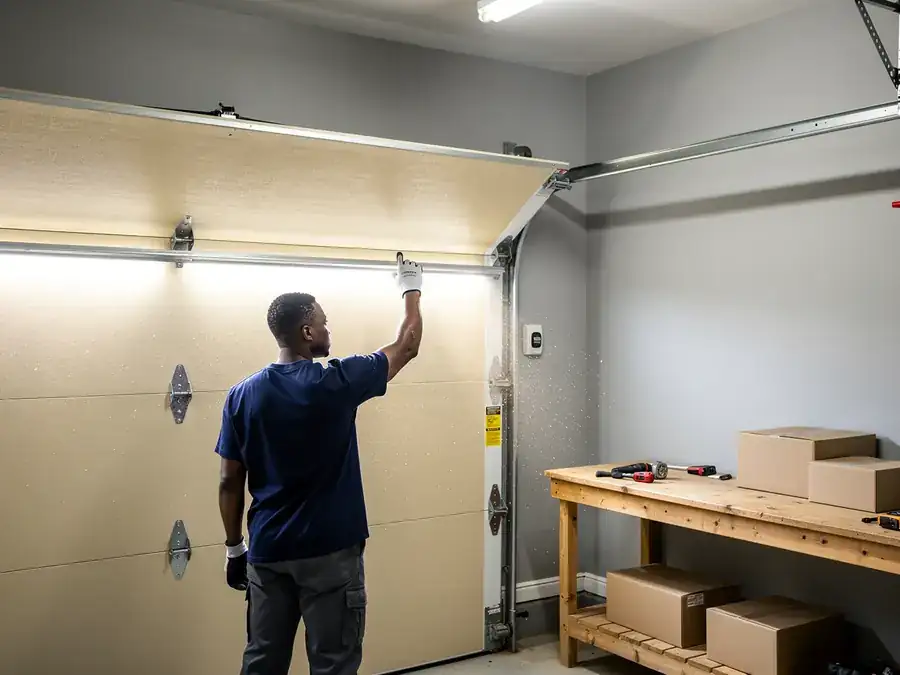
And installing the new motor head, rail, and sensors. On the newer builds common in Enterprise, the existing wiring and wall console wiring are usually reusable, which saves a step. We test travel limits, force settings, and both safety sensors before we leave, and we walk you through the remote and keypad setup if your unit has one.
We travel to Enterprise from our Henderson base, about 11 miles out, so we schedule the visit rather than offering a same-day drop-in
One limitation worth saying plainly: if your opener is a discontinued model from a builder-installed unit and a part isn't available, replacement is usually the faster and more honest answer than chasing a part that may not exist anymore.
- 11 miles