What You Are Seeing
In Enterprise, the roller problem usually isn't the one you'd expect from an older neighborhood
Most houses here went up around 2006, which means the garage doors are newer too - but that doesn't mean the hardware is better. Builders in this era spec'd cheap plastic rollers to hit a price point, not to last. You'll hear it before you see it: a grinding or clicking as the door travels, worse at the top or bottom of the track where the roller has to bear more load.
Because these homes are younger, owners often assume the rollers have years left
They don't. Plastic rollers in this climate band run through two decades of summer heat cycles that make the nylon brittle and crack at the hub, even on a door that's otherwise in good shape. If your door is from that mid-2000s build wave and it's chattering in the track, that's the part, not the opener and not the spring.
What Can Go Wrong
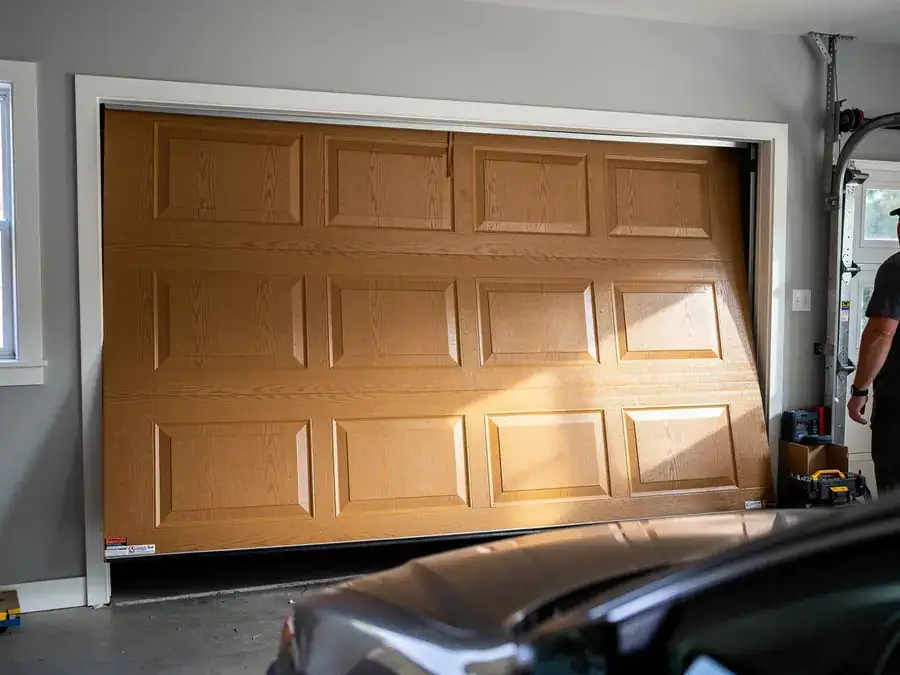
A cracked plastic roller doesn't fail quietly. It splits, the wheel part separates from the stem, and the door starts riding on a bare metal pin inside the track - which chews up the track itself. Keep running the door like that and you're not buying a roller anymore, you're buying a track section too.
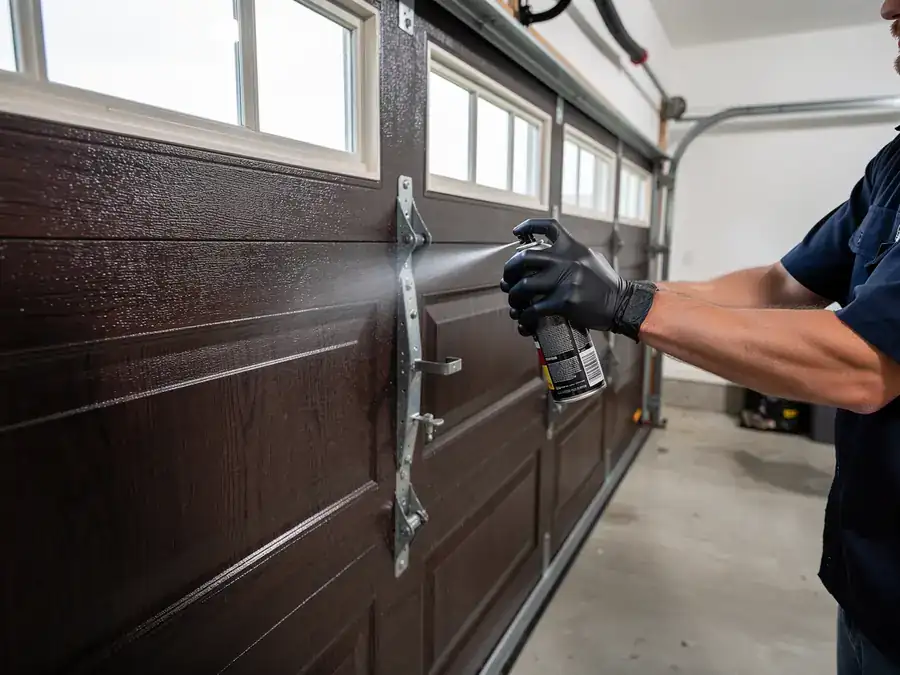
The other failure mode in Enterprise is heat-driven lubricant breakdown. Factory grease on a stock roller stem thins out and runs off in high heat, so the roller binds instead of rolling. That shows up as a door that's suddenly heavier to lift by hand, or an opener that strains and trips its force sensor. Either way, by the time you hear noise, the roller has usually already lost its round shape where it contacts the track, so cleaning and relubing won't fix it - it buys you a few weeks at most.
What It Costs
We don't have a flat number to quote here without seeing the door, since cost depends on how many rollers have failed and whether the track took damage from a cracked roller riding on its pin. A full set replacement on a double door costs more than fixing two or three rollers on a single, and steel rollers with sealed bearings cost more up front than nylon but outlast them in this heat. We're not going to pretend one price covers every Enterprise door, and a quote over the phone before we've looked at the track isn't one we'd trust either.
What the Fix Involves
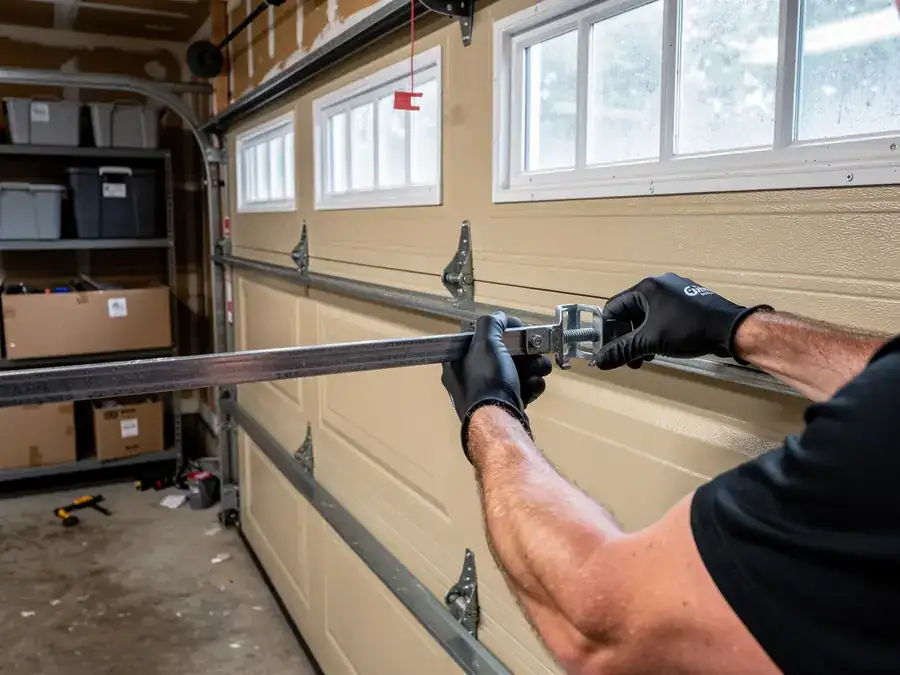
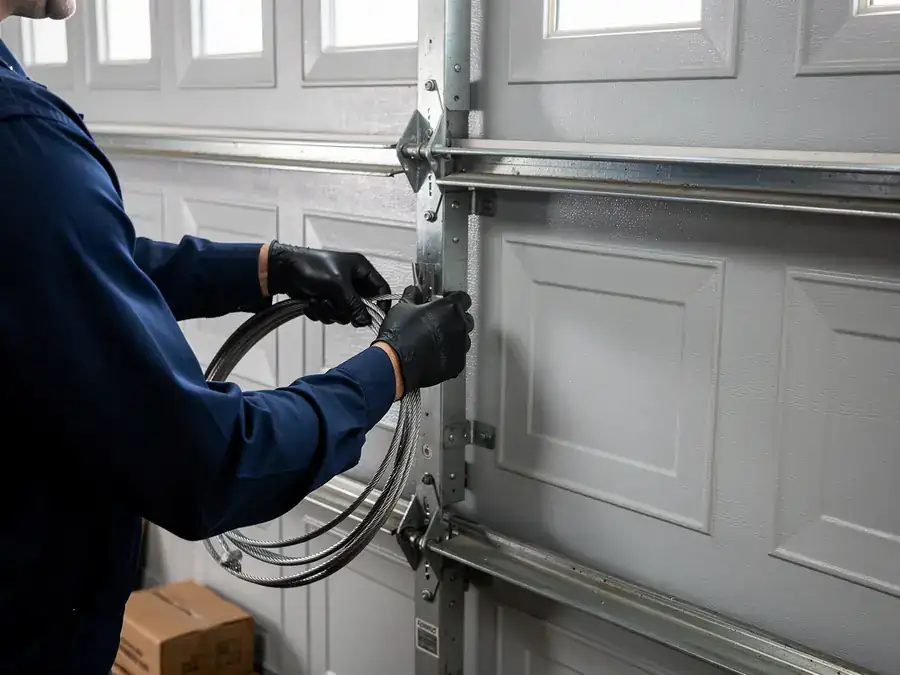
We pull the door down to working tension, release the track brackets
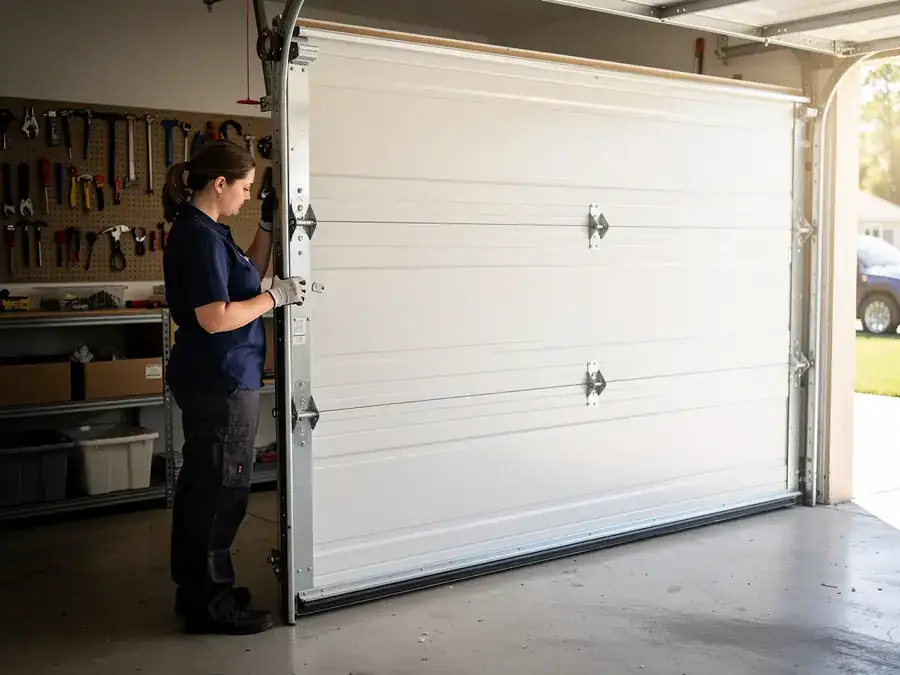
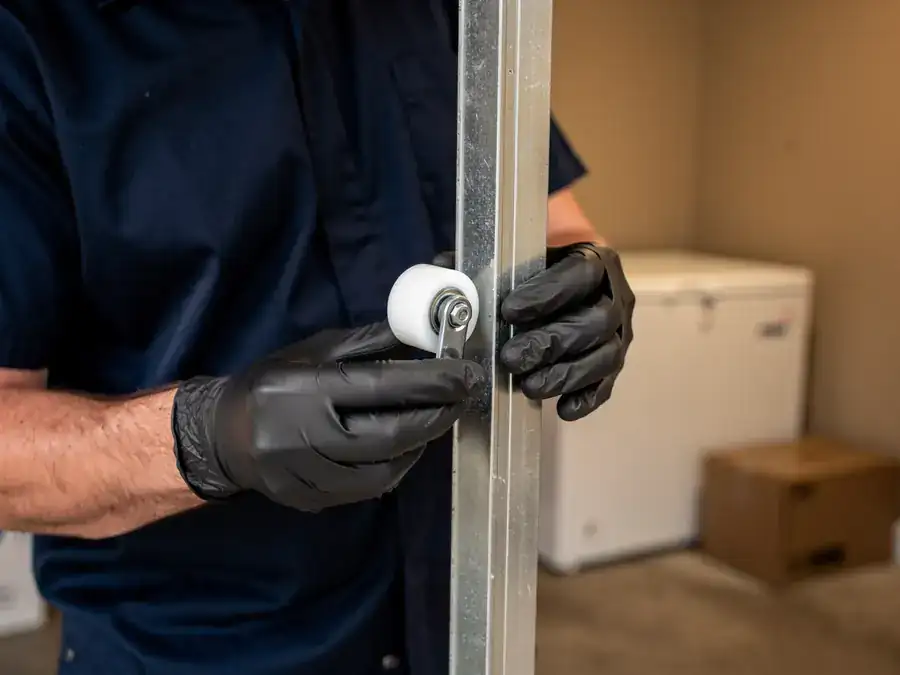
And swap the rollers one section at a time so the door stays supported throughout. If a roller cracked and rode on its stem, we check that stretch of track for dents or spread rails - a warped track will chew through a new roller just as fast as the old one failed, so it gets straightened or replaced before the new roller goes in.
For Enterprise doors specifically, we lean toward nylon rollers with sealed bearings over steel on most jobs
Steel rollers run quieter short-term but transmit more vibration into the house framing, and nylon handles the heat-cycle expansion in these newer tracks better. We travel out from Henderson for this job, about 11 miles, so we schedule it rather than treating it as a same-day drop-in - worth knowing if your door is making noise now and you're deciding whether to wait.
- 11 miles