The DIY Question
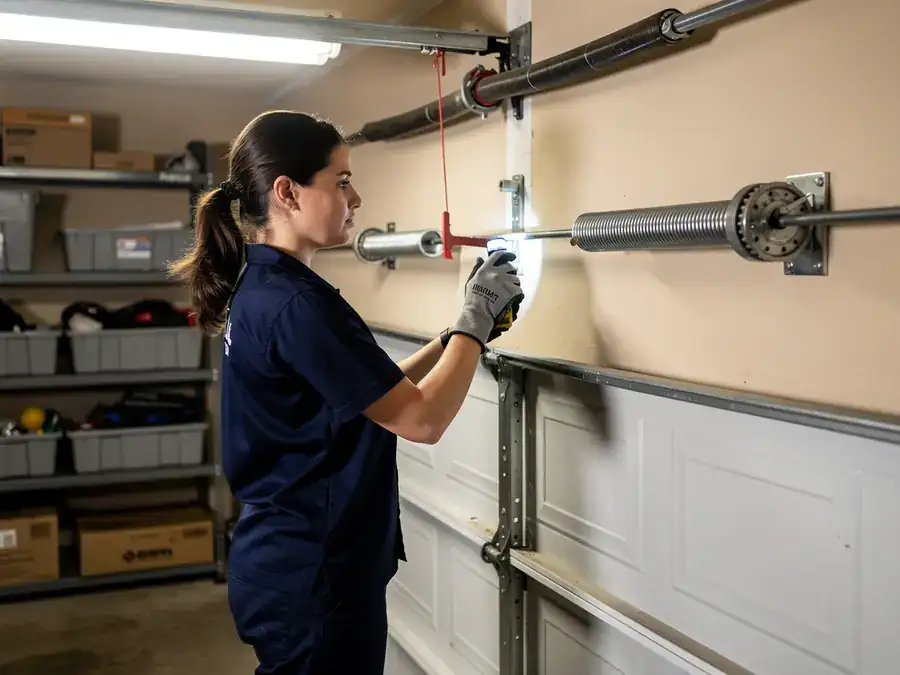
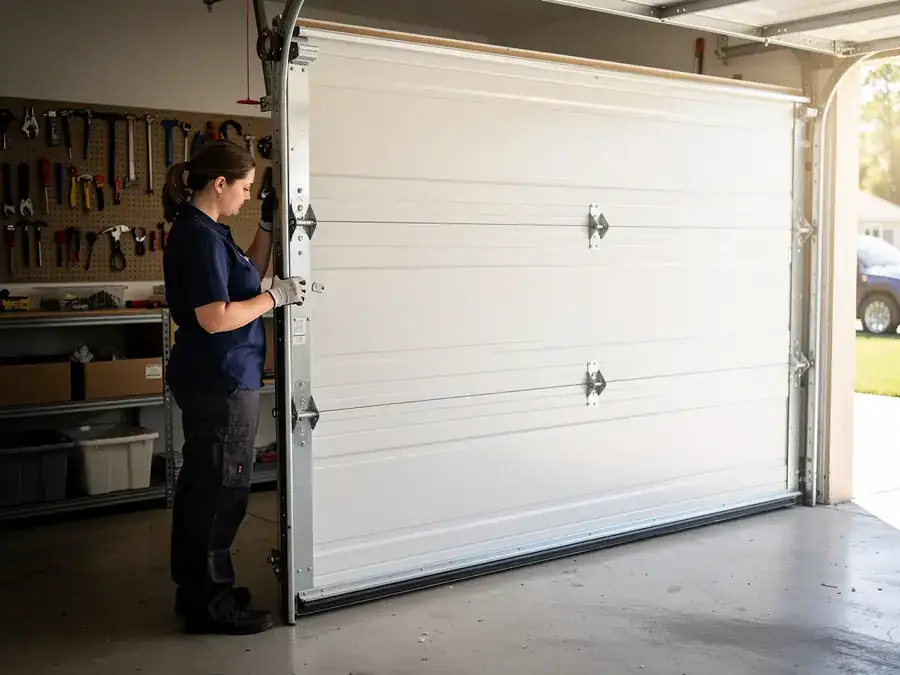
You can push a light door back onto the track yourself if it's only off by an inch and the opener is disconnected first. Past that, stop. A torsion spring under load, a cable that's slipped its drum, or a track that's bent badly enough to pop the door out - these aren't jobs for a ladder and a pry bar on your own. The honest limitation here: if the track is bent more than a slight bow, straightening it rarely holds. We replace that section rather than bend it back, because a repaired bend will walk the roller off again within months. If your door came off the track and you can see the spring is still coiled tight, leave it alone and call. If it's a loose bracket with no visible bend, that's a smaller job and worth asking about before assuming you need a new track.
What the Fix Involves
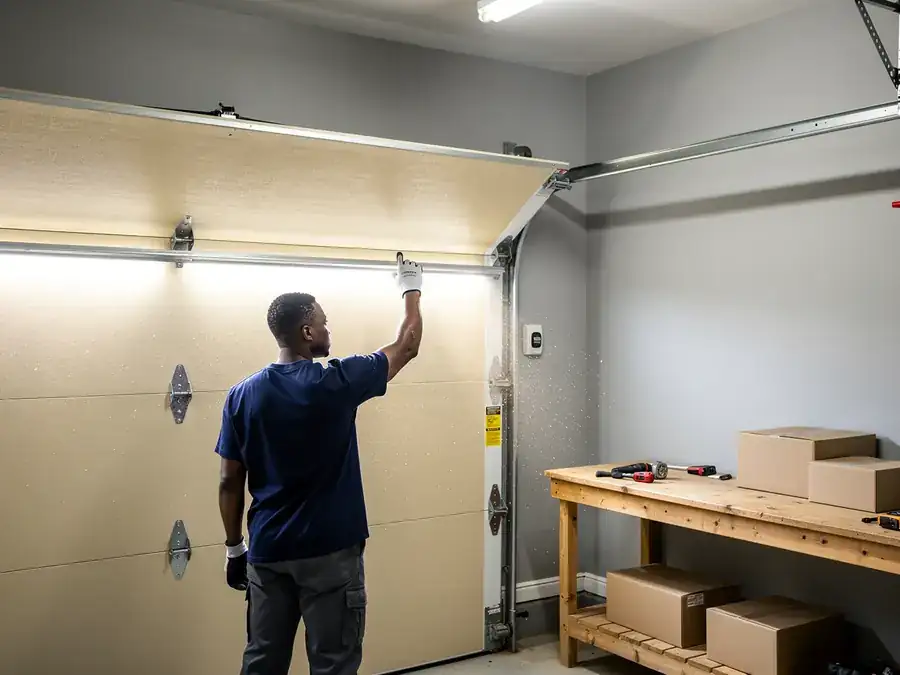
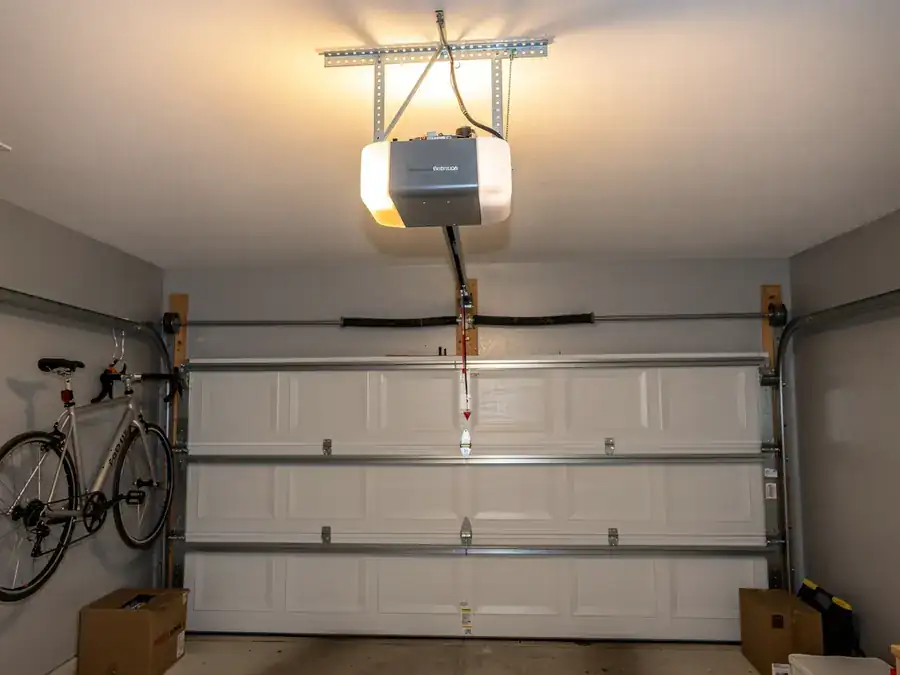
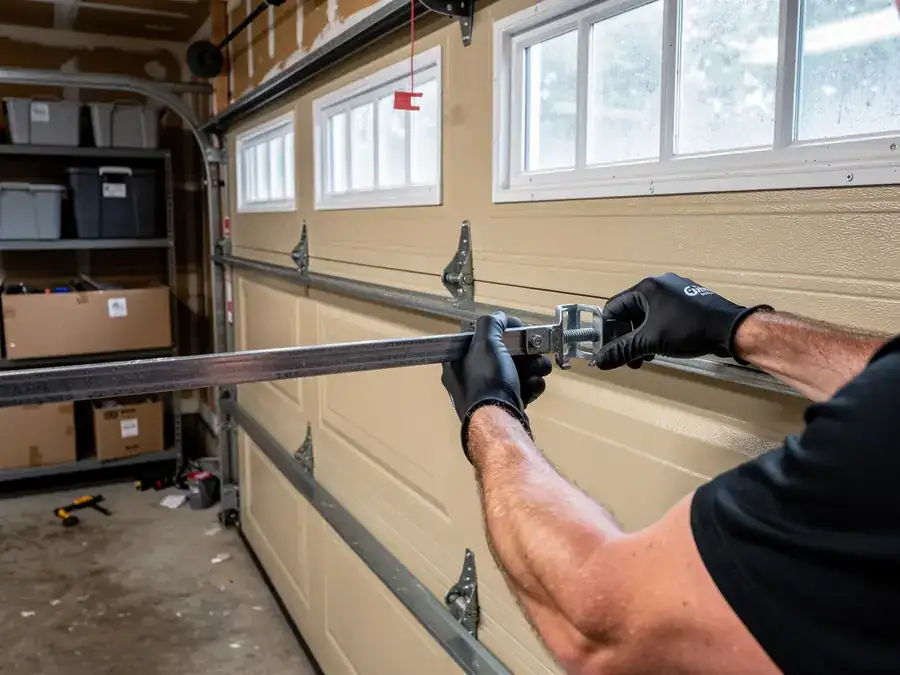
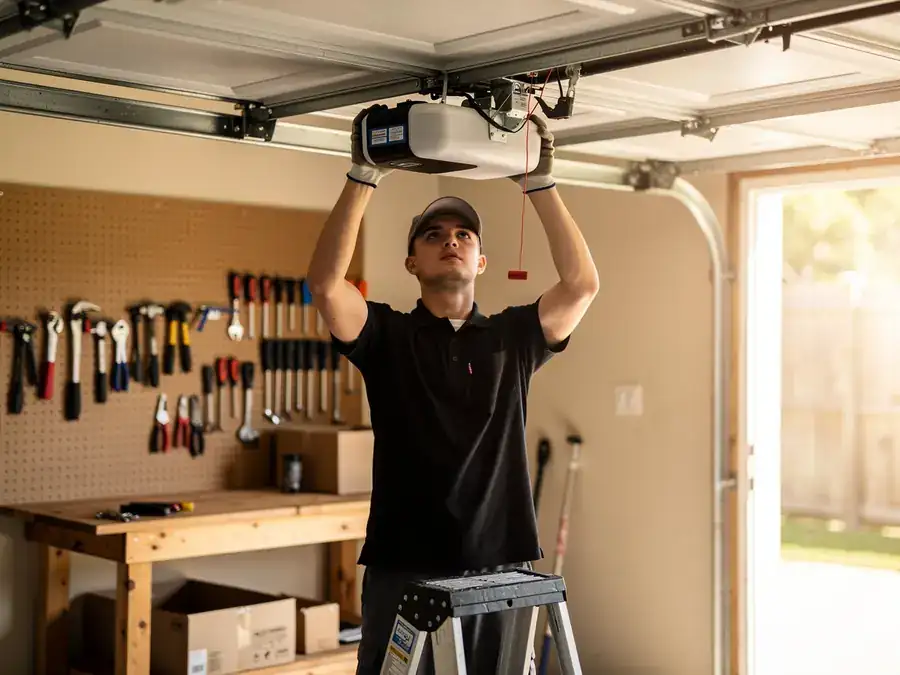
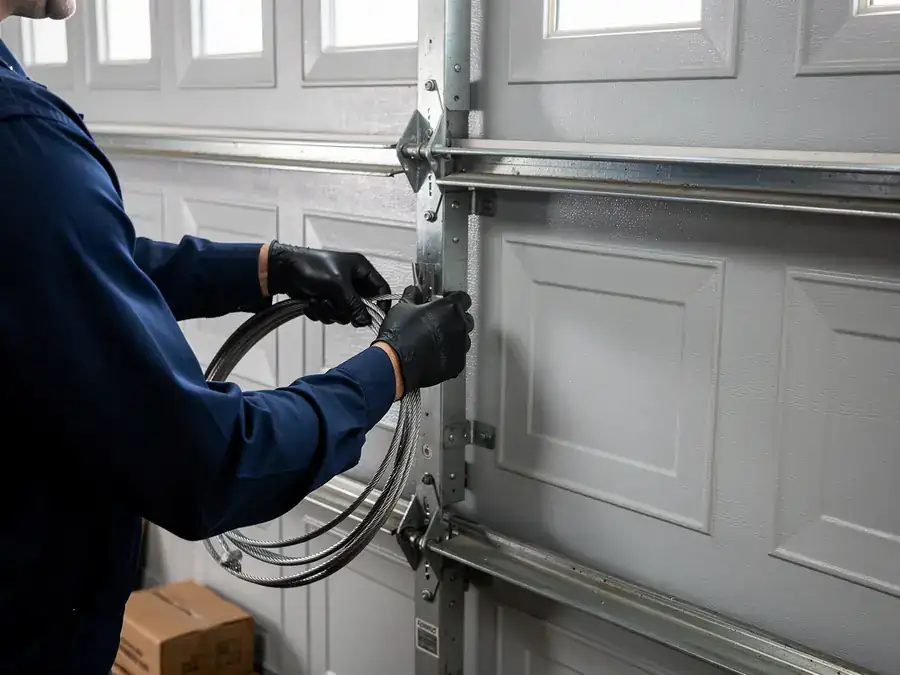
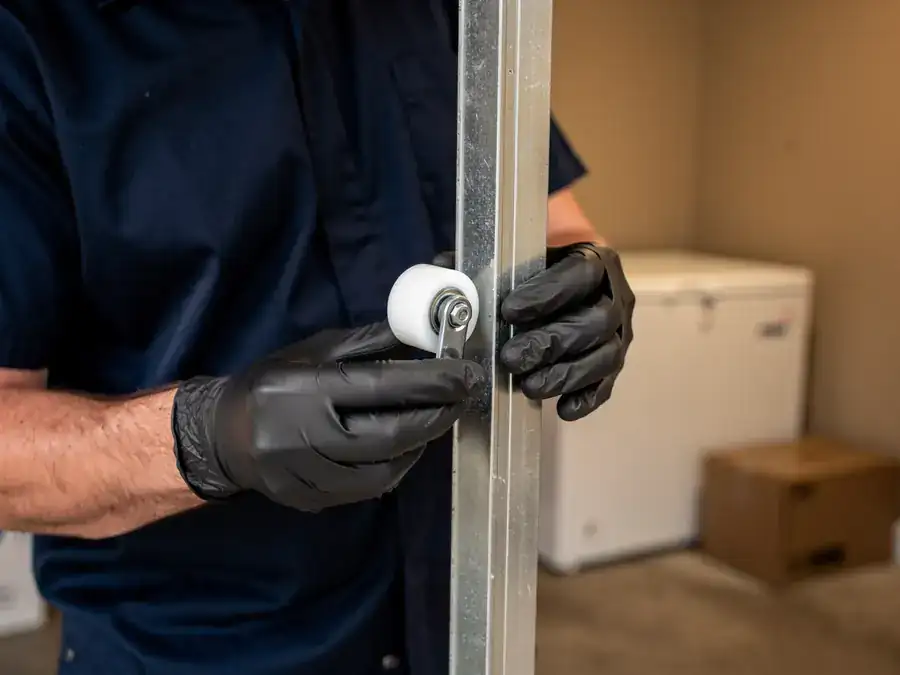
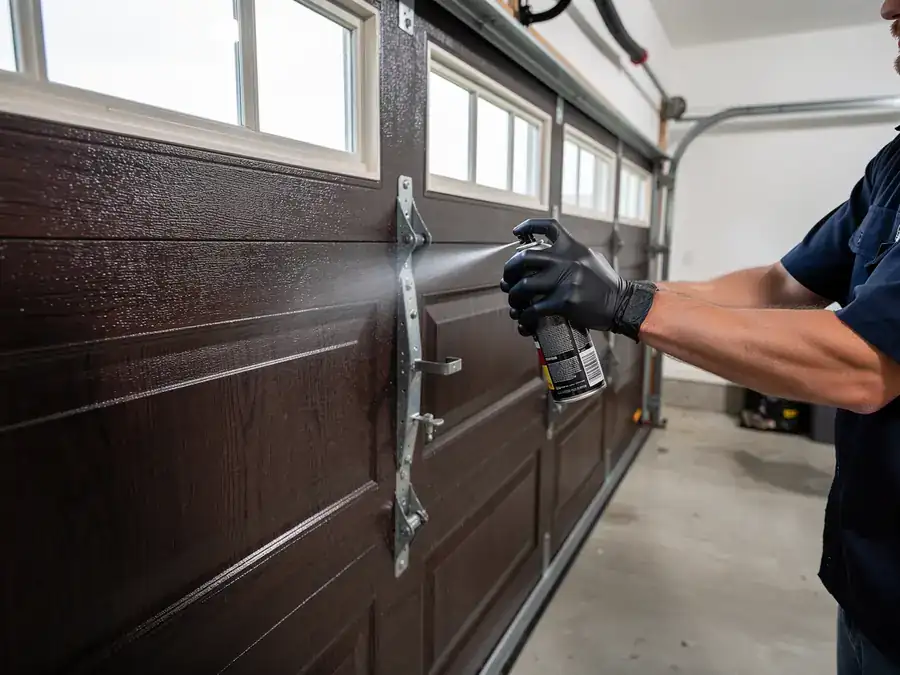
We start by killing power to the opener so nothing drives the door while we're under it. Then we check whether the track itself is bent or just the brackets holding it to the framing have worked loose - on 2002-era builds in this area, it's commonly the brackets, since the original hardware wasn't built for the number of open-close cycles a door sees by year twenty. We re-seat the rollers, square the track against the jamb, and torque the brackets back to the framing. If a roller has cracked or a cable has frayed from riding against a bent section, we replace those parts rather than patch around them. Last step is running the door through a full open-close cycle by hand before we reconnect the opener, to confirm it tracks straight under its own weight and not just under motor power.
Why This Fails Locally
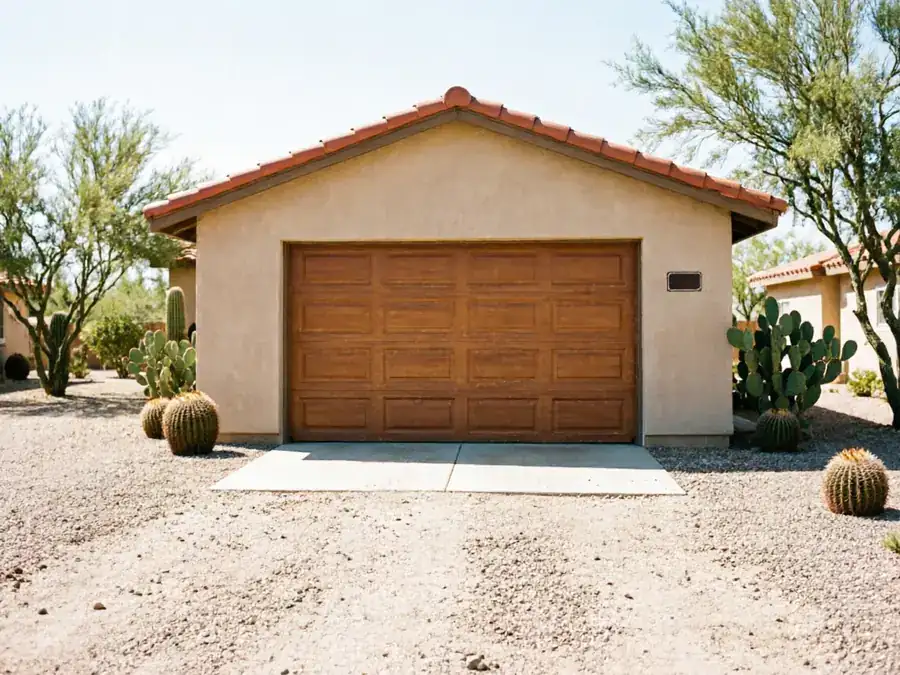
Severe summer heat puts real stress on garage door hardware here - metal track expands and contracts through big daily temperature swings, and that cycling works screws loose and dries out roller grease faster than it would in a milder climate. Combine that with housing stock concentrated around 2002, and you get a specific failure window: doors old enough that original grease has gone dry and brackets have backed out a quarter turn at a time, but not yet old enough that most owners have thought to replace the rollers proactively. Henderson's broader service area runs housing from 1979 to 2006, so a lot of neighboring areas are dealing with even older original hardware than Whitney's 2002 median - which is part of why this isn't a one-size job across the area and why we look at the actual door instead of assuming the year.
What You Are Seeing
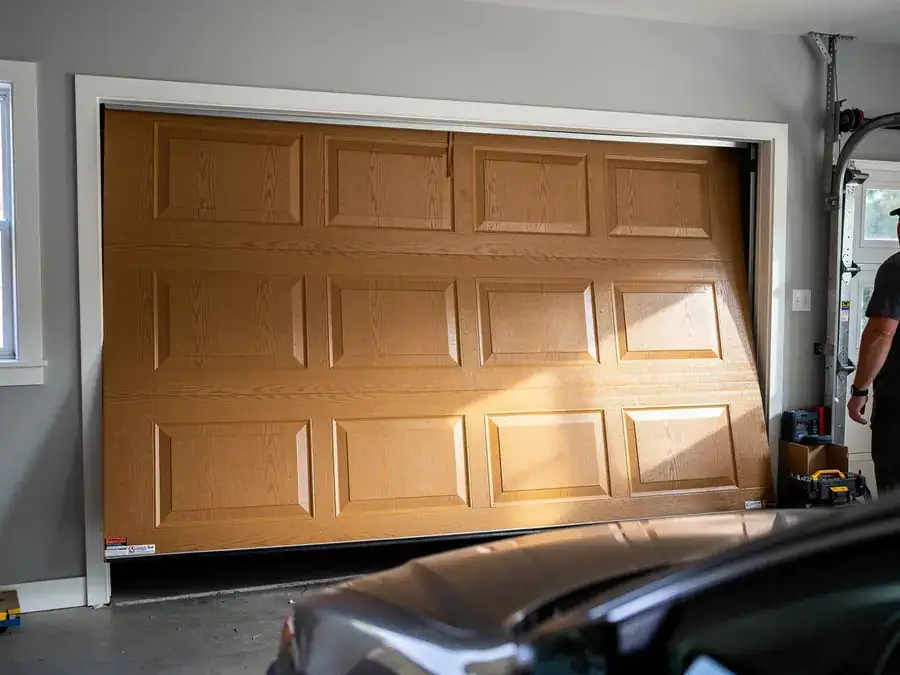
If the door looks crooked in the opening, hangs at an angle, or one side drags against the track with a scraping sound, that's a roller or bracket starting to go, not yet fully off. A door that's visibly jumped the rail - you can see daylight between the wheel and the track - needs the power cut and a call placed, not another cycle on the opener. A grinding or popping noise right before the door binds is usually the roller itself failing, and it's worth getting looked at before it fully derails and bends the track on the way down.