What You Are Seeing
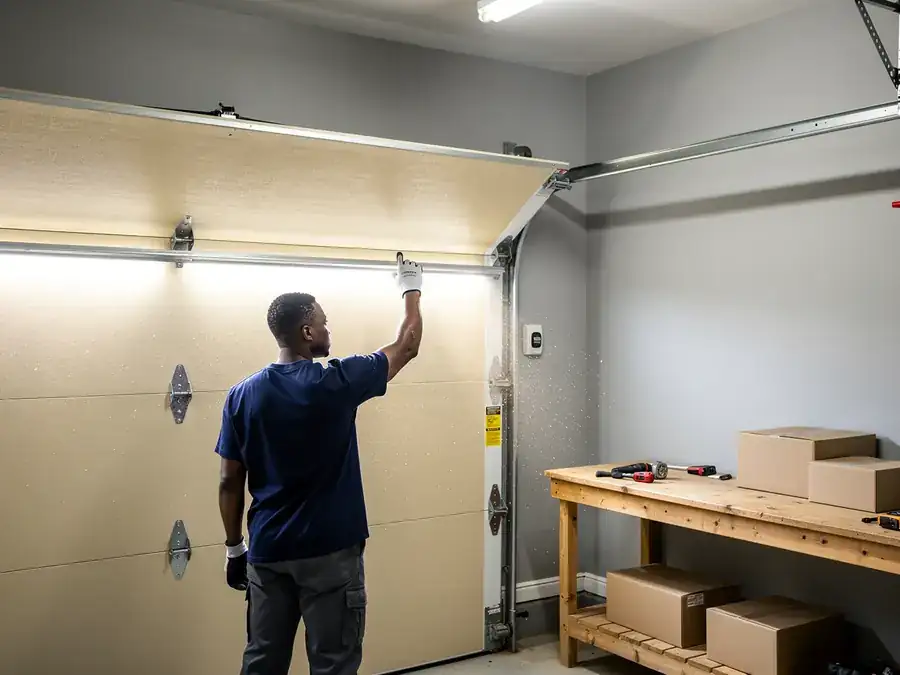
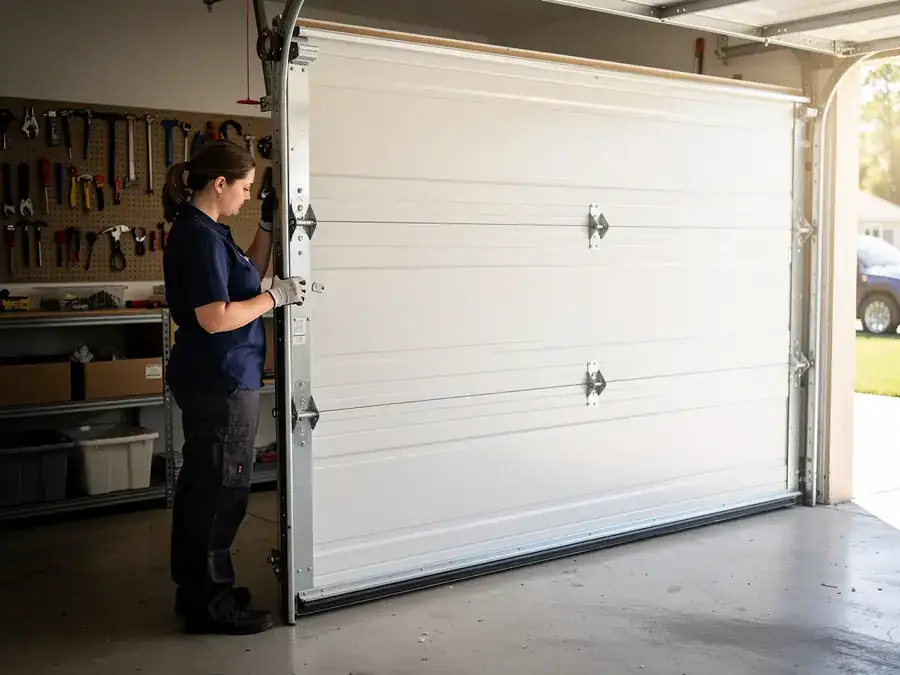
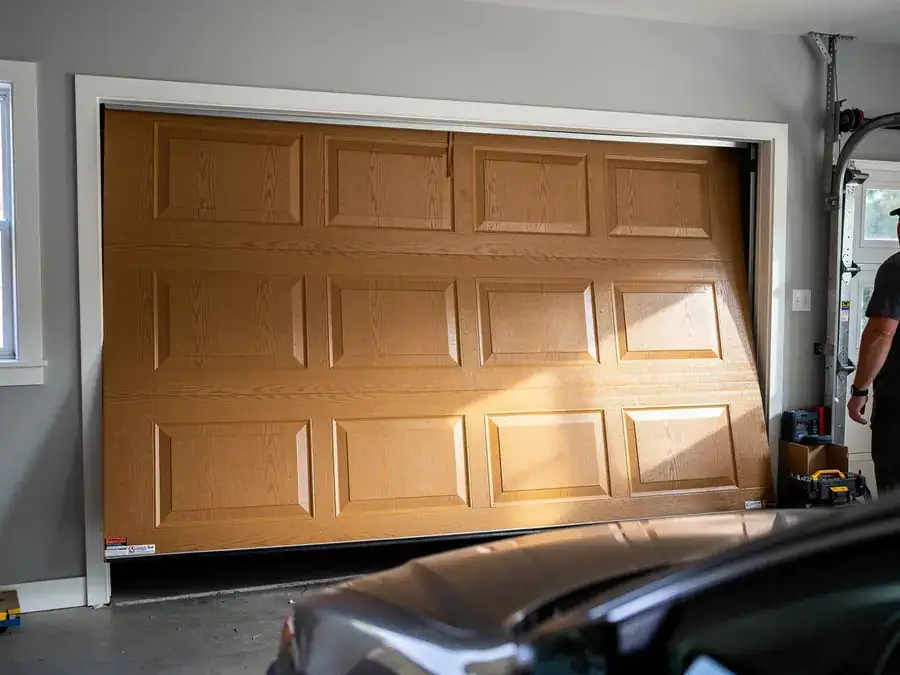
The cable comes off the drum first, usually on one side, and the door hangs crooked or won't lift past a foot before it binds
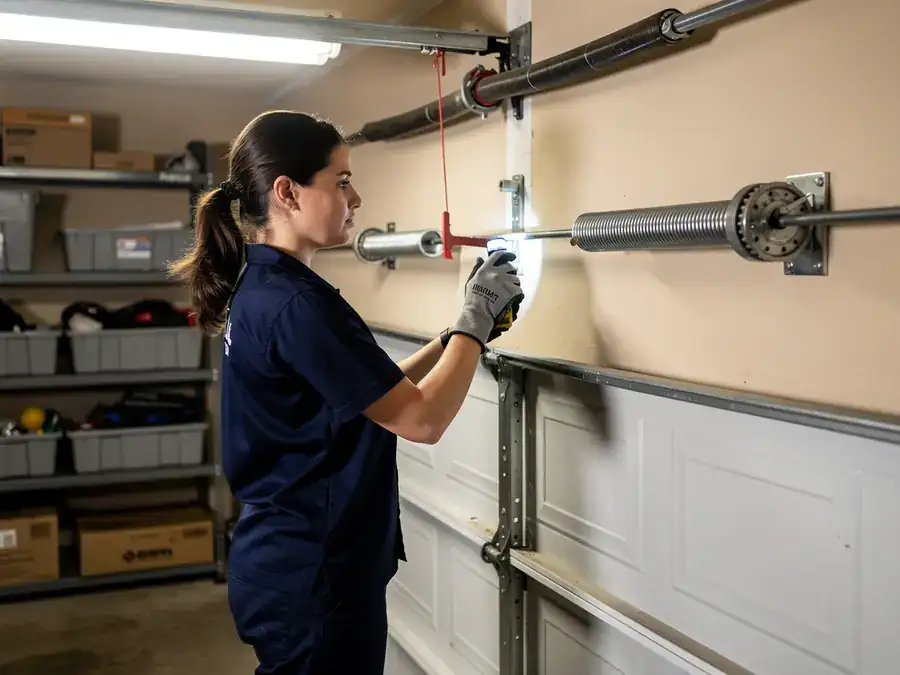
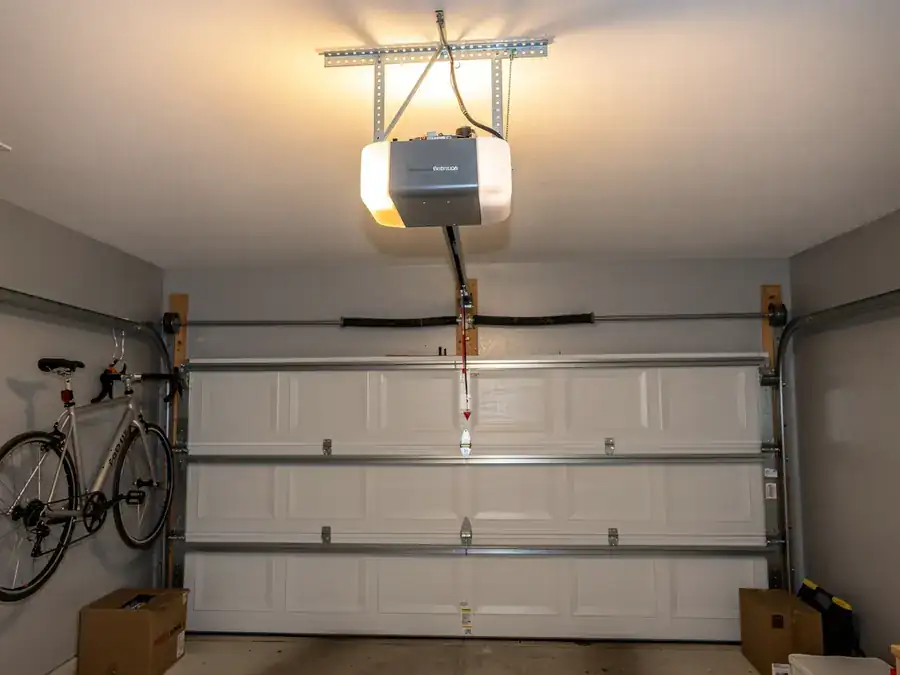
Sometimes you hear it before you see it - a snap, then the door drops hard and stops dead against the track. On a lot of Spring Valley doors that's a torsion-style setup, cable wound around a drum at each end of the spring shaft, and once one side slips off the groove the door is no longer balanced on both corners.
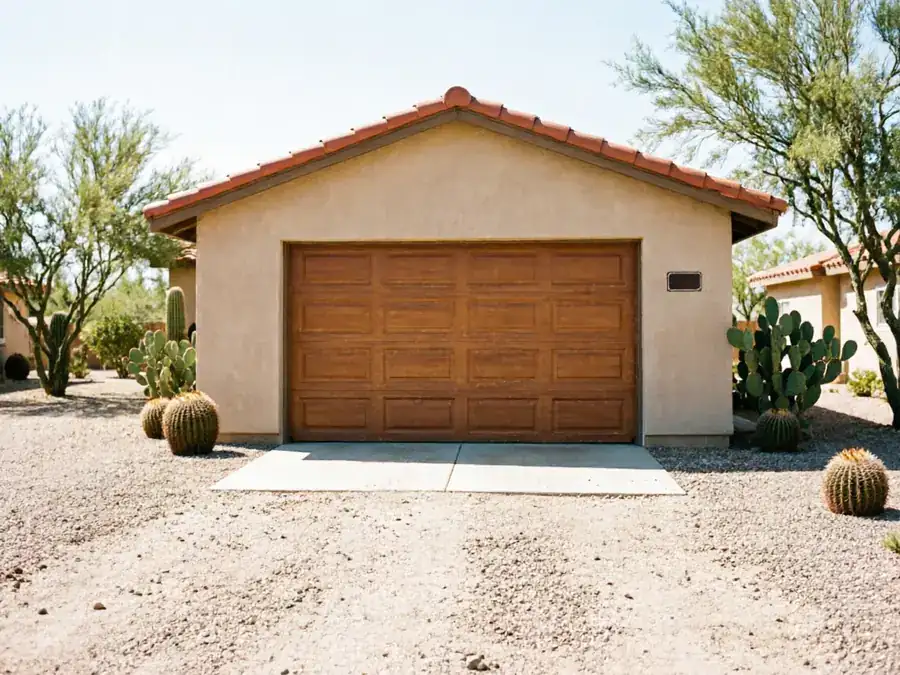
Spring Valley's housing stock centers on 1998
Which puts most of these doors solidly in the torsion-spring era rather than the older extension-and-pulley setups you'd find on much older stock. That means the failure point is almost always the drum groove or the cable itself fraying where it wraps the drum, not a pulley snapping loose. The cable is galvanized aircraft cable, thin gauge, and it's built to wear eventually - the question is whether it's worn evenly or whether one strand has already started to fray and is about to let go under full spring tension.
Why This Fails Locally
Heat is the real driver here. This area sits in a severe-heat climate band, and that matters more for cable than most homeowners expect. The factory grease on a cable dries out faster in sustained high heat, and a dry cable rubs metal-on-metal against the drum groove instead of riding smooth. That friction is what turns a healthy cable into a frayed one years before it would wear out in a milder climate.
It's not a dramatic failure. It's slow - one or two strands going at a time, usually on the side that gets more direct sun through the day, until the cable is down to a handful of strands holding a two hundred pound door under spring tension. By the time you notice the door pulling to one side, the cable has usually been compromised for weeks. We see this across the wider service area, but on Spring Valley's late-90s doors specifically, the original cable is now old enough that heat-driven wear is catching up to a lot of houses in the same few years, not spread out randomly.
What the Fix Involves
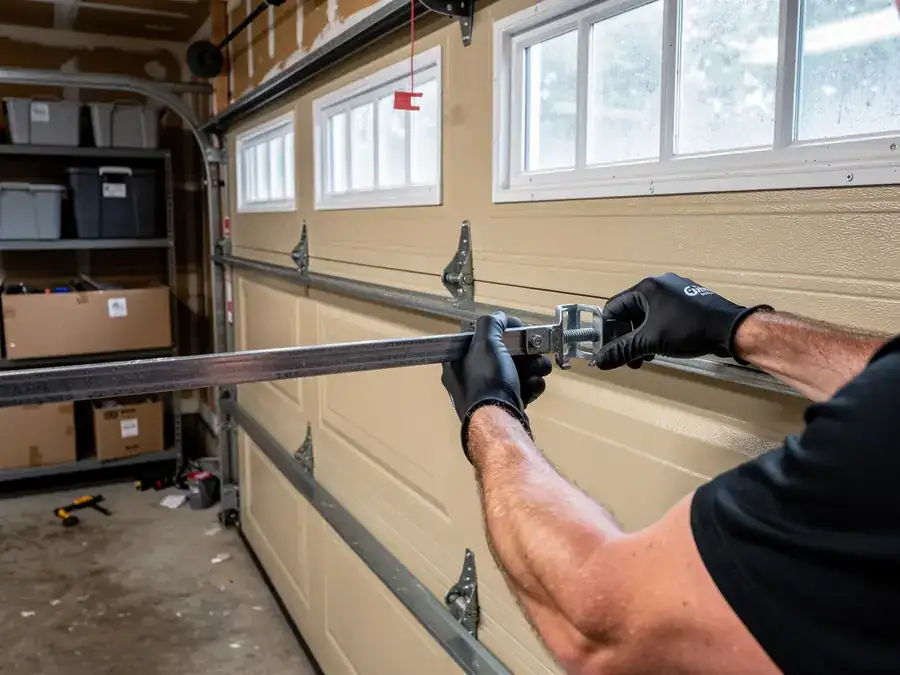
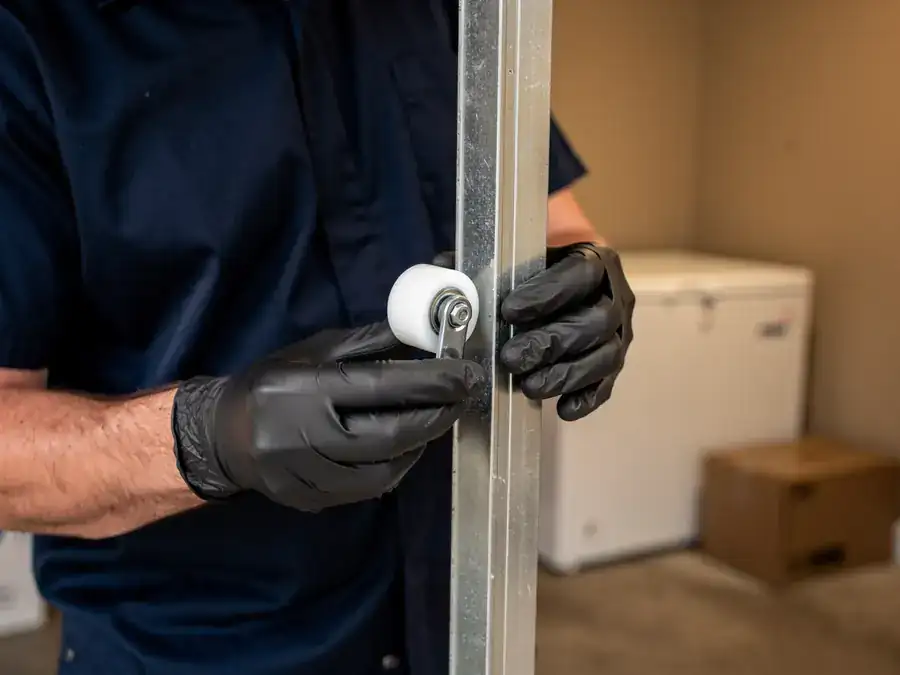
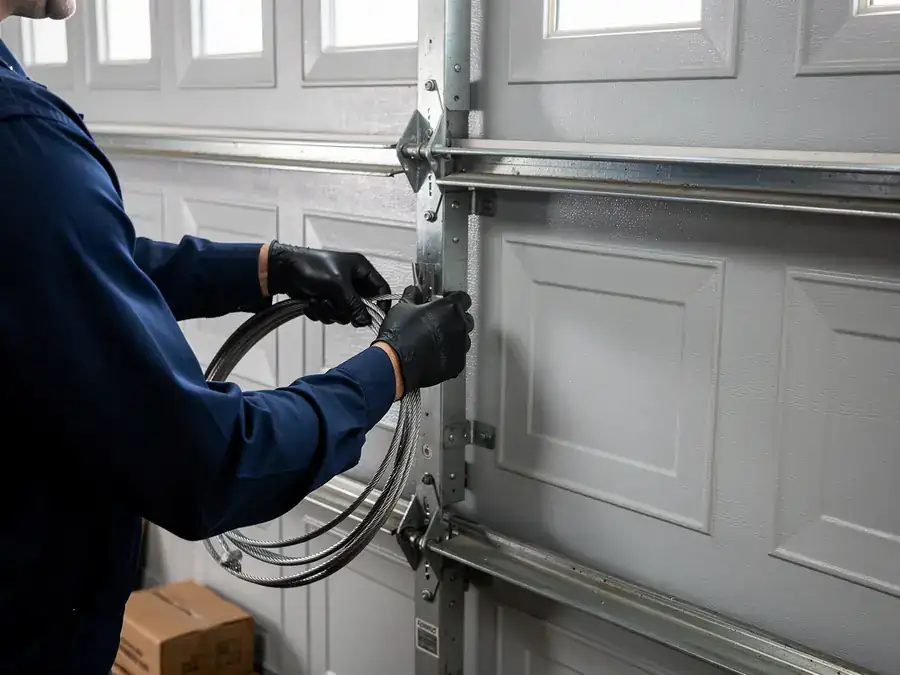
A cable repair is not a spot fix - we replace both cables as a pair, not just the broken one. The one that hasn't snapped yet is the same age and has had the same sun exposure, so leaving it in place just means a second call in a few months. We also check the drum groove for grooving or a chipped edge, since a damaged drum will fray a brand new cable just as fast as it did the old one.
Part of the job is releasing spring tension safely before touching the cable, then re-tensioning once the new cable is seated and wound correctly on the drum. Get the wind count wrong and the door comes up unbalanced, which just shortens the life of the new cable. This isn't a long job once we're on site, but we're driving the fourteen miles out from Henderson to get there, so it's worth describing what's wrong over the phone first so we bring the right drum size and cable gauge.
The DIY Question
A broken cable under spring tension is not a safe DIY repair
The spring is still loaded even with the cable gone, and releasing that tension wrong is how people get hurt - we won't talk anyone through doing it themselves. Where a homeowner can help is before it breaks: if your door has started pulling to one side when it opens, or you can see a frayed strand catching the light near the drum, that's worth a call before it lets go completely, not after.
One honest limit: if the drum or the torsion shaft is also damaged
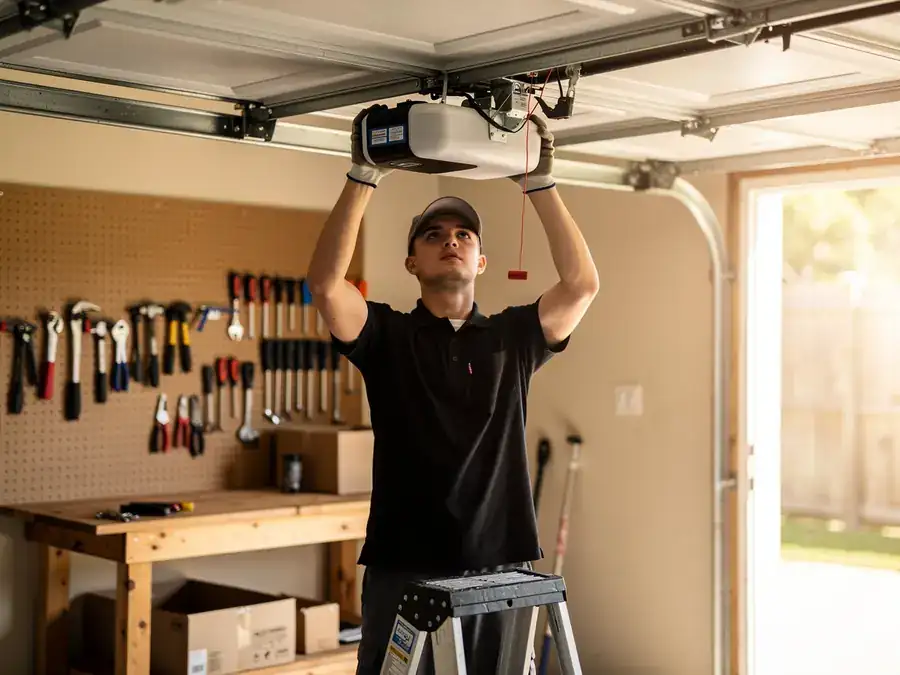
Bent shaft, cracked drum, anything beyond the cable itself - that's a bigger repair than a cable swap, and sometimes the more sensible move is replacing the opener hardware on that side rather than patching around a damaged drum. We'll tell you straight which one you're looking at rather than selling a cable job that won't hold.