Why This Fails Locally
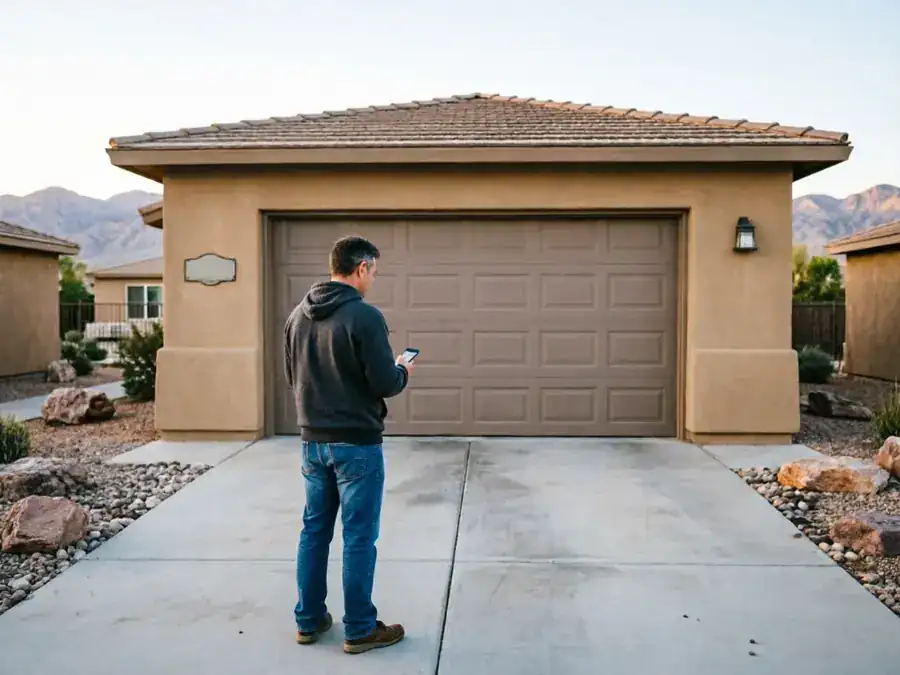
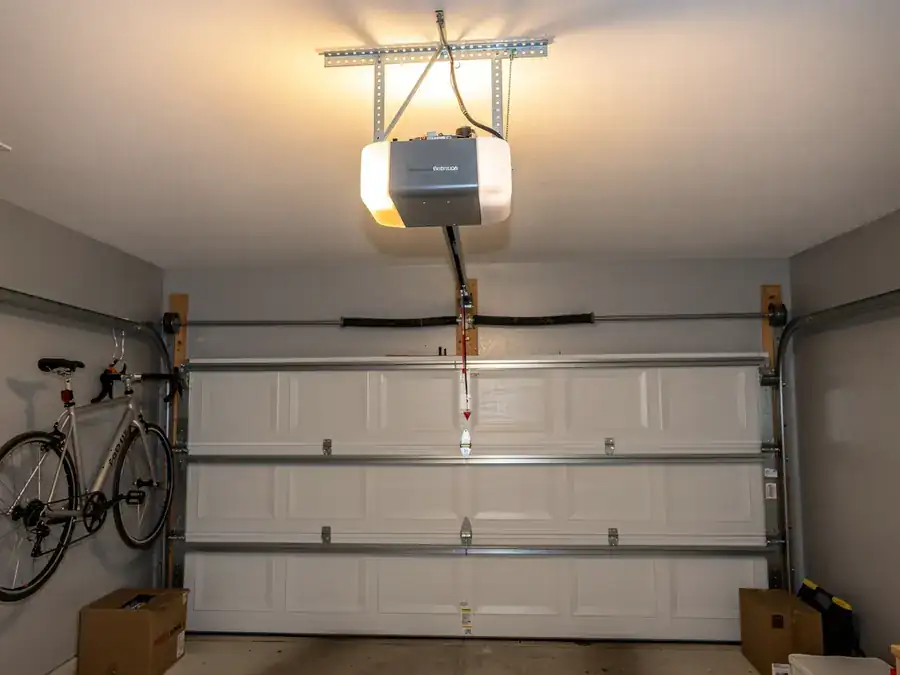
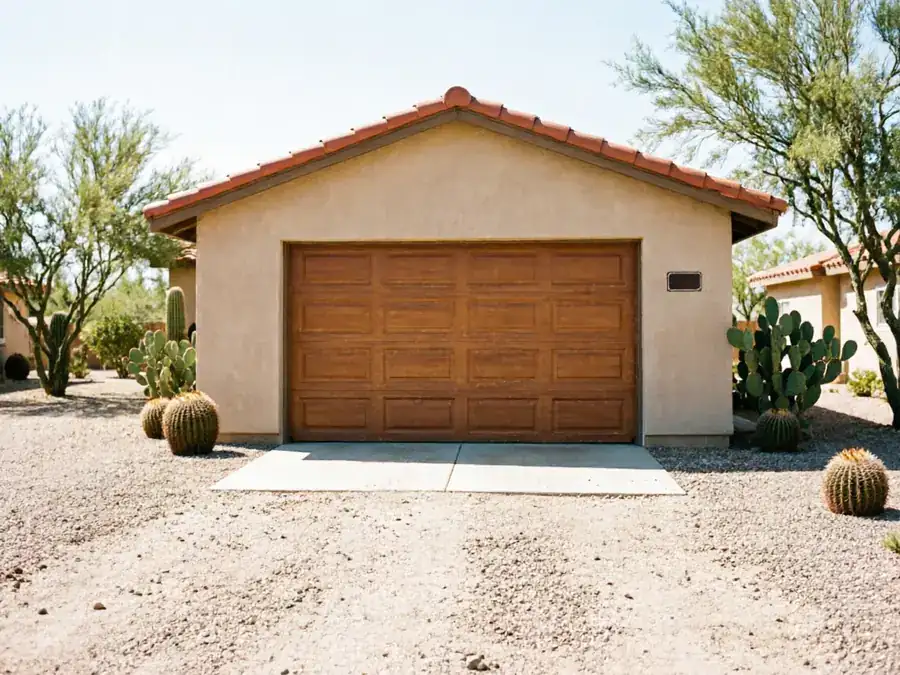
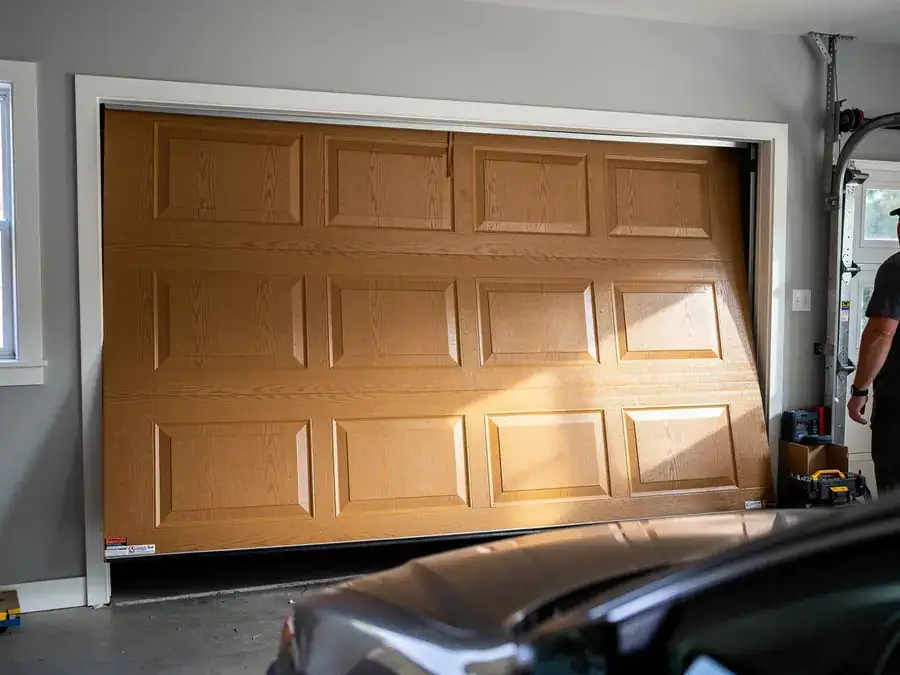
Spring Valley's garages sit in a severe-heat climate band, and that matters more for off-track failures than people expect. Steel track brackets and roller stems expand and contract with the swings between a 115-degree garage in July and a cool night, and over close to three decades that cycling works screws loose in the jamb and lets track drift out of alignment a few degrees at a time. On a 16-foot double door, a few degrees of drift at the top of the track is enough for a roller to walk off the rail under normal opening and closing. It's a slower failure than a snapped cable, which is why a lot of homeowners here say the door was 'fine yesterday' - the track had already been drifting for months before it finally let go.
What the Fix Involves
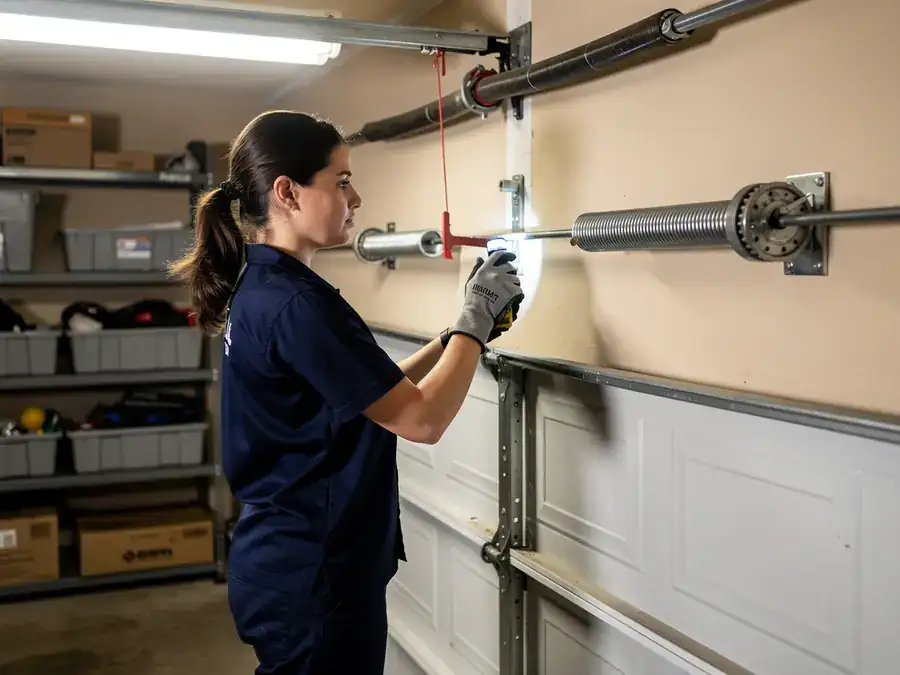
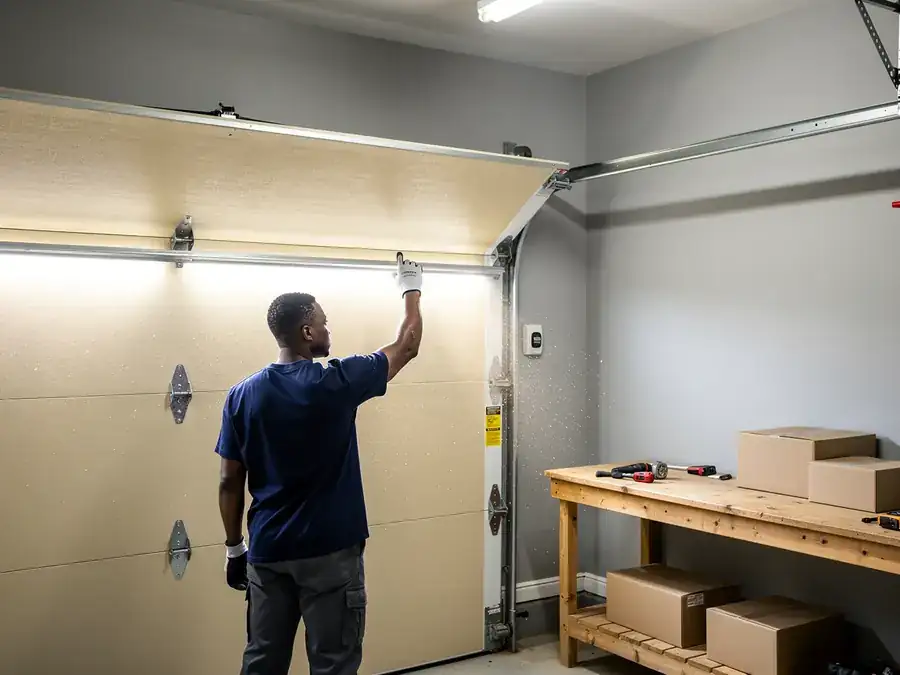
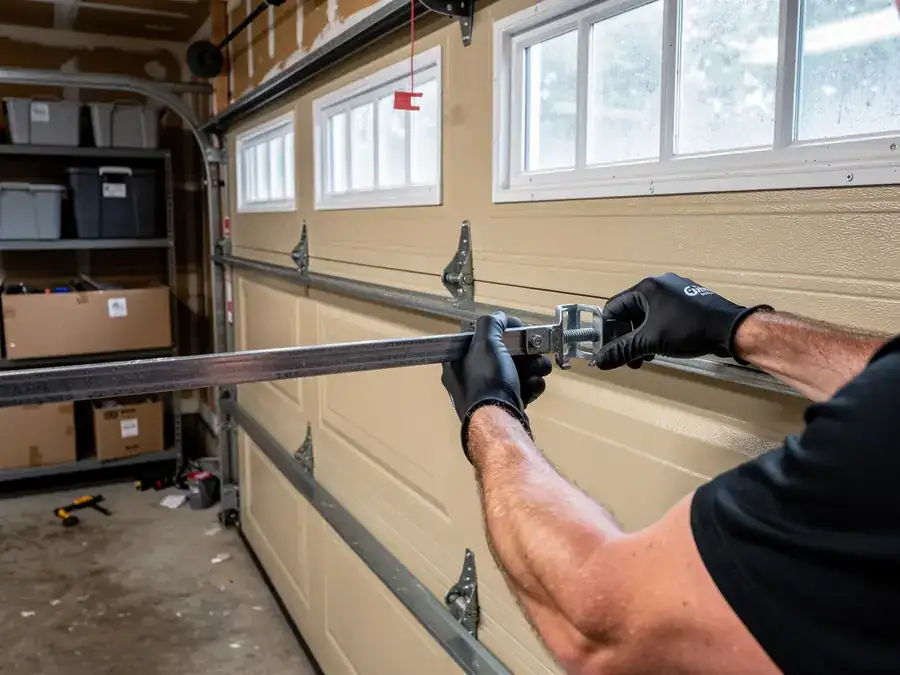
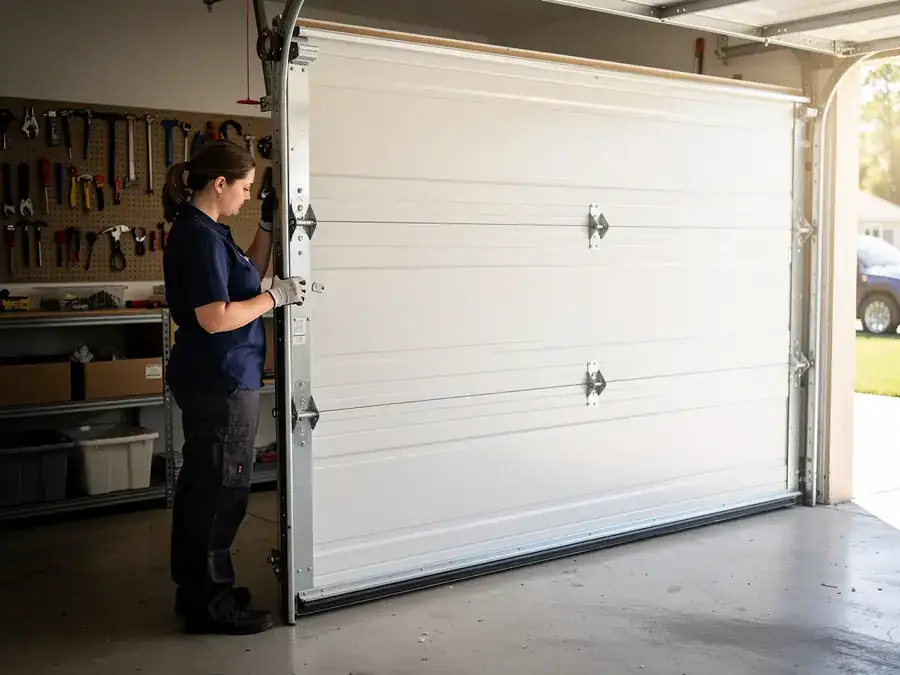
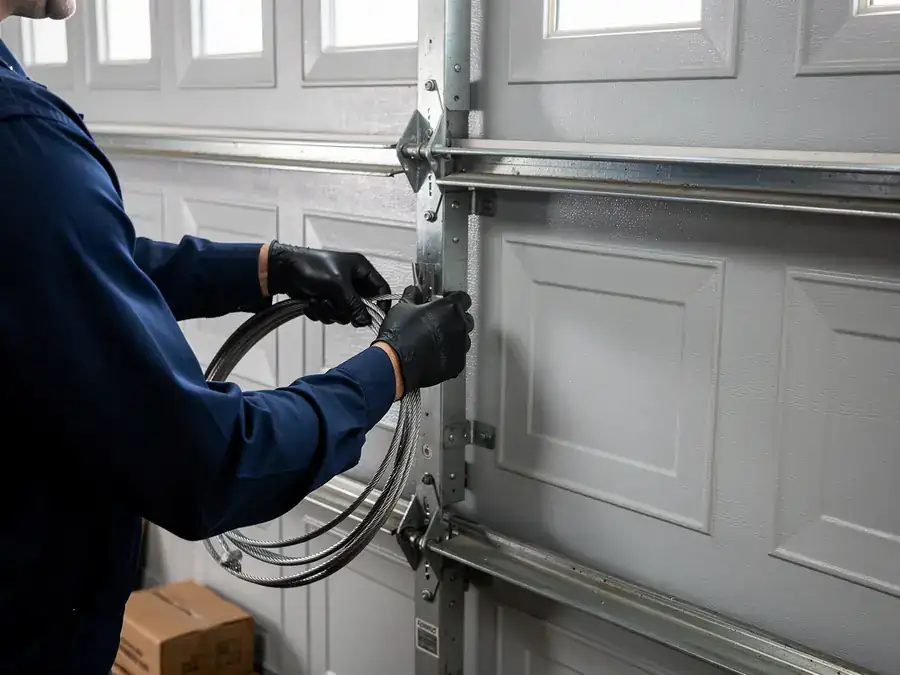
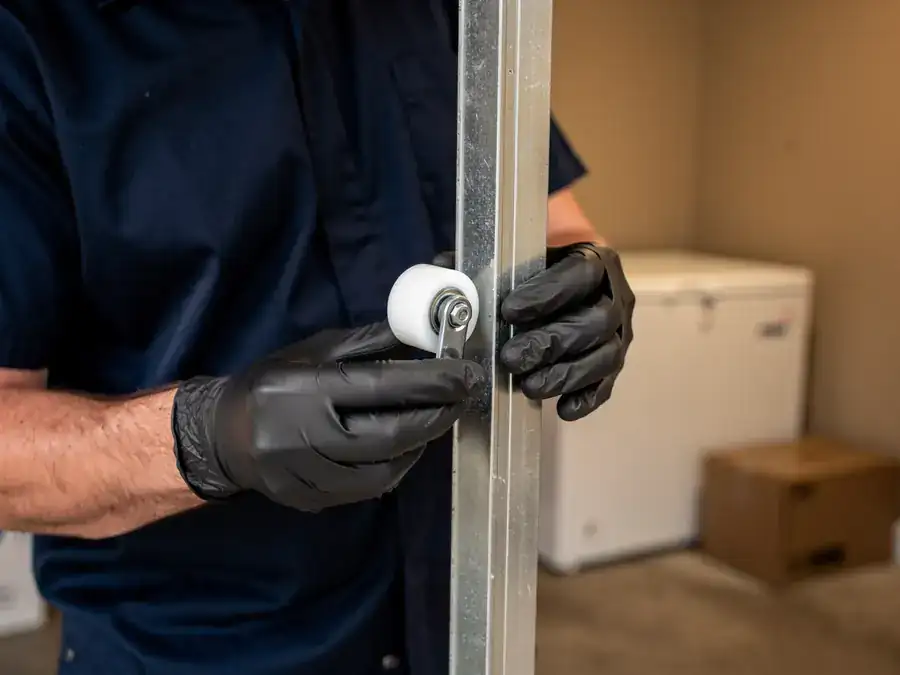
Putting a door back on track starts with checking whether the track itself bent when the roller jumped - on a double door that size, it often does, and a bent section gets replaced rather than hammered straight. Next is the bracket and lag screws holding track to the jamb; in houses from this era, the original screws have usually backed out enough that re-tensioning the door just pulls them loose again, so they get swapped for longer fasteners into solid framing. Rollers get checked one at a time, since a 16-foot door has roughly double the roller count of a single-car door and it's common for more than one to be worn, not just the one that jumped. We'll level the door, re-square both tracks, and run it through a full cycle before calling it done. One honest limit here: if the track is bent in more than one place or the door is old enough that the steel has fatigued, replacing the track costs close to what a new door section does, and we'll tell you that instead of billing you twice for the same repair.