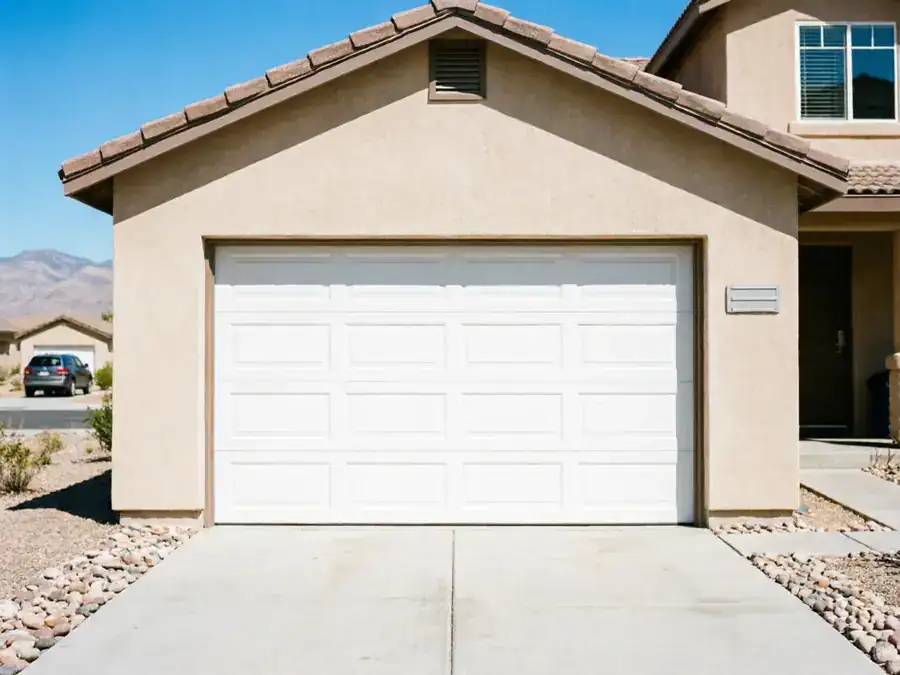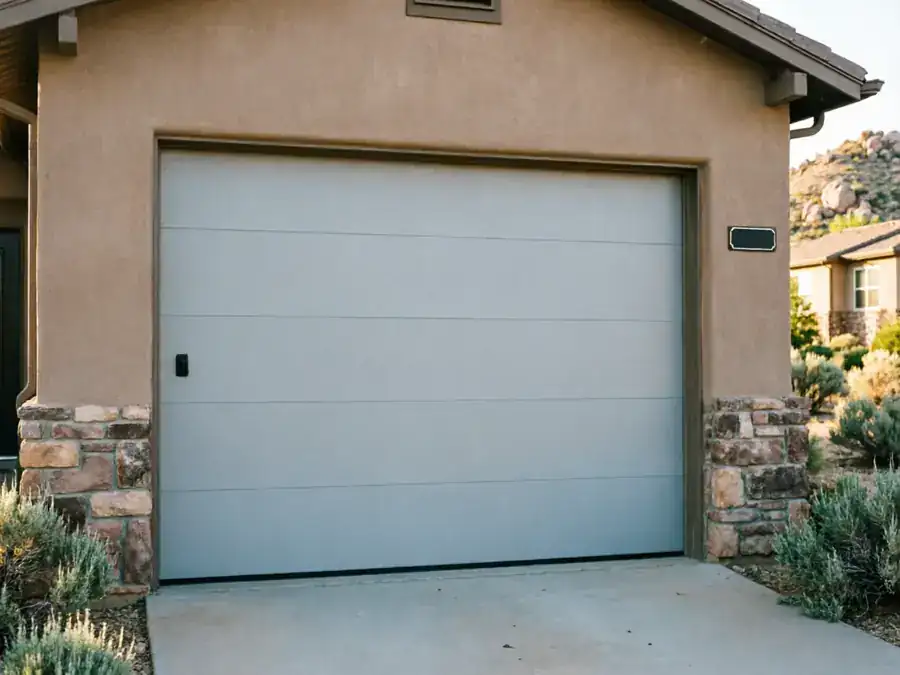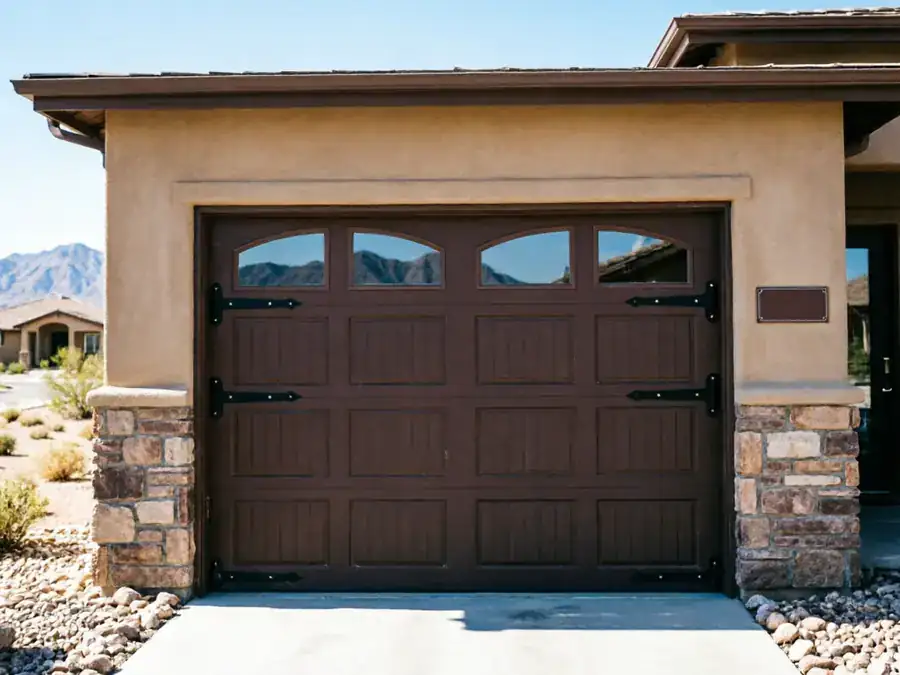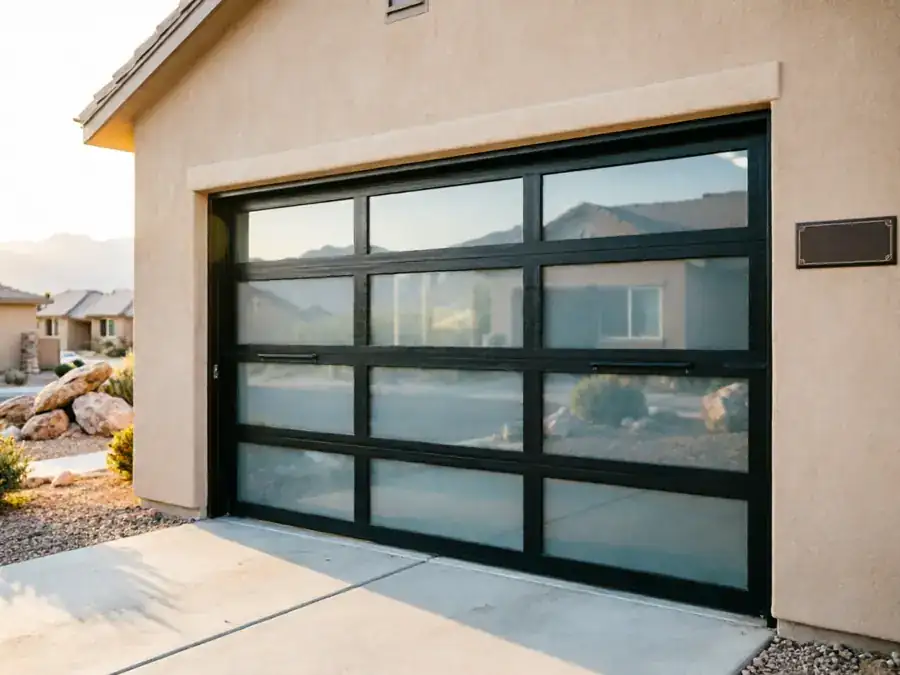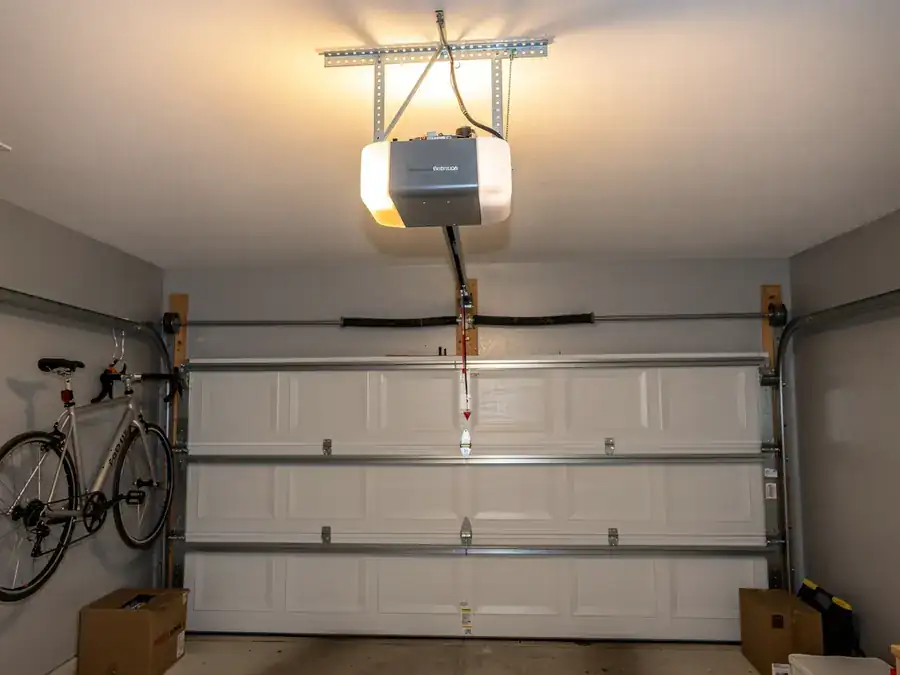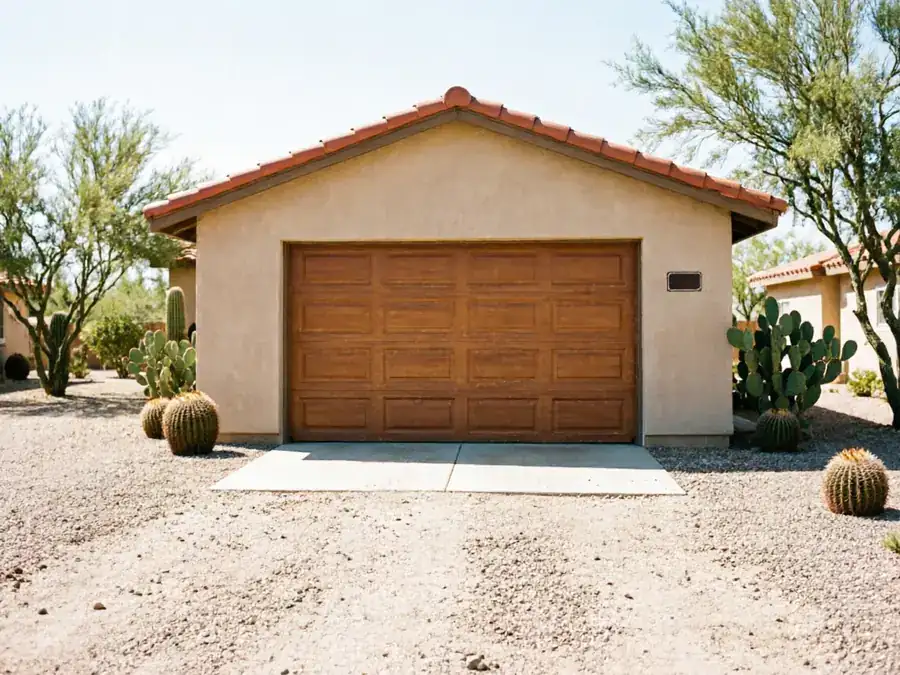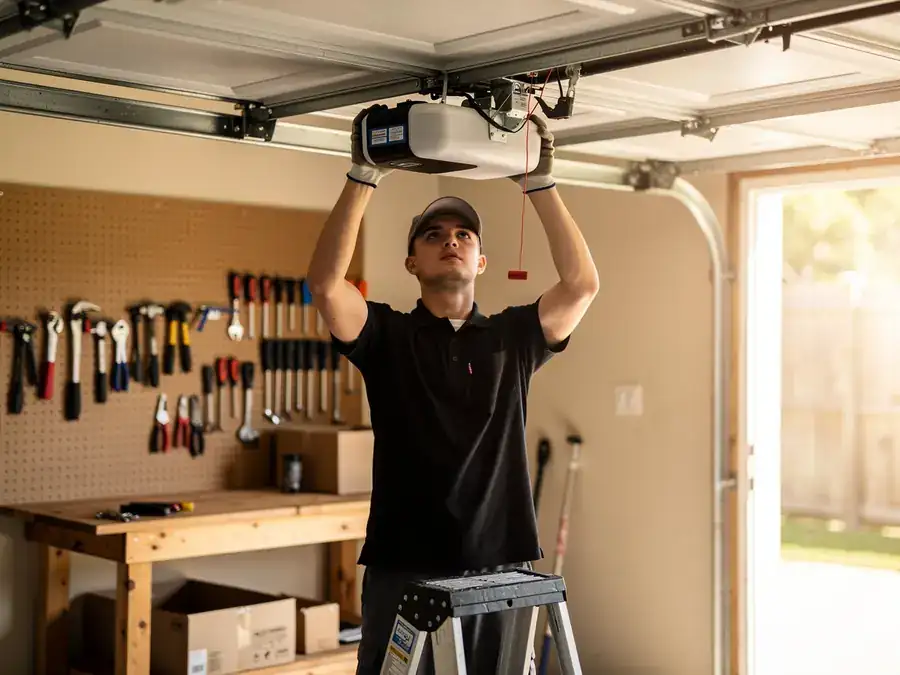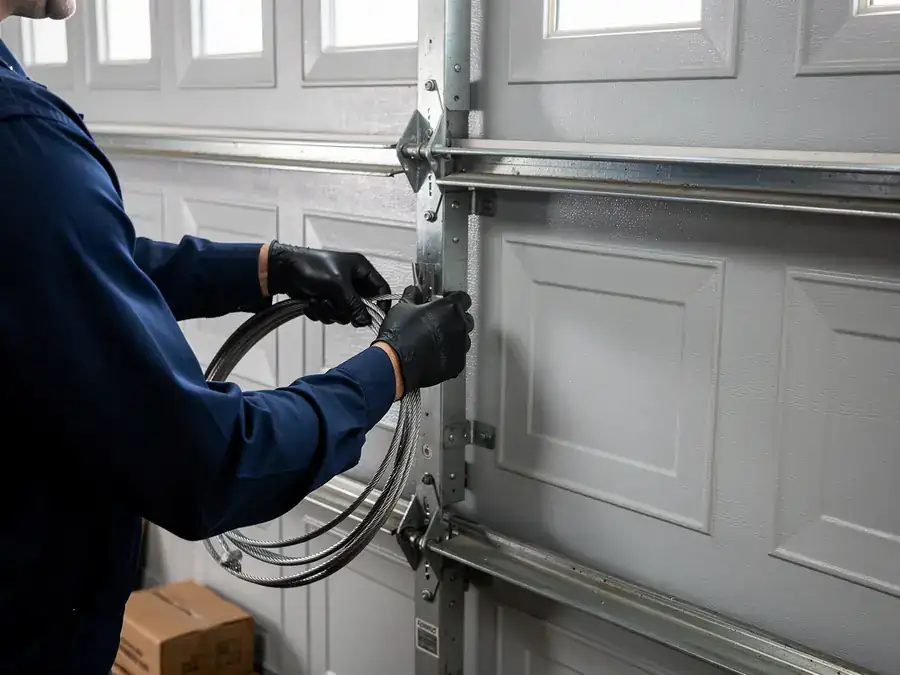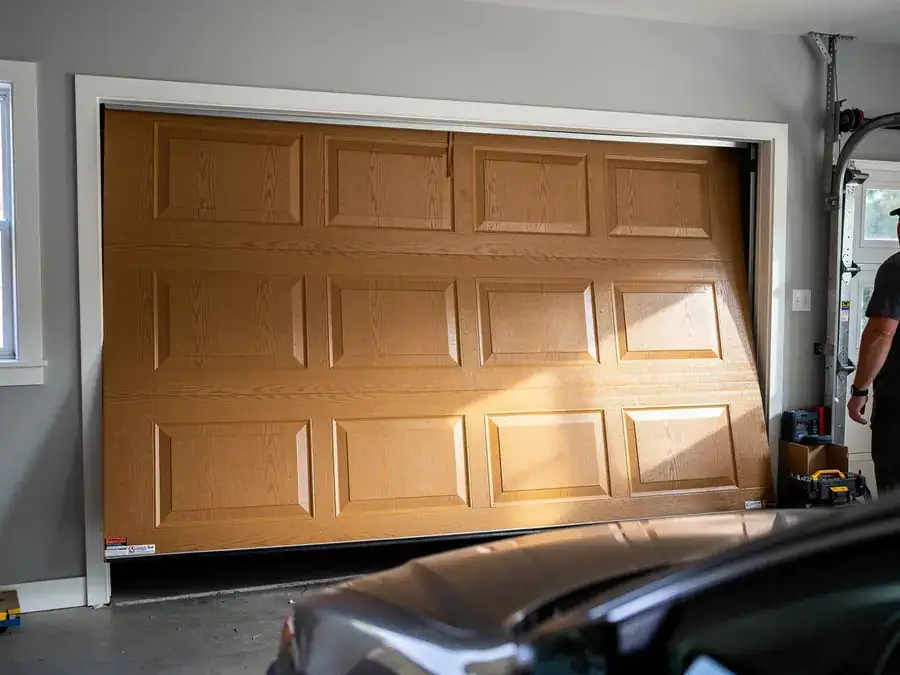
What You Are Seeing
Spring Valley sits about 14 miles from our Henderson shop
Which is the first thing worth knowing if you're calling about a door that's grinding, hopping in the track, or catching every third cycle. That drive means a roller job out here gets scheduled as a real trip, not a drop-by between other calls, so when we come we bring enough roller stock - nylon and steel both - to finish in one visit rather than guessing and coming back.
- 14 miles
Most homes in this area were built around 1998
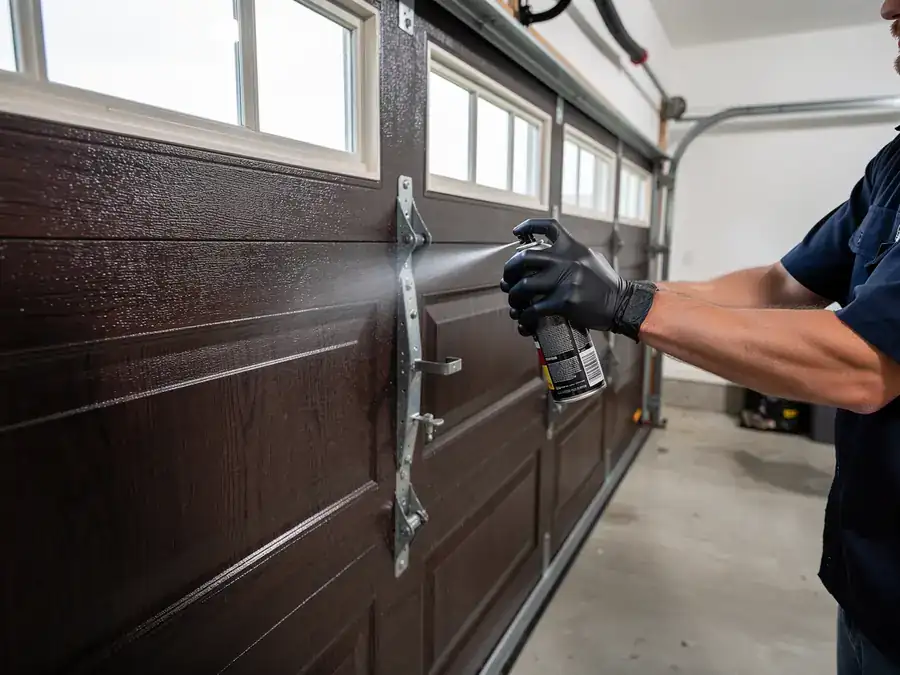
Which puts the garage doors squarely in the era of steel rollers on steel tracks with minimal lubrication built into the hardware. After close to three decades, those stock rollers are usually the original ones, and the stems have worn enough play into the roller bracket that the door rattles sideways as it travels. If your door sounds like a shopping cart with a bad wheel, that's almost always what you're hearing - not the opener, not the spring.
Why This Fails Locally
The valley's summer heat is severe, and that matters more for rollers than people expect. Steel rollers with sealed bearings run dry faster when the garage itself sits in the 110s for weeks at a time - the grease packed into the bearing thins out and migrates, leaving metal running on metal inside the roller stem. Nylon rollers don't suffer that bearing issue, but the nylon wheel itself gets brittle with repeated heat cycling over the years and starts chipping at the edges, which is why some doors develop a thump at the same spot in the track every time they pass it.
Spring Valley's roughly 87,275 households sit at a higher median income, about $72,364, than the service area average, and what we see on calls out here tends to reflect that: more owners replacing rollers before a full track failure rather than after, and more doors that still have their original 1998-era hardware simply because nobody's forced them to touch it yet. The failure mode is the same heat-driven wear either way - it's just a question of catching it before a roller stem snaps and drops the panel off the track.
What the Fix Involves
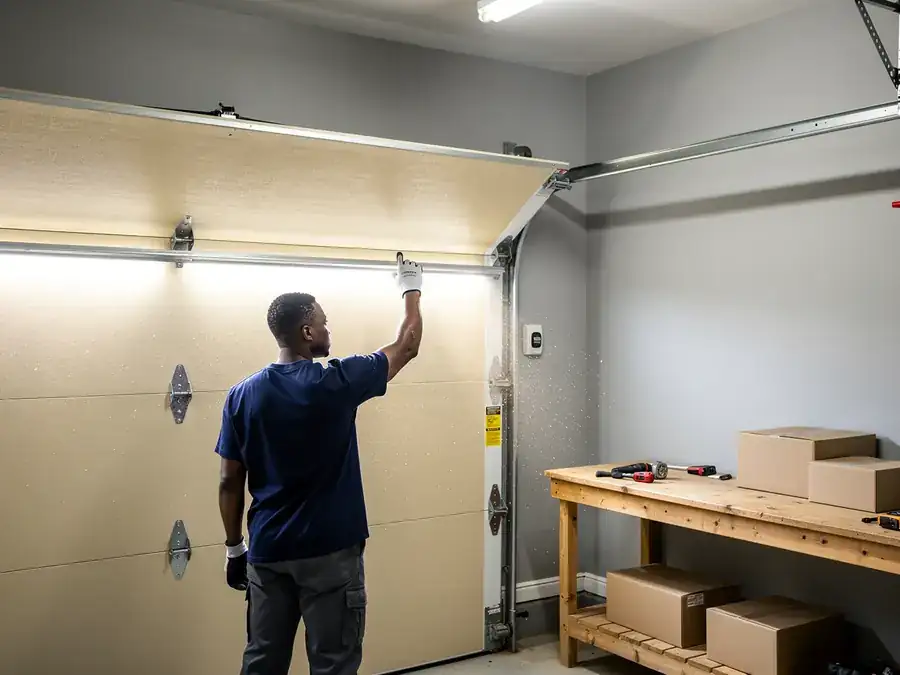
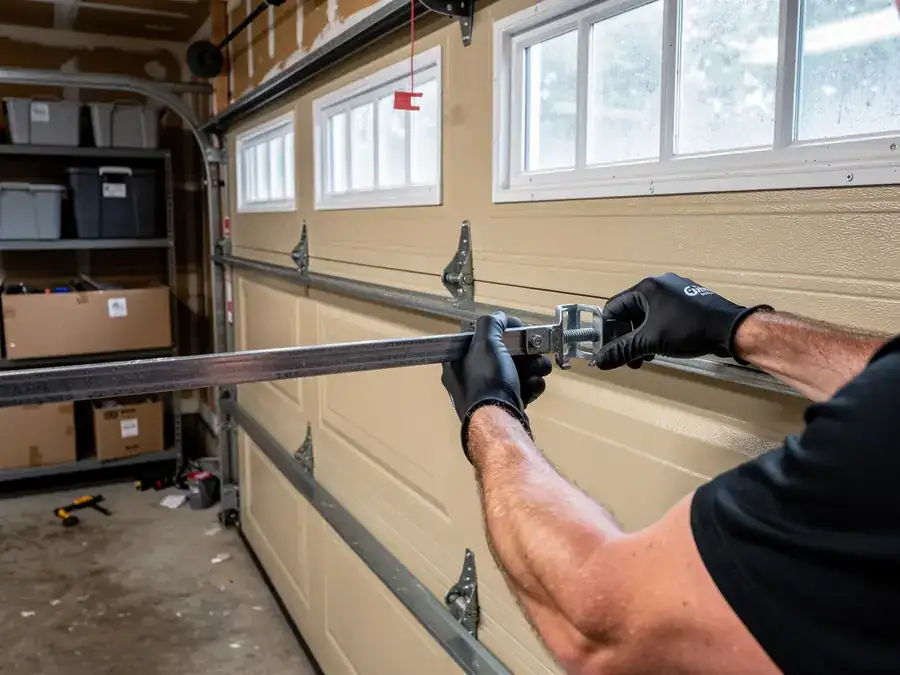
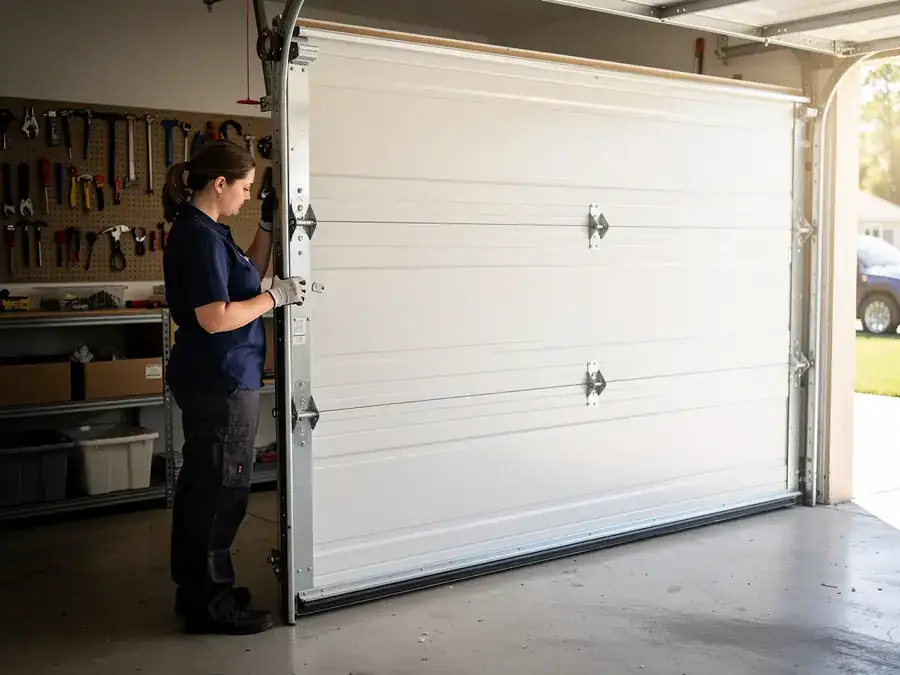
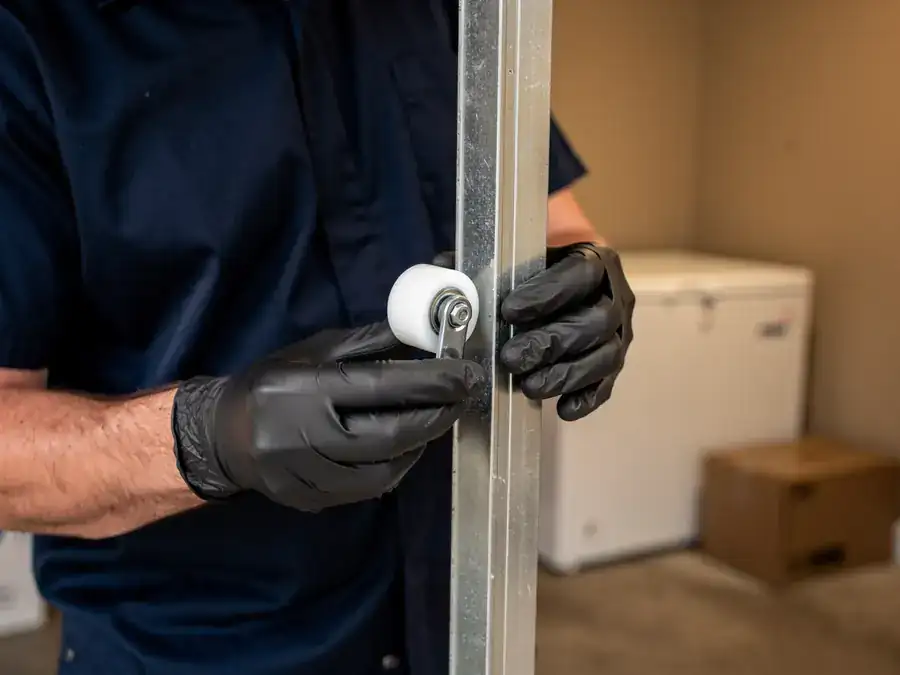
A straight roller swap on a double door usually means working one side at a time with the door supported, pulling each roller stem from its bracket, and setting in a replacement - we use sealed-bearing nylon rollers unless you ask for steel, since nylon runs quieter and doesn't need the periodic lube that steel does in this heat. We check the track alignment at the same time, because a worn roller often means the track picked up a slight bend from the extra side-to-side play, and a new roller riding in a bent track will just wear the same way again.
If the bottom bracket or hinge has worn oval along with the roller, we replace that hardware too rather than bolt a new roller to a stretched bracket - it won't hold. That's the limitation worth saying plainly: a roller swap fixes the roller, not a track that's already racked out of square. If the track's bent, that's a separate repair, and we'll tell you before we start if that's what we're looking at rather than charge for rollers that won't solve the noise.
The DIY Question
Swapping a single roller on a door that's down and unplugged isn't beyond a patient homeowner with the right tools
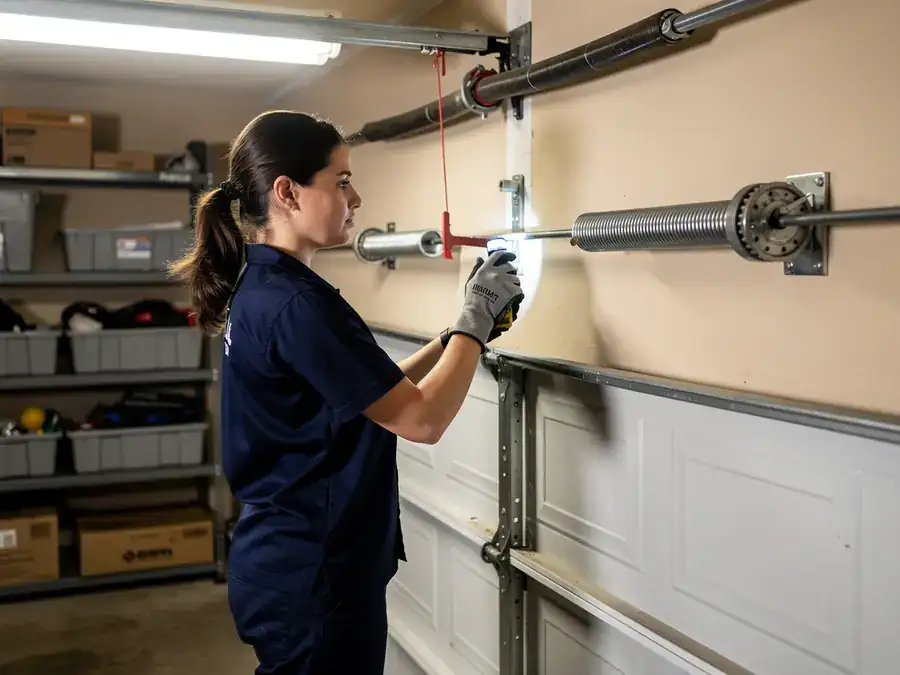
The stems are designed to come out. Where it goes wrong is the top two rollers on each side, which sit under spring tension transferred through the track, and a door that's even partly lifted when you pull one can jump the track or drop a panel on your hand.
Given the age of the hardware common in this area
Original 1998 brackets that have never been off - we'd rather you call for those top rollers and handle the bottom two yourself if you want to save the trip. Mixing new rollers into an old, slightly bent track also just hides the real problem for a few months, so if the door's been noisy a while, it's worth having someone check the track before you buy parts.